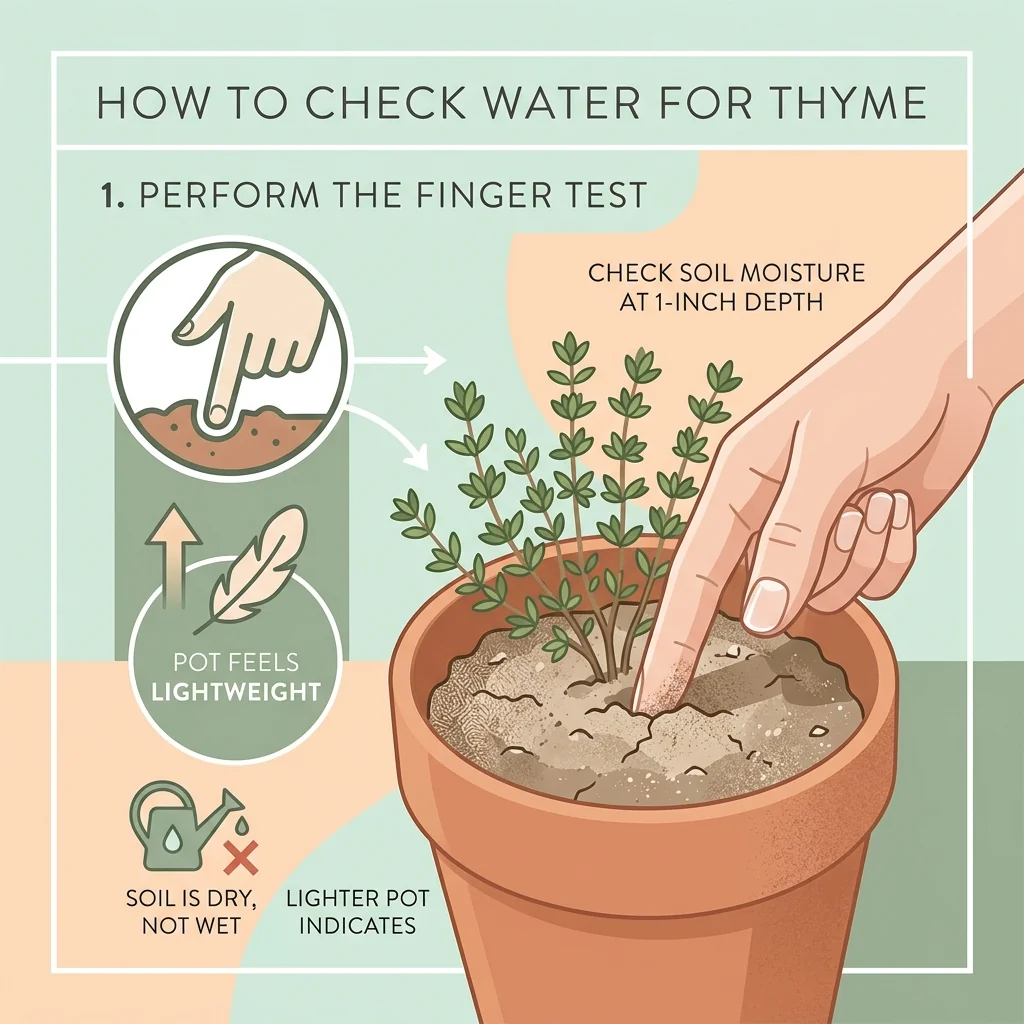
Watering thyme by condition
| Condition | Rough frequency | Check first |
|---|---|---|
| Indoors, moderate light | Every 7-10 days | Top 1-2 in dry and pot feels light |
| Hot balcony or summer | Every 3-5 days | Soil dry, but never kept soggy |
| Cool or low light | Every 10-14 days | Easy to overwater; wait for dryness |
Thyme is the herb you water by weight, not by sight. Its tiny, tough leaves show almost nothing when the soil dries — no flop, no sulk — so the plant itself is a useless gauge, and the pot becomes the instrument: lift it, and if it feels strikingly light with the top inch or two dry, water; if it has any heft, wait. In practice that lands at every 7 to 10 days indoors, faster only in real heat. Thyme sits with rosemary and oregano at the dry end of the herb watering chart, and the soil-first method it relies on is laid out in how often to water potted herbs.
The pot-weight test, in detail
Get to know your thyme pot at both extremes and the test becomes foolproof. Right after a thorough watering-and-draining, lift it: that is “full.” A week or so later, lift it again each day; the day it feels hollow-light, like an empty version of itself, that is “dry” — water thoroughly across the whole surface until it runs from the holes, and reset. Two lifts a week is the entire maintenance schedule. The finger check (top inch or two dry) confirms it, but with practice the weight alone tells you.
Why the silence? Built for drought
Thyme evolved on poor, stony, sun-baked ground, and its whole design assumes dry spells: minimal leaf surface, waxy coating, deep reserves of nothing to lose. That is why it doesn’t dramatise dryness the way basil does — dry is its comfort zone. The corollary is that wet is its danger zone: soil that stays moist suffocates roots adapted to sharp drainage, and rot sets in quietly. The most common potted-thyme death is not neglect but “just in case” watering, a little too often, for weeks.
A shallow root mat changes the pour
Unlike rosemary’s dense woody root ball, thyme spreads a shallow, creeping mat across the surface of a wide pot. Two practical consequences. First, water the whole surface when you do water — spot-watering one side leaves half the mat dry. Second, the plant has little deep reserve, so in a hot spell the cycle shortens more than you might expect for a drought herb: the table above moves from 7–10 days toward 3–5. A wide, shallow terracotta bowl with gritty mix matches this root habit perfectly, as covered in thyme pot size.
Woody centre or black stems? Two different verdicts
Two problems get blamed on thyme watering, and only one deserves it:
- Black or mushy stems, sudden leaf drop, soil that stays wet → root rot from overwatering. Let it dry hard and fix the drainage.
- A woody, bare centre with green only at the tips → age, not water. Thyme naturally lignifies over a year or two; trim lightly after flowering to push fresh growth, and divide or replace old plants.
Reading the difference correctly saves healthy-but-elderly plants from being “rescued” with water they do not want.
Winter: mostly leave it alone
Hardy and near-dormant in the cold months, thyme uses almost no water in winter. Cut back to a token watering every couple of weeks at most, and never let a winter pot sit wet — the cold-and-damp combination is when rot most often takes hold. The same austerity makes thyme, like its cousin rosemary, one of the easiest herbs to leave during a trip; the setups in how to water potted herbs while on vacation are only needed for longer absences.
Companion guides for dry-loving thyme
These guides connect thyme's dry-side watering to pot choice and the wider potted herb routine.
Common questions
How often should you water thyme?
Water potted thyme only when the soil has dried out, which is usually every 7 to 10 days indoors and more often in hot, dry weather. Thyme is drought-tolerant and prefers the dry side.
Can you overwater thyme?
Yes, and it is the most common cause of failure. Thyme is Mediterranean and rots in soil that stays wet, so let the pot dry before watering again.
How do I know when thyme needs water?
Lift the pot or check the soil. When the pot feels light and the top inch or two is dry, water thoroughly until it drains from the bottom, then wait.
Does thyme need watering every day?
Almost never. Daily watering usually keeps the soil too wet for thyme. Only small pots in intense heat might approach a daily rhythm, and even then you should check first.
How can I tell if thyme needs water when it does not wilt?
Use the pot-weight test. Thyme does not flop like basil, it just dulls and goes woody, so lift the pot; if it feels light and the top inch or two is dry, water thoroughly. That is more reliable than watching the foliage.
Why is the centre of my thyme woody and bare?
That is usually age, not a watering problem. Thyme naturally turns woody over a year or two. Trim it lightly to push fresh growth, and divide or replace old, leggy plants. Only suspect watering if stems are black or mushy and the soil is staying wet, which points to rot.
Related guides
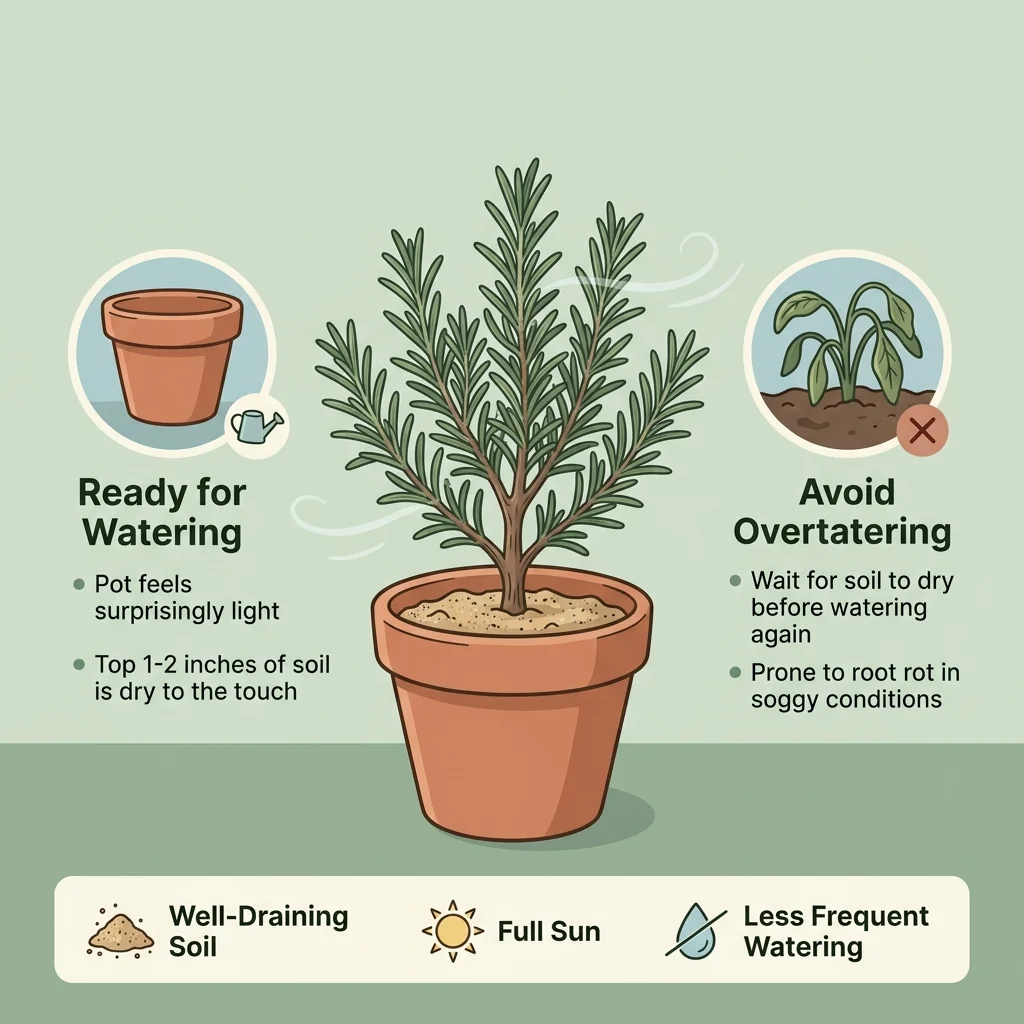
How often should you water rosemary? Less than you think
Rosemary kills more gardeners with kindness than neglect. Water it deeply but infrequently, only once the soil has dried, and it will thrive on the dry side.
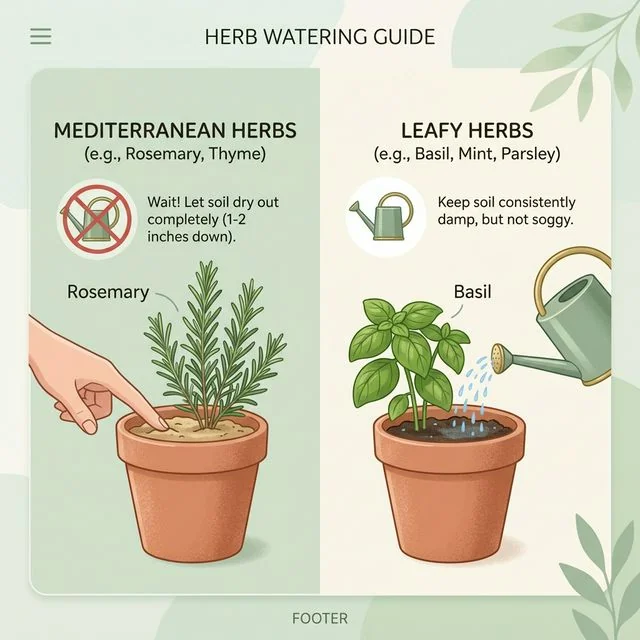
How often to water potted herbs: a by-herb chart
Most potted herbs should be checked often but watered only when the root zone is actually drying. This guide explains how to judge the pot instead of following a rigid calendar.
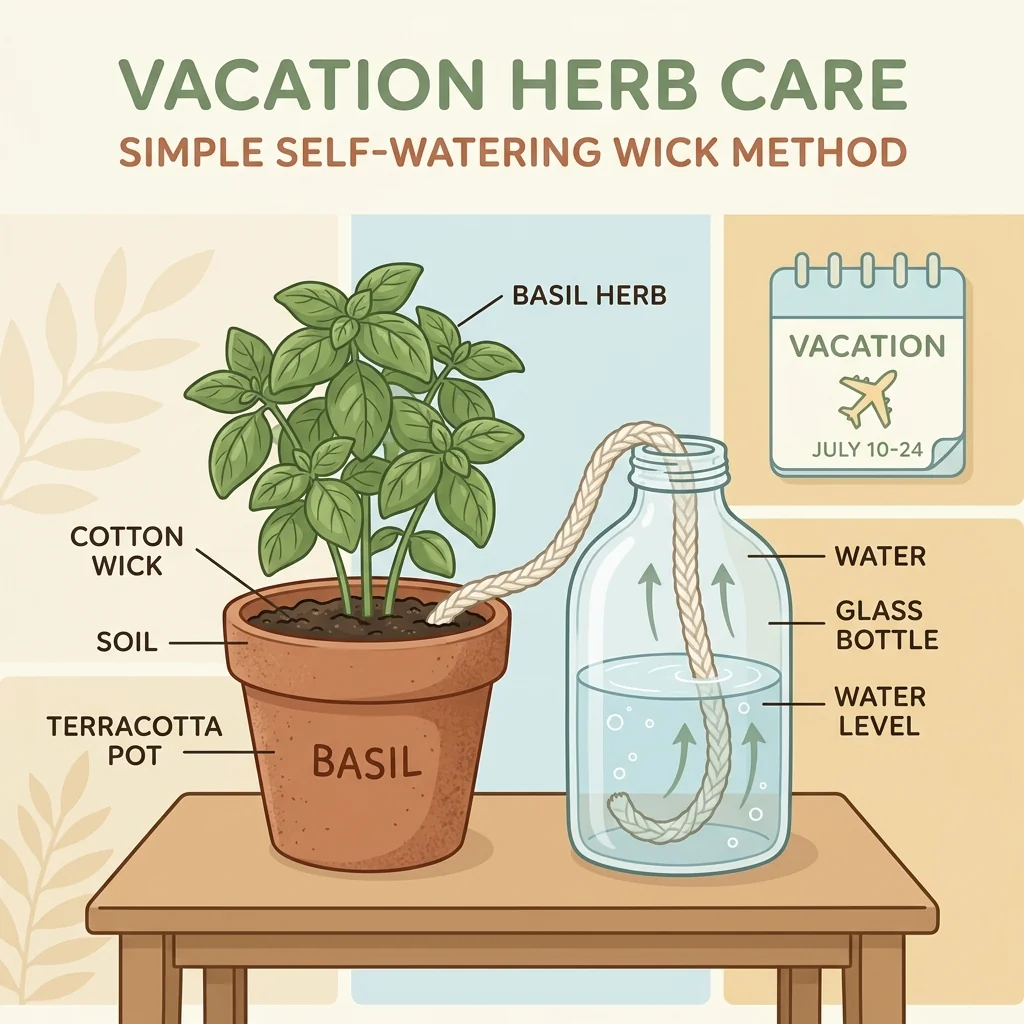
How to water potted herbs while on vacation: 5 foolproof methods
Potted herbs are notoriously sensitive to drying out. If you leave your apartment for a week without a plan, you will return to a graveyard of crispy, brown basil and dead mint. Here are five simple, passive self-watering systems you can build in minutes.