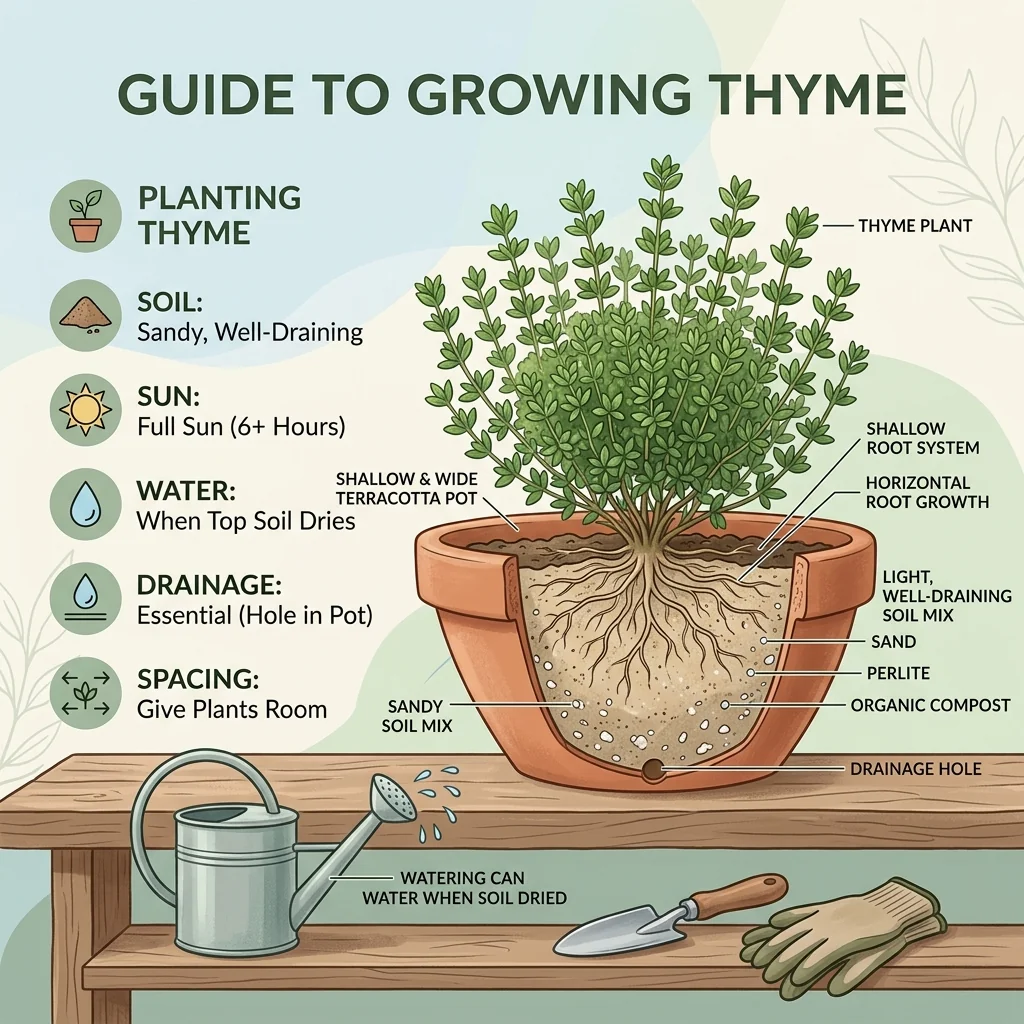
Thyme pot size at a glance
| Container | Size | Best for |
|---|---|---|
| Minimum pot | 6 in wide, 6 in deep (15 x 15 cm) | One thyme plant |
| Ideal pot | 8 in wide, 6 in deep (20 x 15 cm) | One thyme plant with room to spread |
| Wide trough | Plants 6 in apart, 6 in deep | Several thyme plants or a Mediterranean mix |
Think of thyme’s ideal pot as a rock ledge with drainage: wide, shallow, and never waterlogged. In the wild it grows on dry, stony slopes with its roots fanned out near the surface, and a container should copy that shape — about 6 to 8 inches (15 to 20 cm) wide but only 6 inches (15 cm) deep, draining fast. That makes thyme the mirror image of taproot herbs like parsley, and its row on the main herb pot size chart is one of the few where “smaller” is the right call.
Shallow roots change the whole equation
Thyme’s roots stay in the top few inches and spread horizontally, so a wide pot gives them the ground they actually use, while everything below six inches is dead weight. Worse than dead weight, in fact: soil the roots never reach dries only by evaporation, so the bottom of a deep thyme pot stays damp for weeks and wicks moisture back up into the root zone. A shallow bowl dries evenly and quickly — exactly the cycle thyme is built for. Shapes and materials are compared in best containers for herbs.
Sizing by planting style
One thyme plant is happy in a 6 to 8 inch wide bowl. For several, space them about 6 inches apart in a wide trough — thyme takes to group planting better than most herbs. Terracotta is the natural material choice here because it breathes and dries the mix even faster; the full comparison is in plastic vs. terracotta pots for herbs.
Two pots, one lesson
A common failure pattern makes the width-not-depth rule concrete. Put one thyme in a handsome 12-inch-deep planter with rich potting soil, and another in a cheap 6-inch terracotta bowl with gritty mix, and water both weekly through spring. By early summer the deep-planter thyme is dull, dropping leaves, with blackened stems near the base — its bottom half of soil never dried, and the roots sat above a permanent damp layer. The bowl thyme, technically in “less” pot, is spilling over the rim. The expensive planter did not fail for lack of size; it failed because thyme cannot use depth, and unused depth turns into stored water.
Drainage outranks every size decision
Because thyme is drought-tolerant, the fastest way to kill it in any pot is to keep the soil wet. Drainage holes are non-negotiable, and the mix matters as much as the pot: blend extra grit or perlite into the potting mix, and top the surface with a thin layer of grit to keep the crown dry. That mineral, free-draining root zone does more for long-term survival than any dimension choice. Once the pot is right, water on the dry-side rhythm in how often to water thyme.
Use the trailing habit instead of fighting it
Thyme’s low, sprawling growth is a feature. In a wide bowl or raised pot it cascades over the rim, and creeping varieties spill even more — ideal for shallow bowls, the edges of mixed containers, and hanging pots, where the trailing stems get airflow and stay dry. If you prefer a mound to a sprawl, trim after flowering to keep it compact.
One bowl for the whole Mediterranean crew
Thyme shares its exact regime — fast drainage, dry-outs between waterings, full sun — with oregano, sage, and young rosemary, so a single wide, shallow, gritty bowl planted with all of them is often the smartest use of space: one container, one watering schedule, four herbs. Give each about 6 inches and use a free-draining or cactus-style mix. Keep basil and mint out; they want the opposite conditions. When an established thyme spreads to the edges or the centre goes woody and bare, widen the container or divide it, handling the move as in how to repot herbs without slowing growth.
Choosing thyme's pot? These pair well
These guides connect thyme's pot size to drainage, container material, and the dry-side watering it prefers.
Common questions
What size pot does thyme need?
A pot about 6 to 8 inches (15 to 20 cm) wide and 6 inches (15 cm) deep suits one thyme plant. Thyme has shallow, spreading roots, so a wide, well-draining pot works better than a deep one.
Does thyme need a deep pot?
No. Thyme's roots spread horizontally rather than down, so a deep pot mostly holds extra wet soil at the bottom. Choose width and drainage over depth.
Can I plant several thyme plants in one pot?
Yes, thyme is one of the easier herbs to group. Space plants about 6 inches apart in a wider, shallow container or trough so each has room to spread.
Why does my potted thyme keep dying?
Usually overwatering or poor drainage. Thyme prefers to dry out between waterings, so a fast-draining mix, drainage holes, and a terracotta pot all help.
Can thyme share a pot with rosemary, oregano, and sage?
Yes, and it is a great combination. These Mediterranean herbs all want fast drainage, drying out between waterings, and sun, so a wide, shallow, gritty bowl with about 6 inches per plant works well. Keep thirsty herbs like basil and mint out of it.
Is a deep pot actively bad for thyme, or just wasted?
Slightly worse than wasted. The soil below thyme's shallow roots never dries through root uptake, so a deep pot keeps a permanently damp layer at the bottom that wicks moisture upward and raises the rot risk. A shallow pot dries evenly, which is what thyme wants.
Related guides
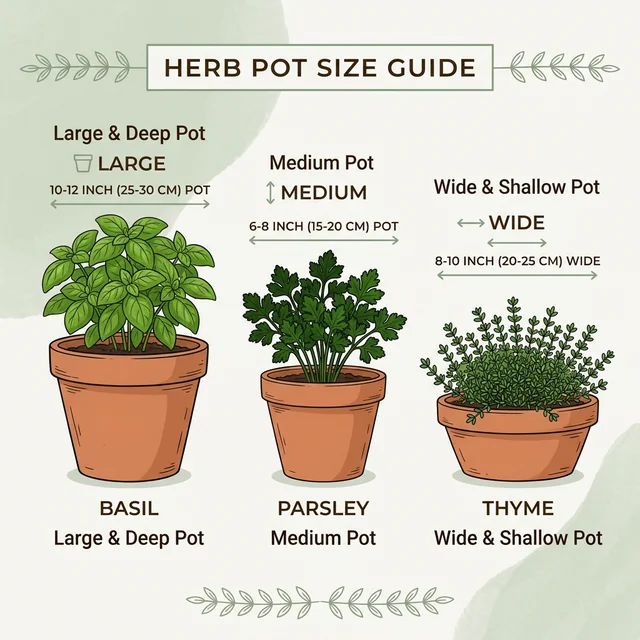
Herb pot size chart: basil, mint, parsley, thyme & chives
A practical herb pot size guide for the most common kitchen herbs, with simple size ranges that make container growing easier to read and maintain.
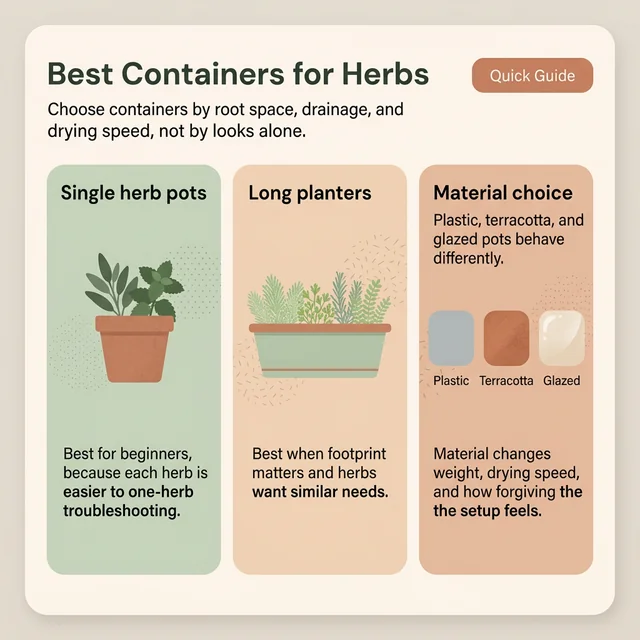
Best containers for herbs: drainage, pot size, and materials that work
A practical guide to herb containers that explains which pots work best, why drainage matters, and how material changes the way containers dry.
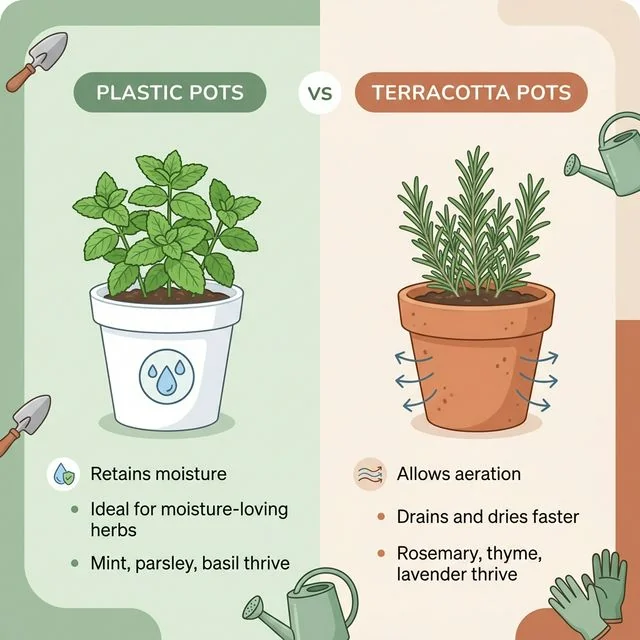
Plastic vs. terracotta pots for herbs: which makes care easier?
The material of your pot dictates how fast your soil dries out. If you put a thirsty mint plant in unglazed terracotta, you will be watering every single day. If you put rot-prone rosemary in a plastic pot, you must be extremely careful.