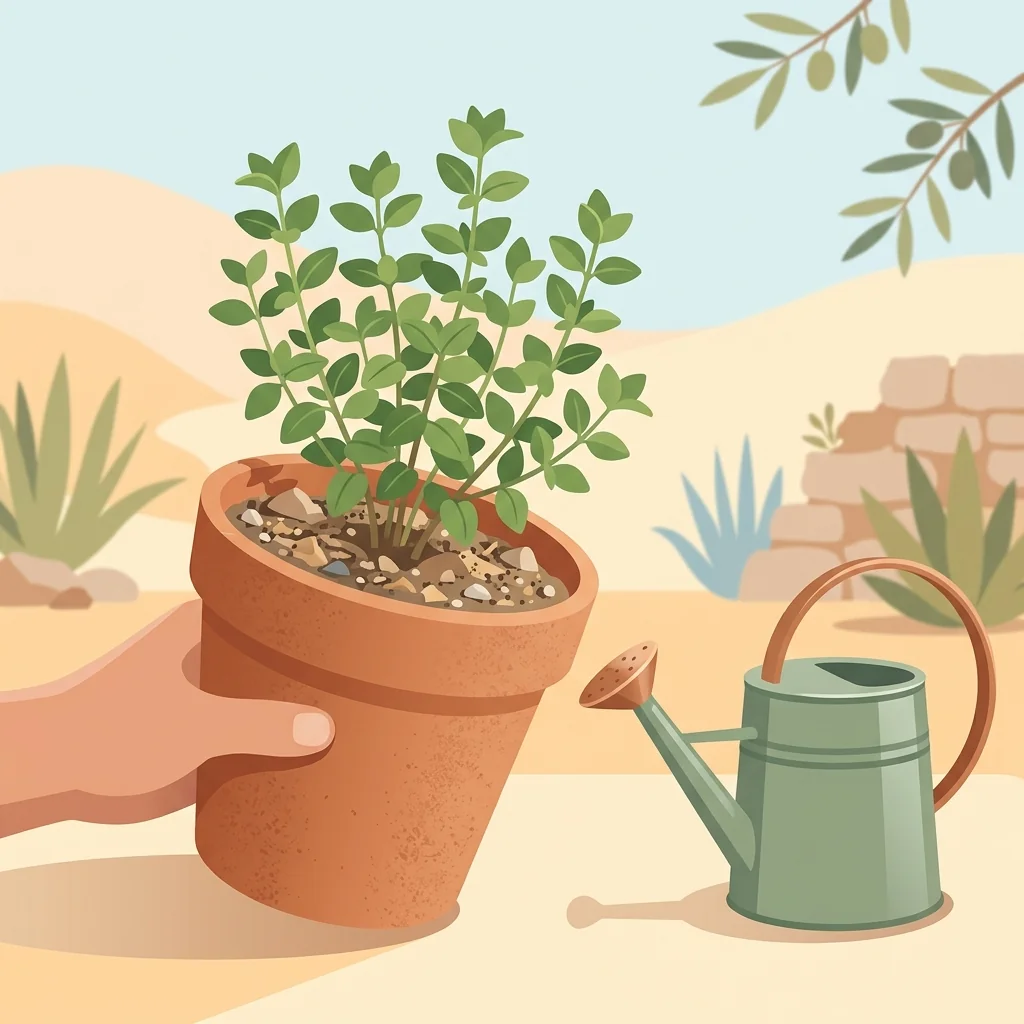
Watering oregano by condition
| Condition | Rough frequency | Check first |
|---|---|---|
| Warm balcony, terracotta pot | Every 5-7 days | Soil dry 2 in down; pot light |
| Indoors, average room | Every 7-10 days | Soil dry 2 in down |
| Cool or low light | Every 10-14 days | Do not water if still damp |
Oregano is the herb that punishes attentiveness. The flavour that makes it worth growing — the pungent, peppery oil in the leaves — is a product of lean, dry living, and both the plant’s health and its taste degrade when the soil stays moist. Water it only when the soil is dry a couple of inches down, which in a pot means roughly every 7 to 10 days, less in cool weather. It shares the drought-tolerant end of the herb watering chart with thyme, rosemary, and sage, and the check-first method behind the numbers is in how often to water potted herbs.
Dry soil is a flavour decision
Here is the part most watering guides skip: with oregano, the watering can controls the spice rack. Grown dry and a little hungry, oregano concentrates aromatic oils in its leaves; grown lush — frequent water, rich soil — it produces more foliage with noticeably less punch. Mediterranean growers have always known this, harvesting the most pungent oregano from the poorest, driest hillsides. In a pot you recreate it deliberately: dry-side watering, gritty mix, no heavy feeding. If your oregano is healthy but bland, the fix is usually less comfort, not more.
Check two inches down, not the surface
Oregano’s check is deeper than the thirsty herbs’ top-inch rule. Its roots run further down than a surface skim reveals, and the top of a gritty mix dries within a day of watering — meaning a surface check would have you watering constantly. Push a finger a couple of inches in, and lift the pot: only the combination of dry-at-depth plus a light pot means water. Then water thoroughly, let it drain completely, and park the can until both signals return.
Quiet failure: how overwatered oregano actually looks
Basil wilts loudly when mistreated; oregano fails in silence, and in the opposite direction from what its symptoms suggest. Weeks of slightly-too-frequent watering show up as yellowing lower leaves, a soft base, dull colour, and stalled growth — a plant that looks vaguely underfed, which invites more water and faster decline. If those signs appear, do the counterintuitive thing: stop. Let the pot dry out fully, verify water runs freely from the holes, and resume with a longer interval. Black, mushy stems mean rot is already advanced; take healthy cuttings and start over.
A tale of two pots on one balcony
The same nursery oregano, split into a plastic pot and a terracotta pot side by side on a south balcony, teaches the material lesson within a season. The plastic pot holds moisture two or three days longer after every watering — an advantage for basil, a slow liability for oregano, whose root zone gets fewer dry days per cycle. By August the terracotta plant is compact, grey-green, and intensely aromatic; the plastic one is bigger, greener, and blander, with the odd yellow leaf at the base. Terracotta’s evaporative walls effectively add safety margin to every watering decision — the same reason it suits all the Mediterranean herbs.
Rain, cutbacks, and winter: the interval stretches
Three situations where oregano needs even less than usual. After rain, a pot can stay wet for days — check at depth before adding anything, and empty the saucer in a wet spell. After a hard cutback (oregano responds brilliantly to being sheared mid-season), the plant has a fraction of its leaf area and drinks accordingly; one good watering after the cut, then expect a stretched interval while it regrows. In winter, this hardy perennial goes semi-dormant and a light watering every couple of weeks is plenty — cold plus wet is the one combination that reliably kills an established oregano. Its housemates thyme and rosemary follow the same rules on their own timetables; see how often to water thyme and how often to water rosemary, and note that all three can share one watering schedule in a single Mediterranean planter.
The rest of the dry-herb playbook
These guides connect oregano's watering to the other drought-tolerant herbs and the full watering method.
Common questions
How often should you water oregano?
Water oregano only when the soil is dry a couple of inches down, which in a pot is often every 7 to 10 days and less in cool weather. Oregano is drought-tolerant and prefers to dry out between waterings rather than being kept moist.
Can you overwater oregano?
Yes, and it is the most common way to kill it. Oregano hates soggy soil; constant moisture causes root rot, yellowing, and weak, flavourless growth. When in doubt, wait a day and check again.
Should I water oregano every day?
No. Daily watering will usually rot it. Even in summer, a potted oregano rarely needs water more than every few days, and only when the soil has actually dried out.
How do I know if my oregano needs water?
Feel the soil a couple of inches down and lift the pot. If the soil is dry and the pot feels light, water thoroughly and let it drain. If it is still damp or the pot feels heavy, wait.
Does watering less really make oregano taste stronger?
Yes, within reason. Oregano grown lean and dry concentrates the aromatic oils in its leaves, while lush, heavily watered growth is bigger but noticeably blander. Water on the dry-side rhythm and skip rich feeding for the most pungent leaves.
How should I water oregano after cutting it back?
Give it one thorough watering after a hard cut, then return to the normal dry-out rhythm. A freshly cut plant has much less leaf area and drinks less, so the interval usually stretches for a couple of weeks while it regrows.
Do I need to water outdoor oregano when it rains?
Usually not for days afterwards. A rained-on pot can stay wet longer than you expect, so always check a couple of inches down before adding more. In a rainy spell, the bigger job is making sure the pot drains and does not sit in a full saucer.
Related guides
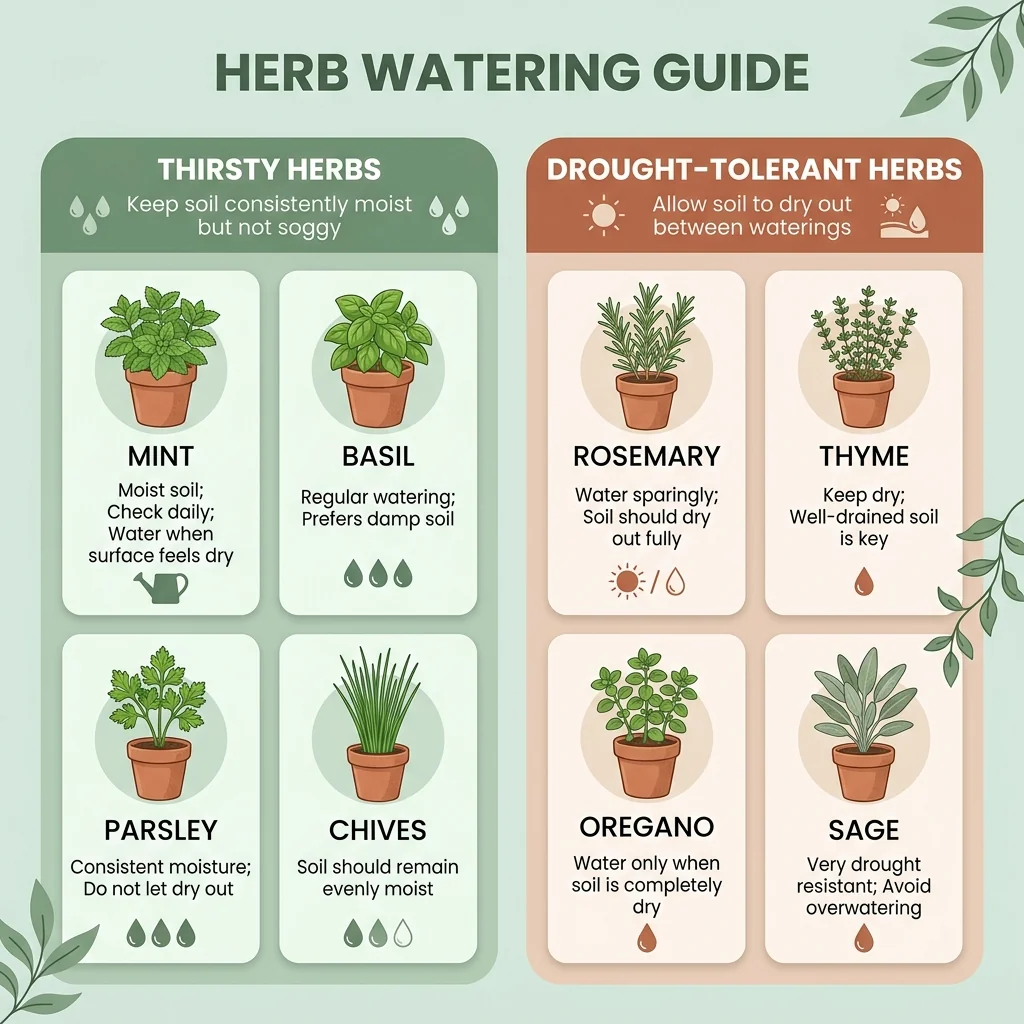
Herb watering chart: how often to water each herb
One simple chart for how often to water the most common herbs, split into thirsty herbs and drought-tolerant herbs, with links to a full guide for each.
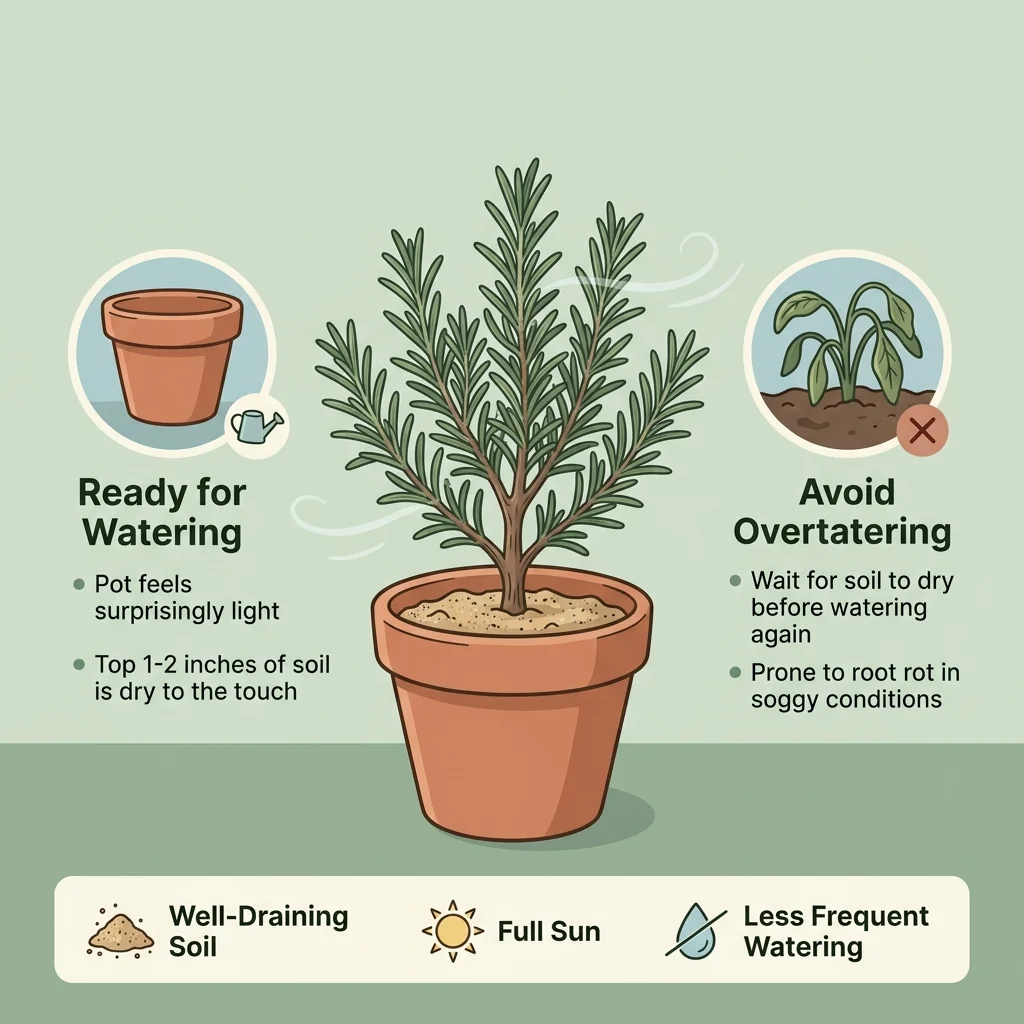
How often should you water rosemary? Less than you think
Rosemary kills more gardeners with kindness than neglect. Water it deeply but infrequently, only once the soil has dried, and it will thrive on the dry side.
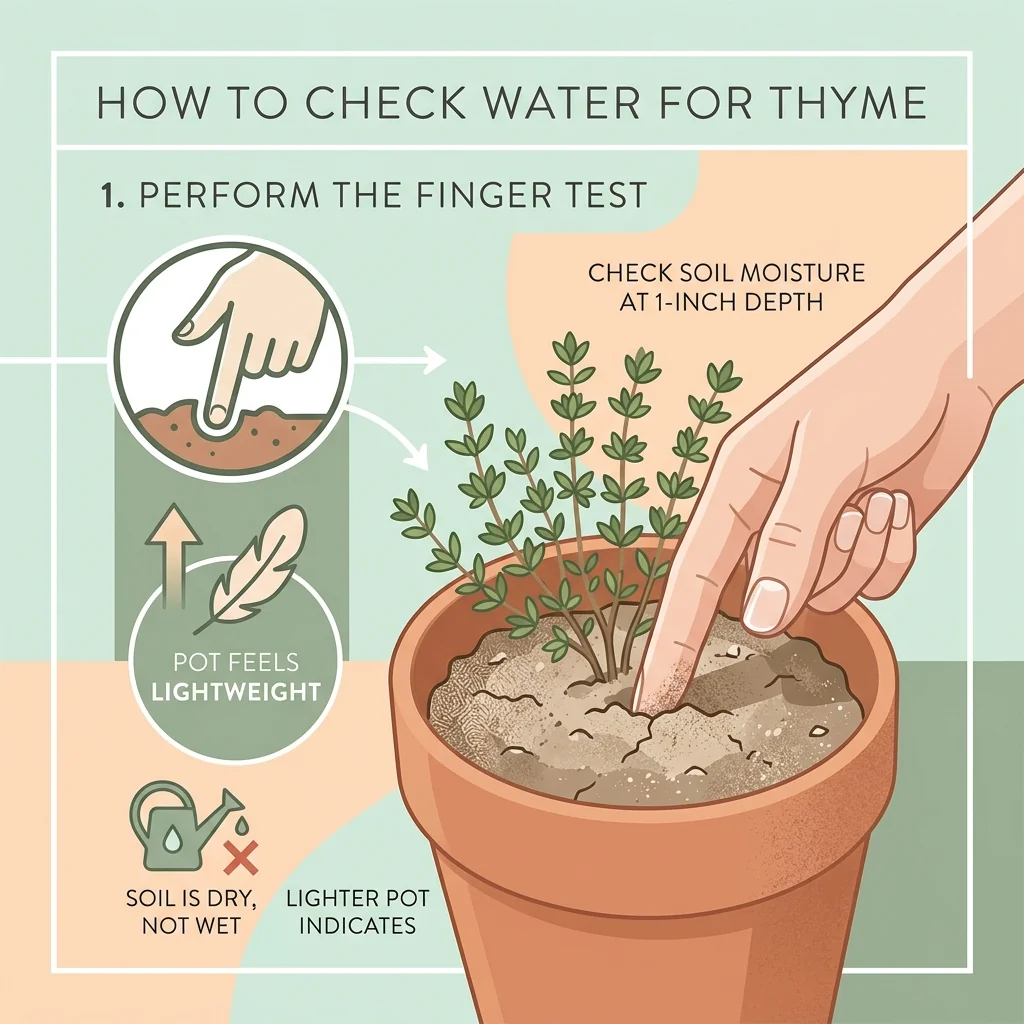
How often should you water thyme? Let it dry out
Thyme is a Mediterranean herb that hates wet feet. Water it only when the pot feels light and the soil is dry, and it will reward you for the neglect.