Can you reuse microgreens soil? Why a spent tray is single-use
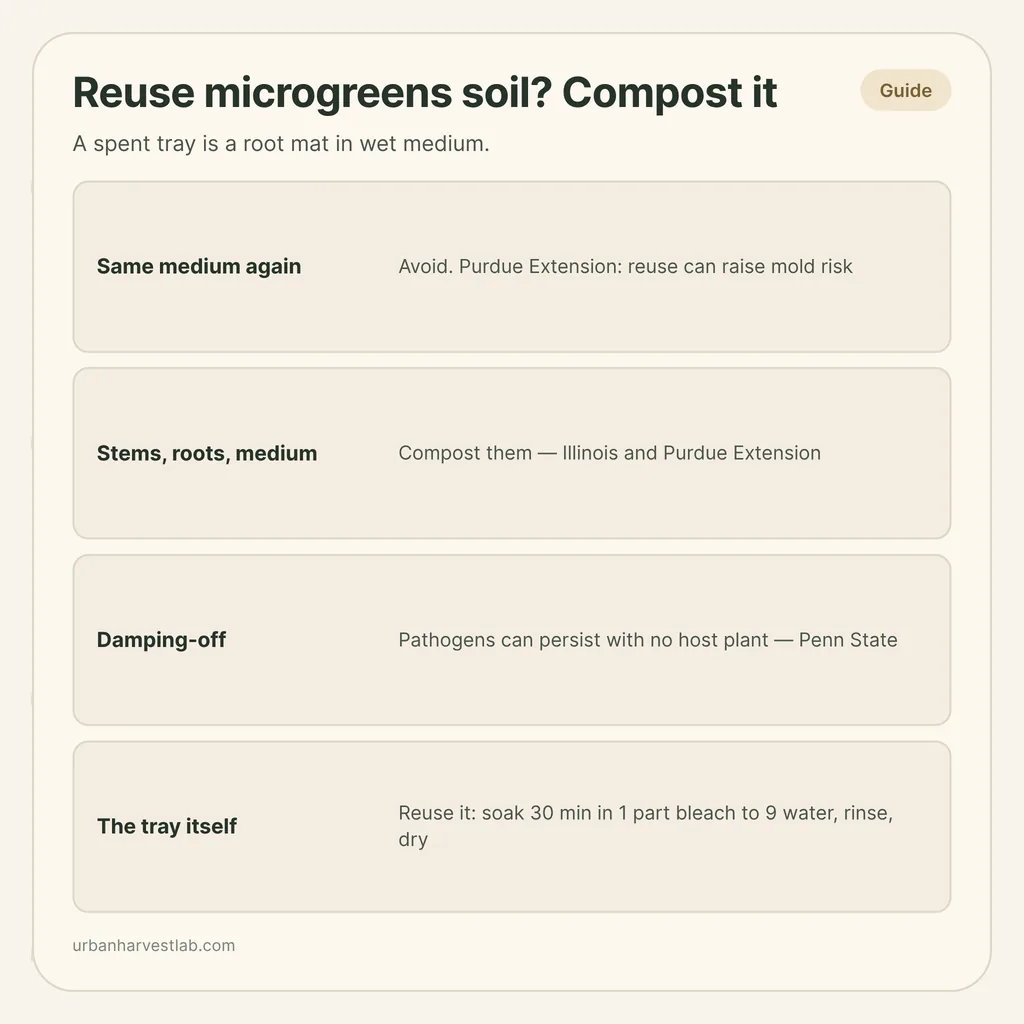
A harvested tray leaves a dense mat of roots in wet medium. Purdue and Illinois Extension both point it to the compost, not back into the next tray.
This is the plain utility list for every published microgreens guide. For the main topic page with curated pathways, featured entry points, and broader context, use the primary hub.
Microgreens are the fastest, most forgiving crop for indoor and small-space growers, ready to harvest in one to two weeks. This hub organizes the topic into a beginner how-to, variety selection, and soil-free methods so you can start a tray this week and avoid the few mistakes that cause most failures.
Browse the full set of published guides in Microgreens. This archive stays intentionally simple so it does not compete with the main hub.
A harvested tray leaves a dense mat of roots in wet medium. Purdue and Illinois Extension both point it to the compost, not back into the next tray.
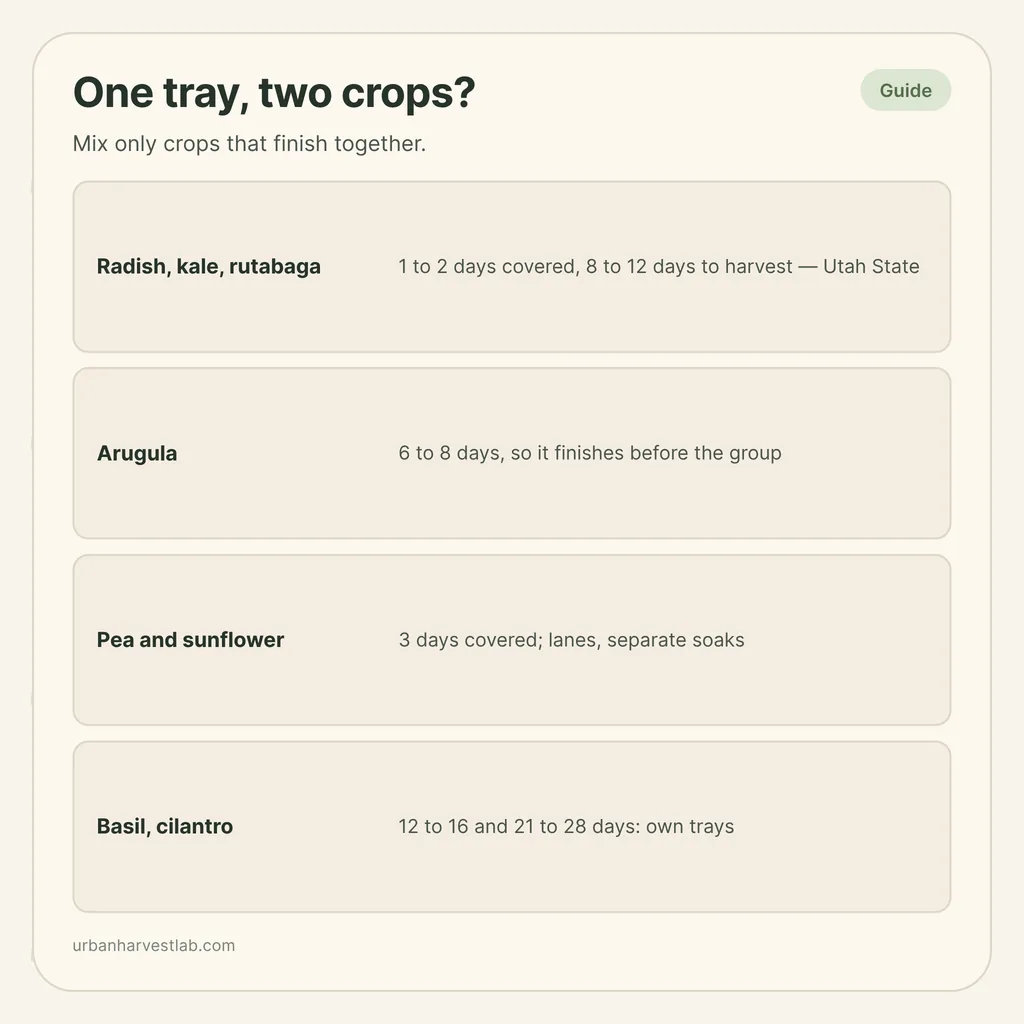
Mix crops in one tray only when their cover time and days to harvest line up. Utah State's table shows which ones do and which finish weeks apart.
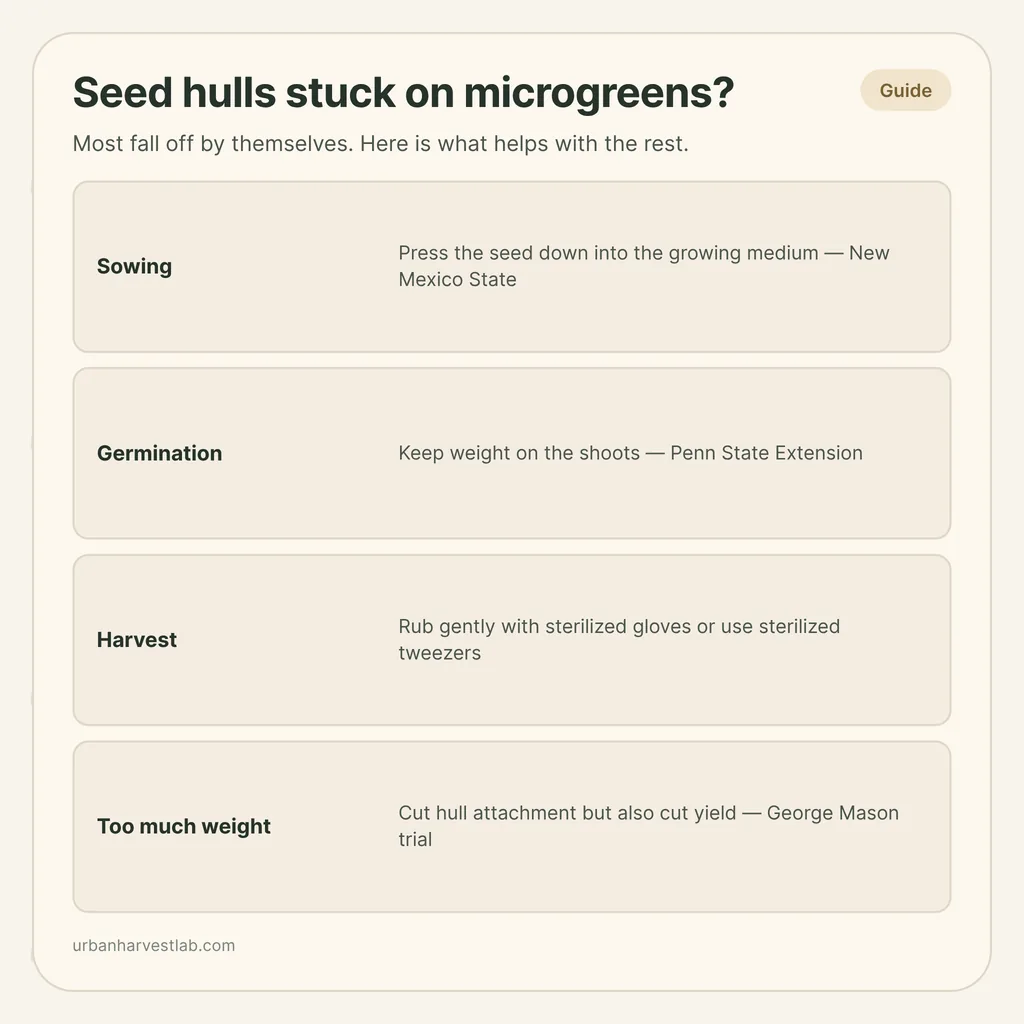
Most hulls fall away by themselves. For the ones that do not, the published options are weight during germination, a gentle rub or tweezers at harvest, and, in one university hydroponic trial, a shake before cutting.
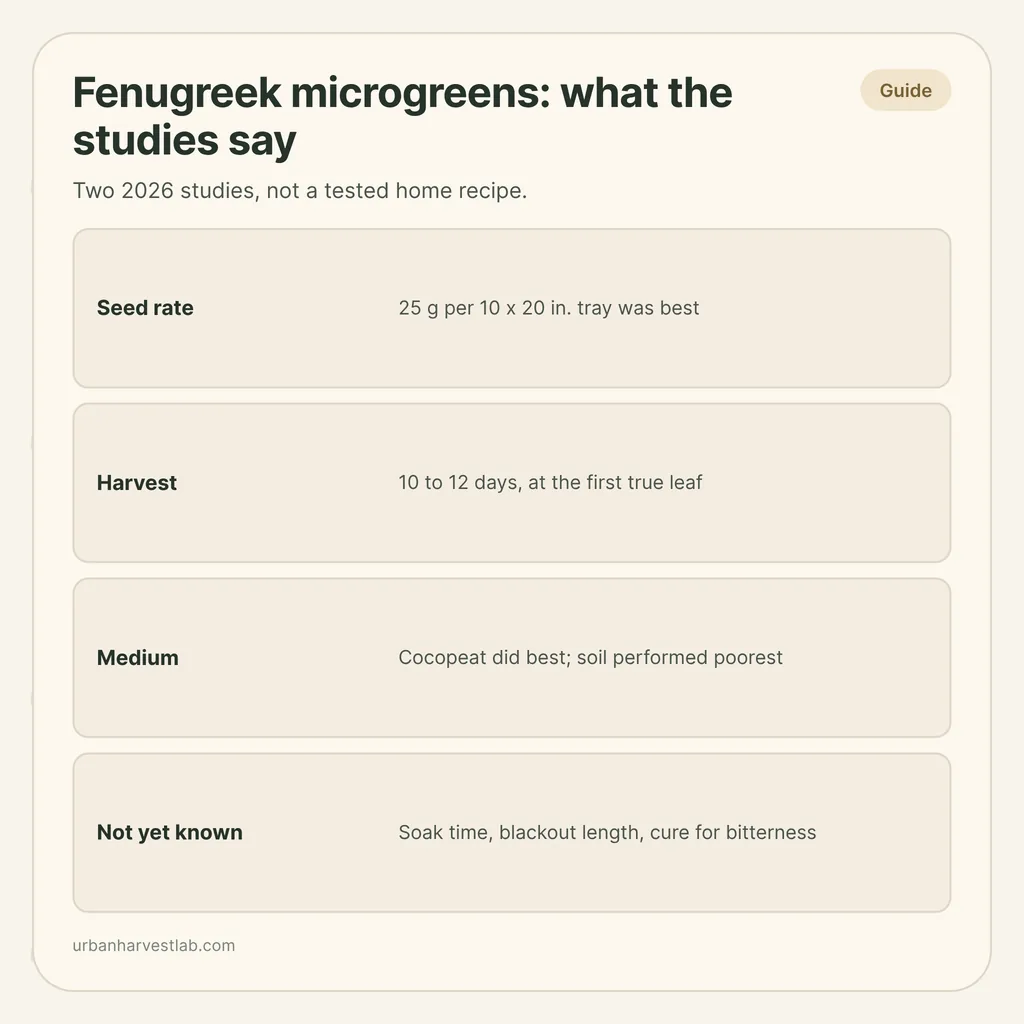
Fenugreek microgreens have almost no extension guidance, but two 2026 peer-reviewed studies give a seed rate, a harvest window and a growing-medium ranking.
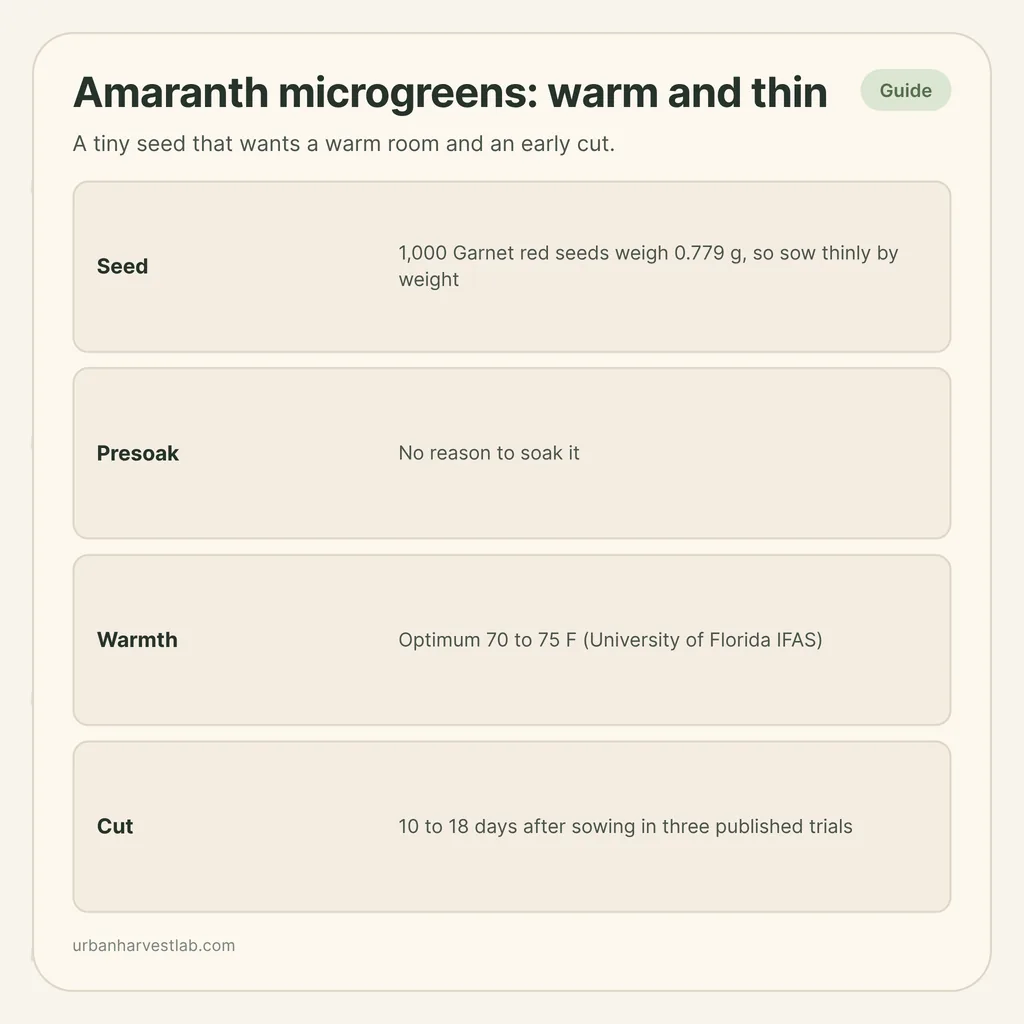
Amaranth is a warm-season crop with a tiny seed, so the tray rewards thin sowing, a warm start and a cut at the cotyledon stage rather than a long wait.
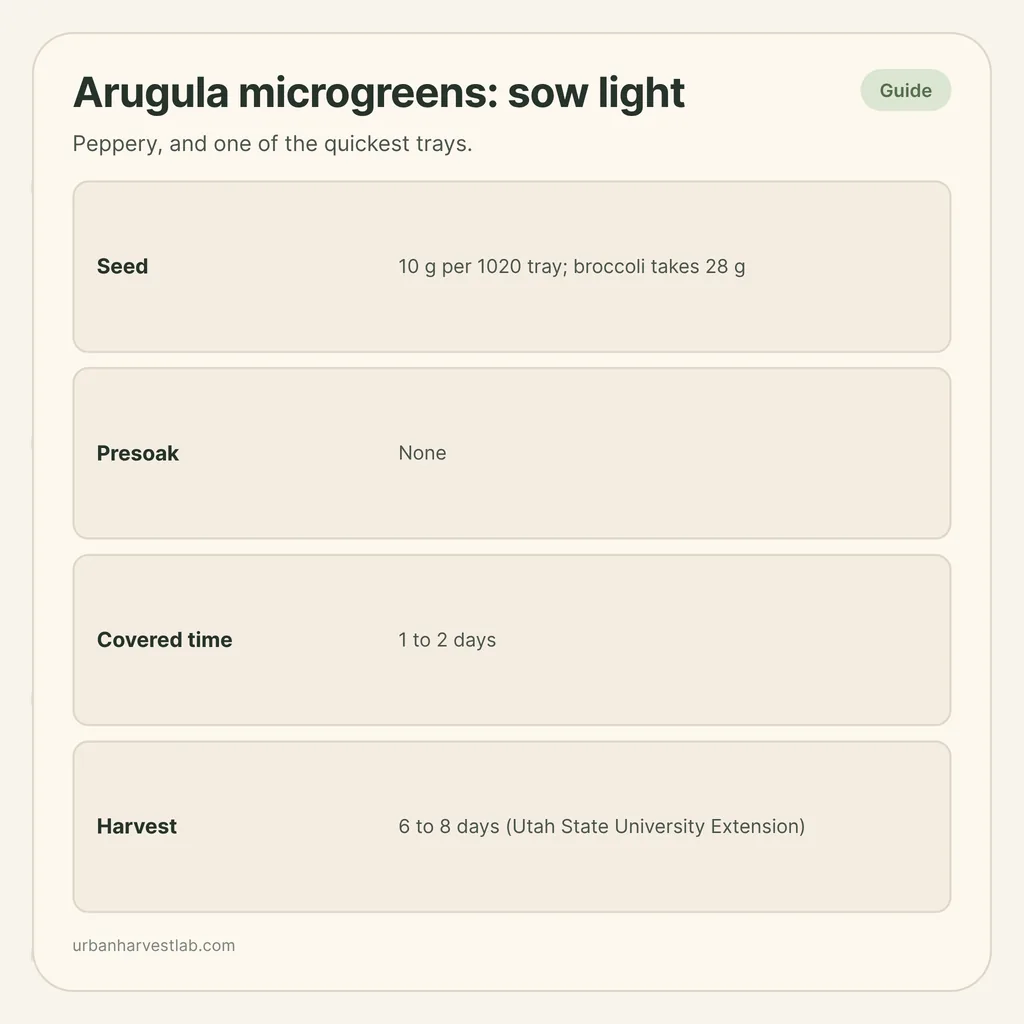
Utah State's table gives arugula the lowest seeding rate (10 g per tray), a 1-2 day cover and 6-8 days to harvest, with a peppery flavor to match.
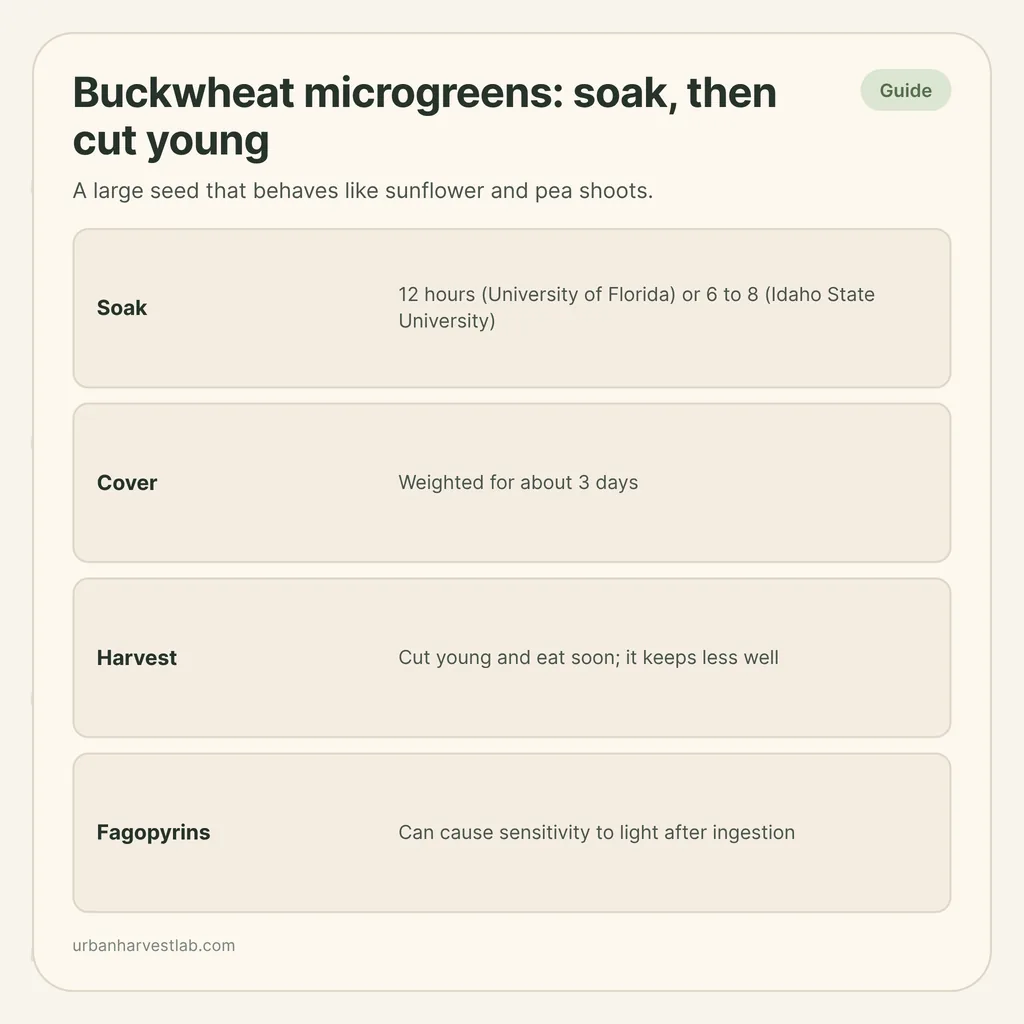
Extension sources soak buckwheat for 6 to 12 hours, cover it for about three days and grow it like sunflower or pea. One plant compound sets it apart.
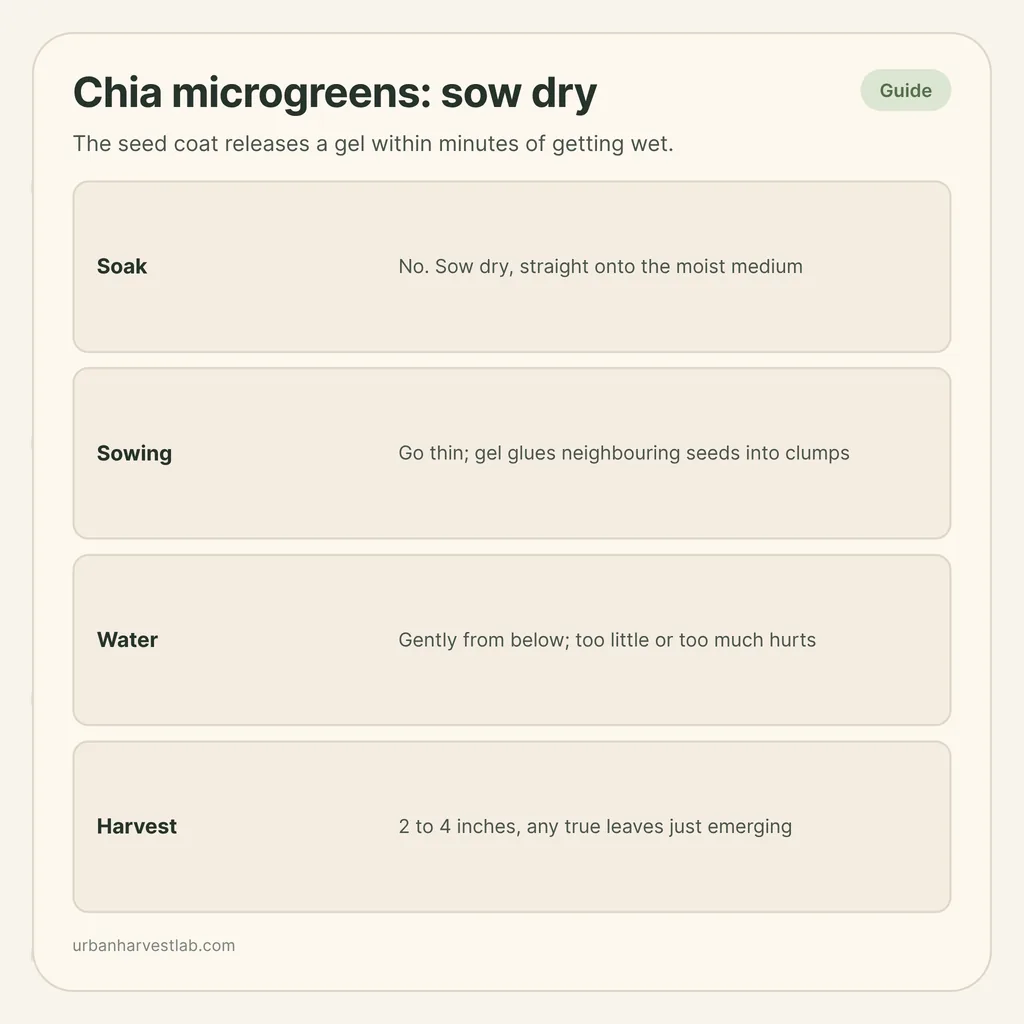
Chia is the opposite case to the soak-first crops: the seed coat releases mucilage the moment it is wet, so the method is dry seed, a thin layer and careful water.
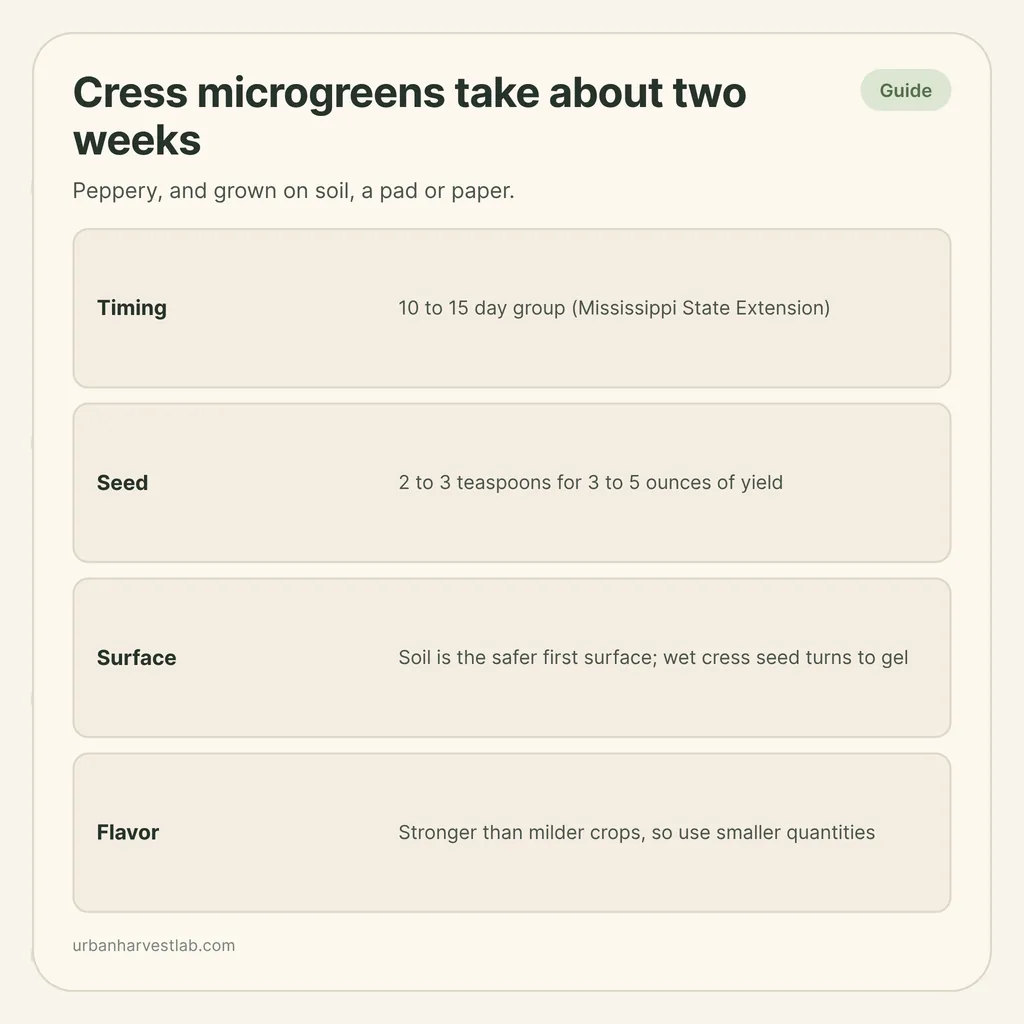
Cress is a small-seeded, peppery brassica relative that grows on almost any damp surface. Here is what extension sources say about timing, seeding rate, paper versus soil, and when to cut.
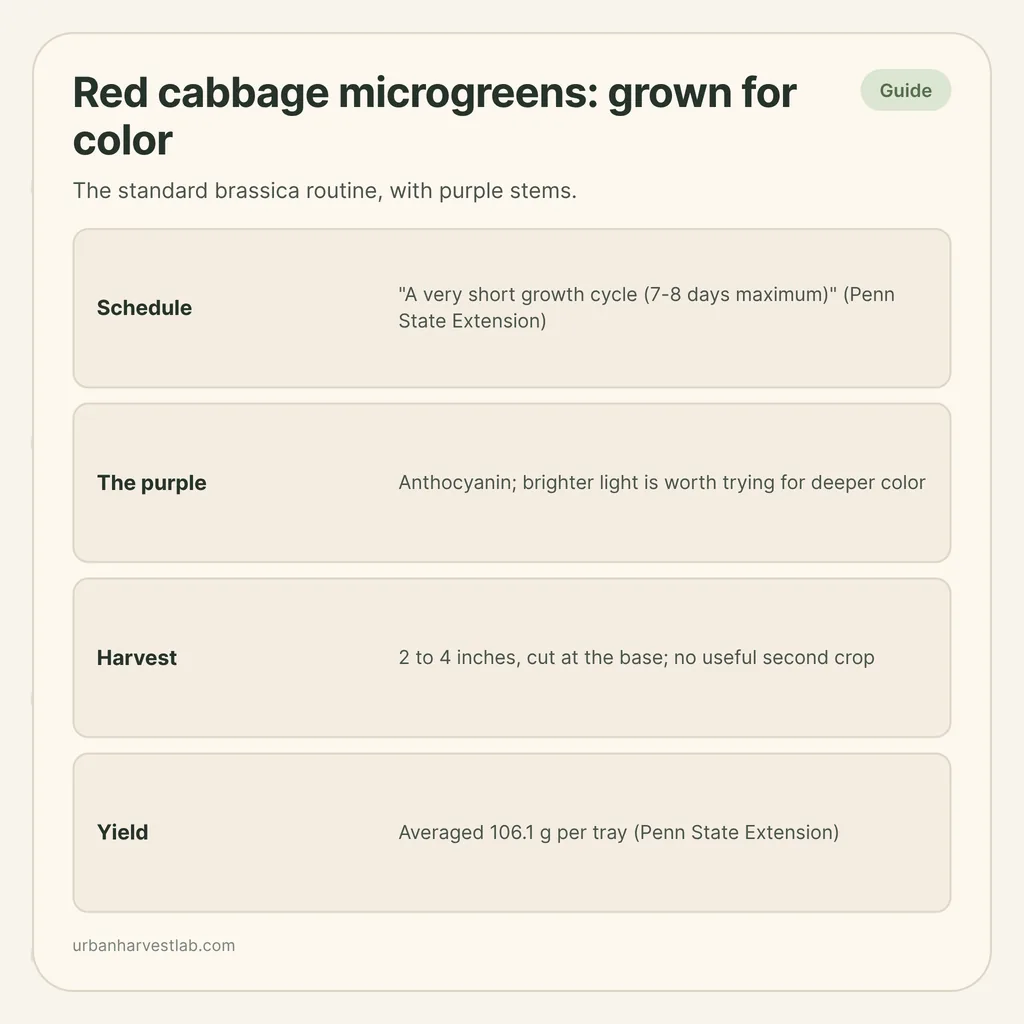
Red cabbage is a fast brassica grown for its purple stems and its nutrition reputation. Here is what the sources support about colour, light and what to expect from a tray.
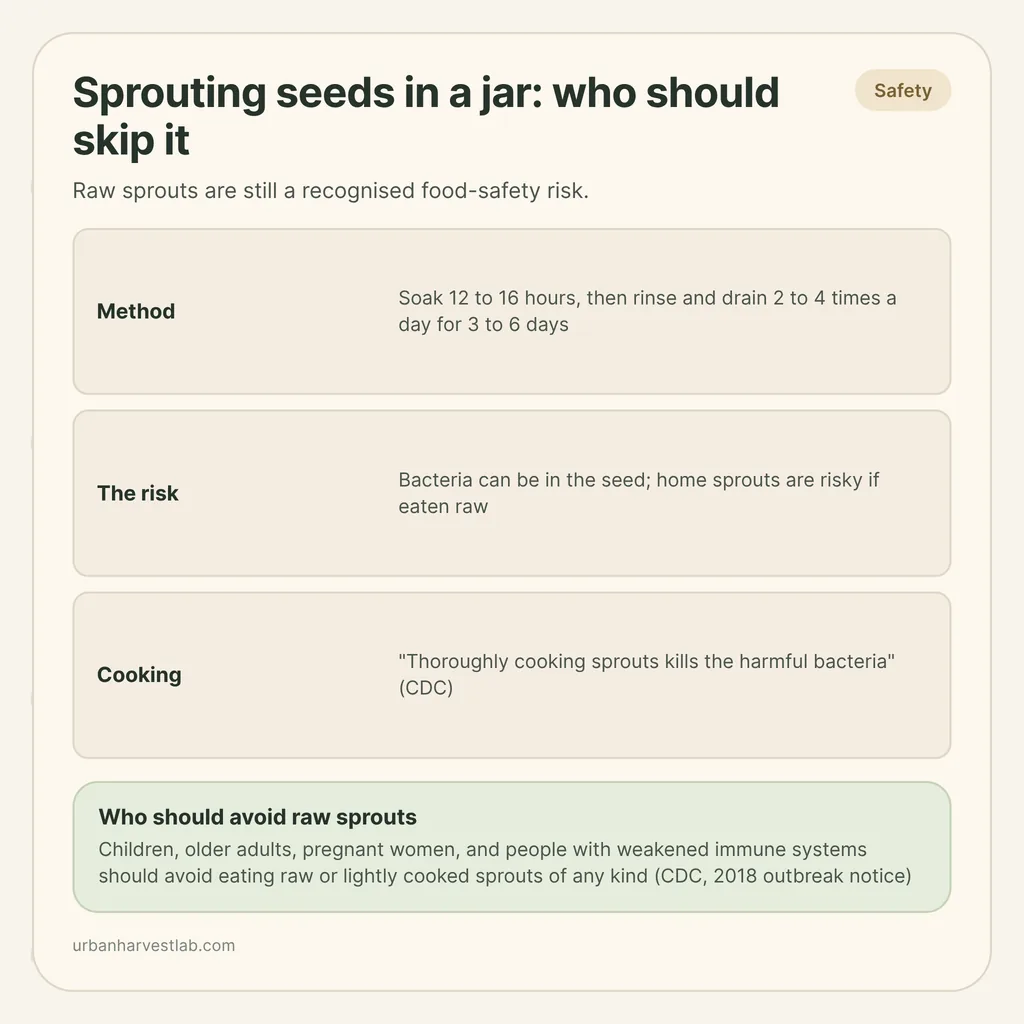
A jar sprout is grown wet and dark and eaten whole, root and seed included. Here is the rinse routine, and the FDA and CDC advice on who should cook theirs or skip them.
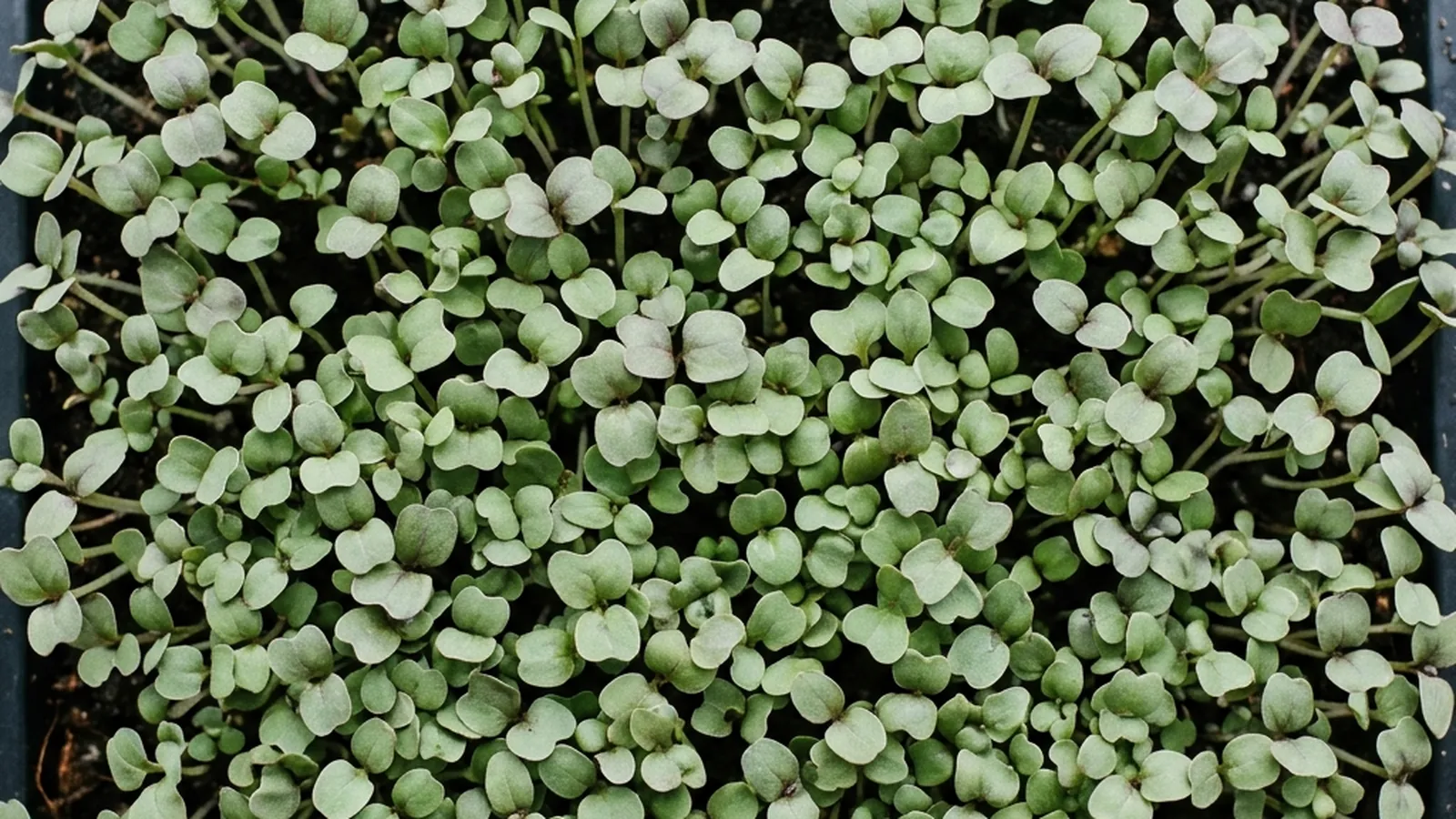
Basil's seed turns to gel instead of soaking, and Utah State puts it at 12 to 16 days to harvest — a mid-pack crop that needs deliberate watering and airflow to avoid mold.
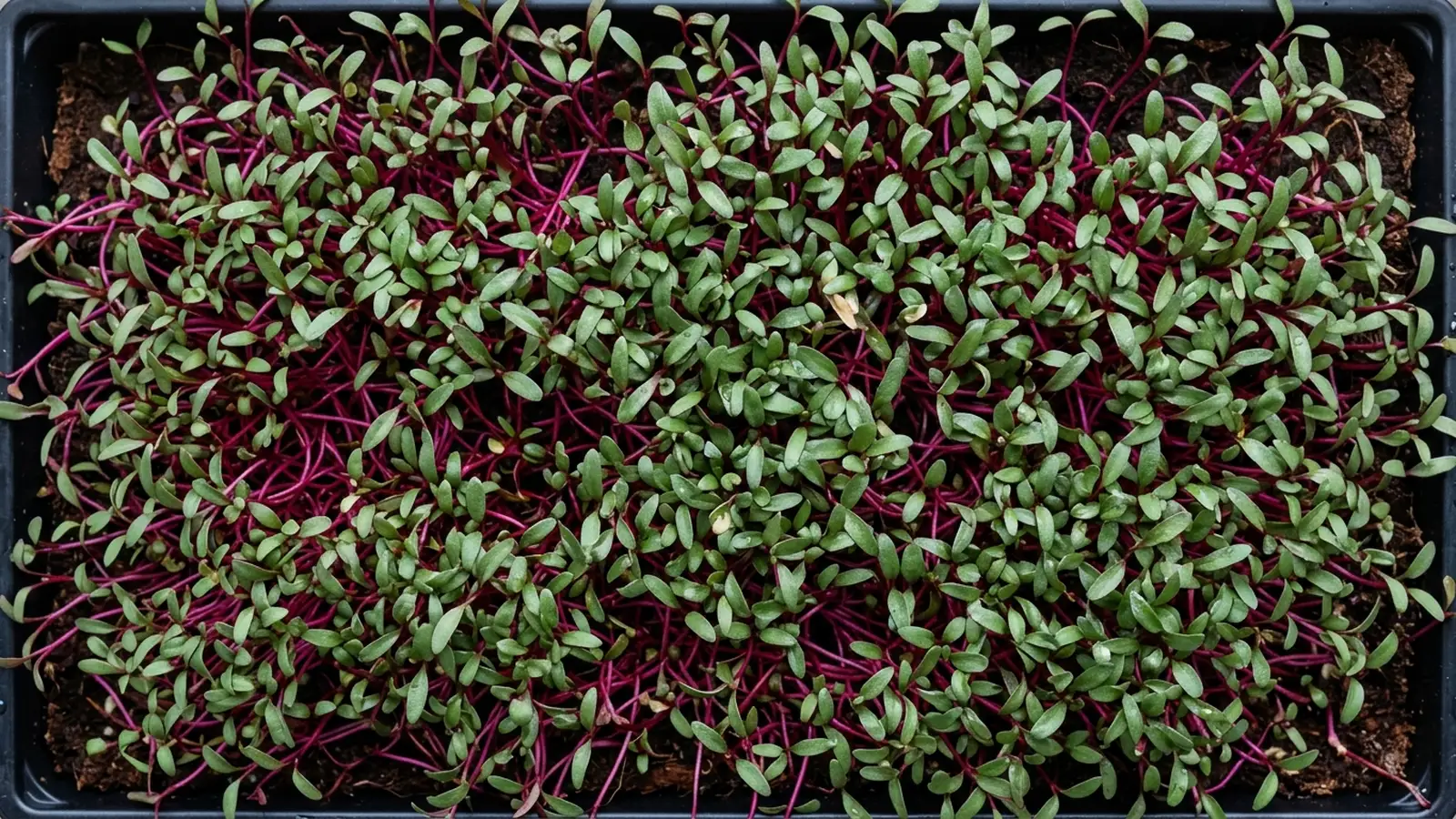
Beet is one of the slower crops in the tray, and its seed is not really one seed at all. That single fact explains most of what looks unusual about it.
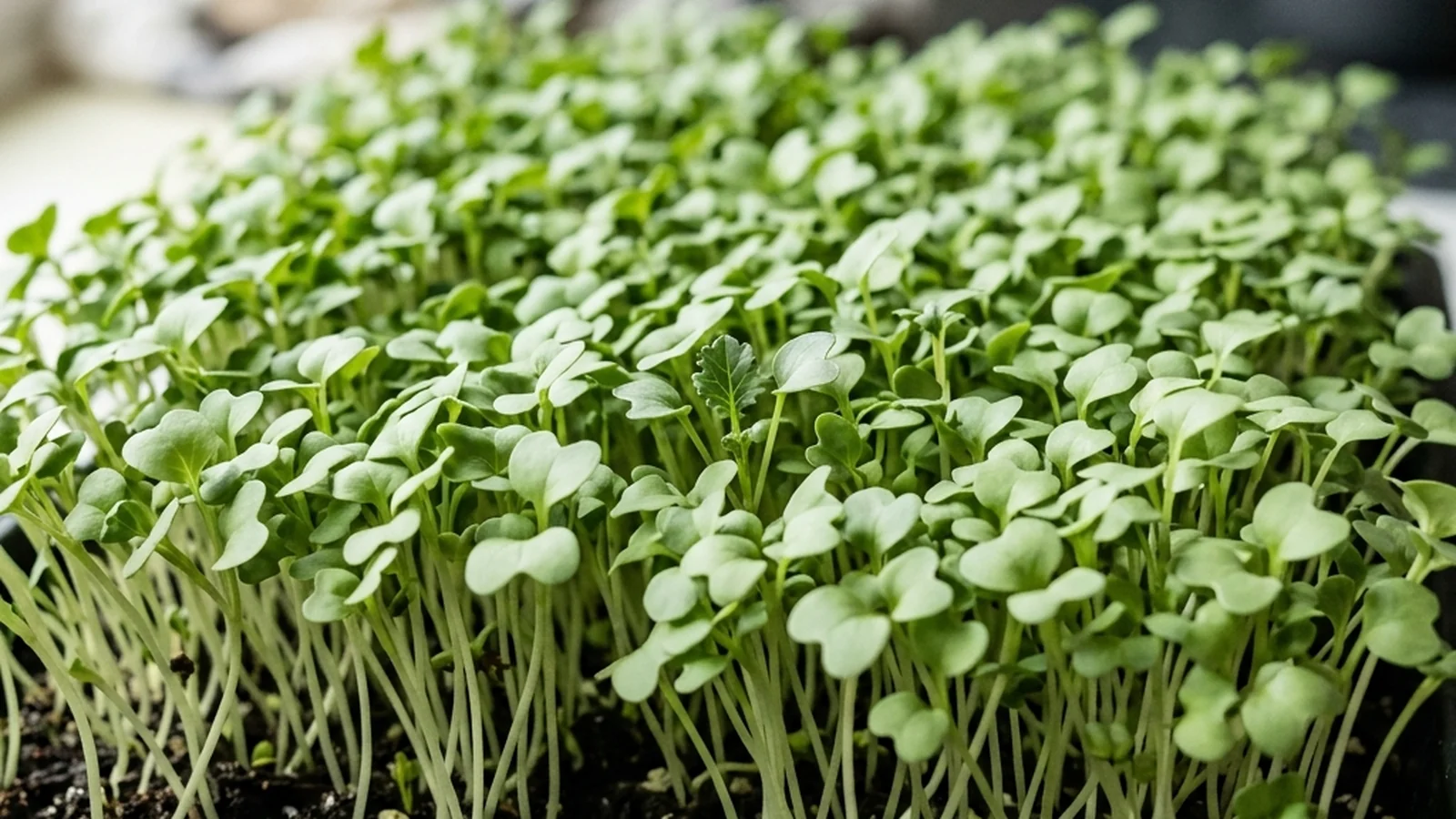
Broccoli microgreens follow the same fast brassica schedule as radish, but the reason people search for them is different. Here is the typical timeline, and what the nutrition claims actually support.
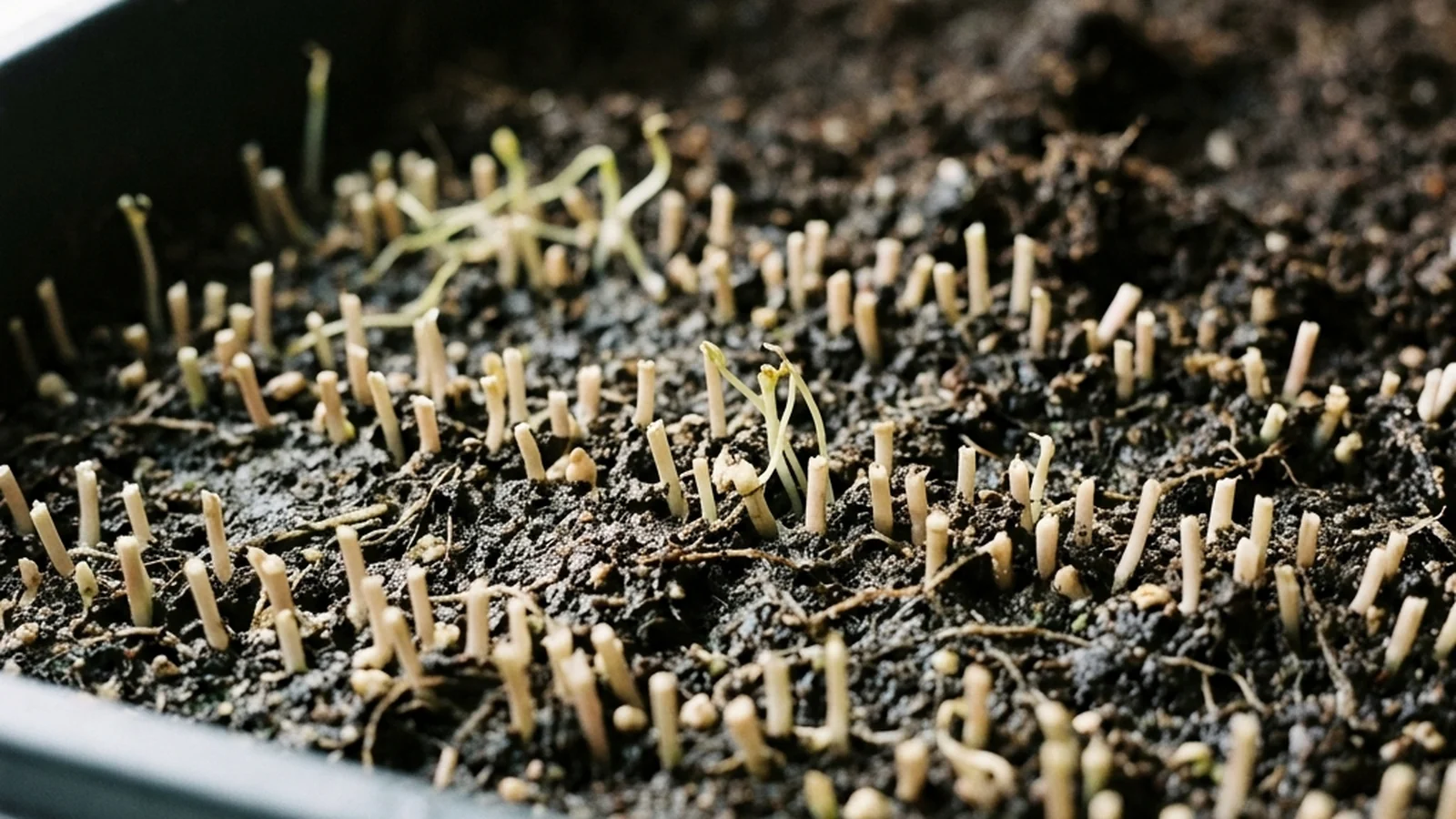
The cut you make decides everything. For almost every crop it removes the one part of the plant that could grow back.
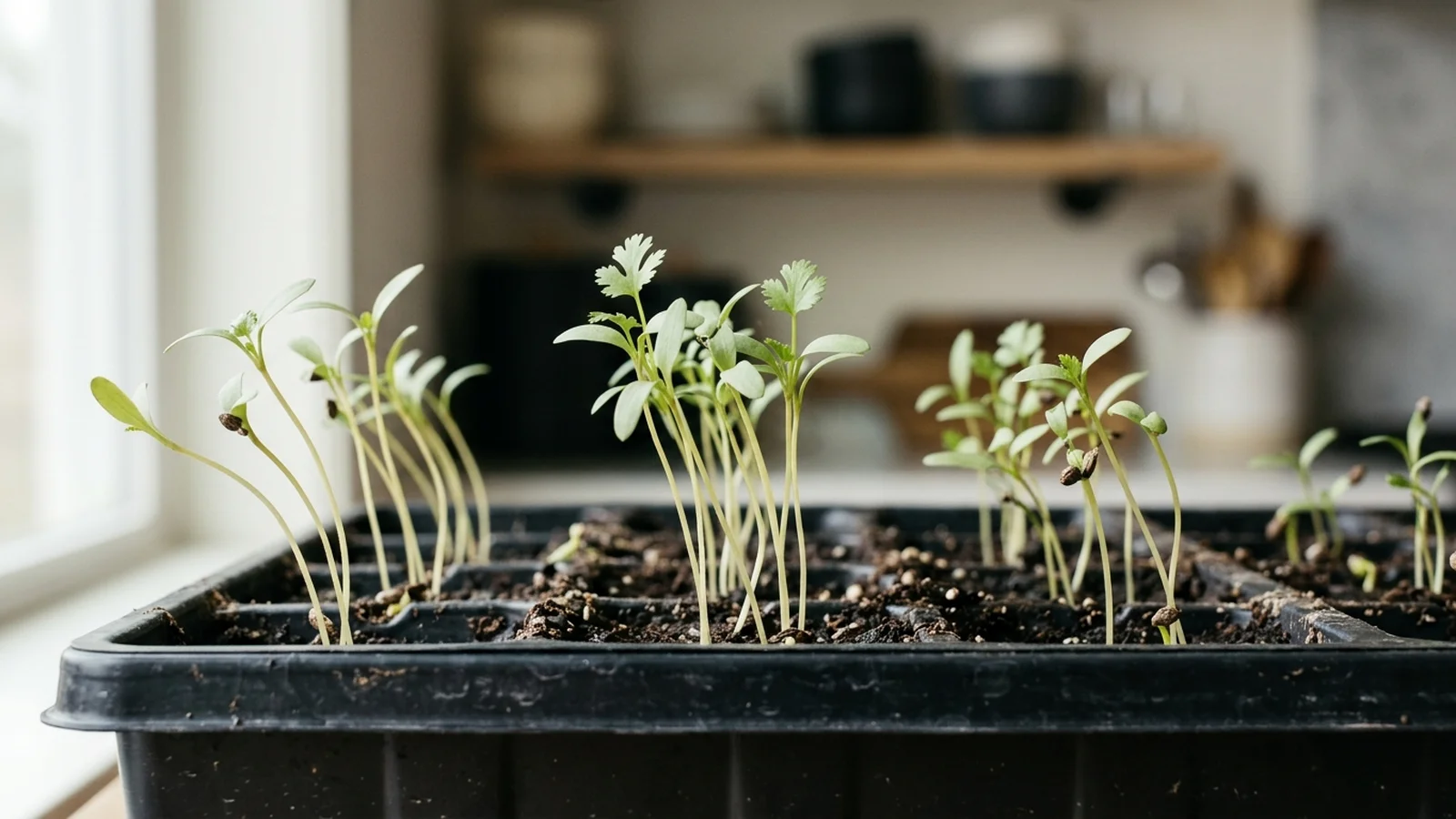
Cilantro microgreens taste like the herb, but the seed is a split fruit and the tray is one of the slowest in the cluster. Here is what that actually changes.
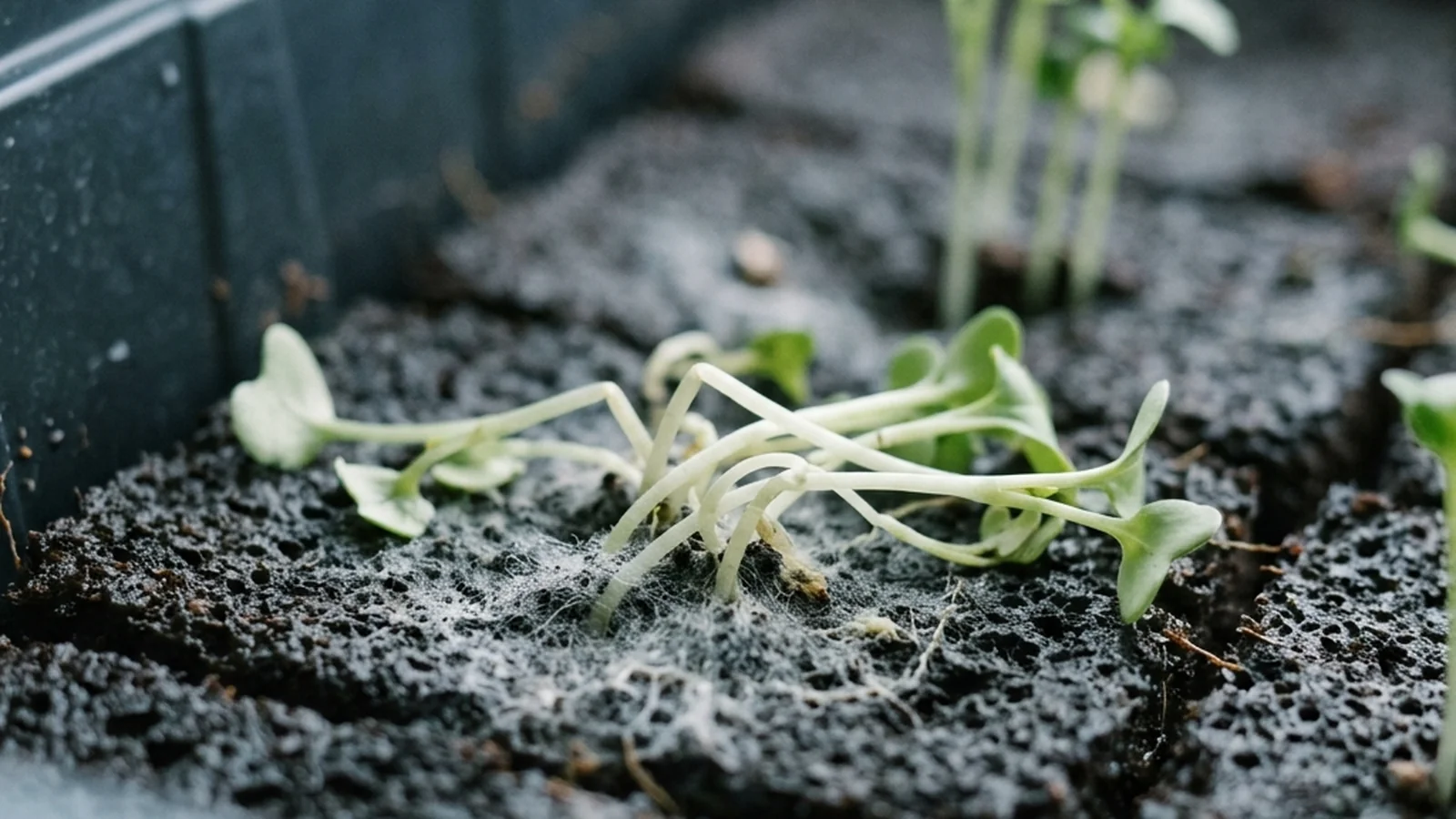
Damping-off attacks the seedling itself, not the tray surface. Here is how to recognize pre- and post-emergence stages and control outbreaks with sanitation, not fungicide.
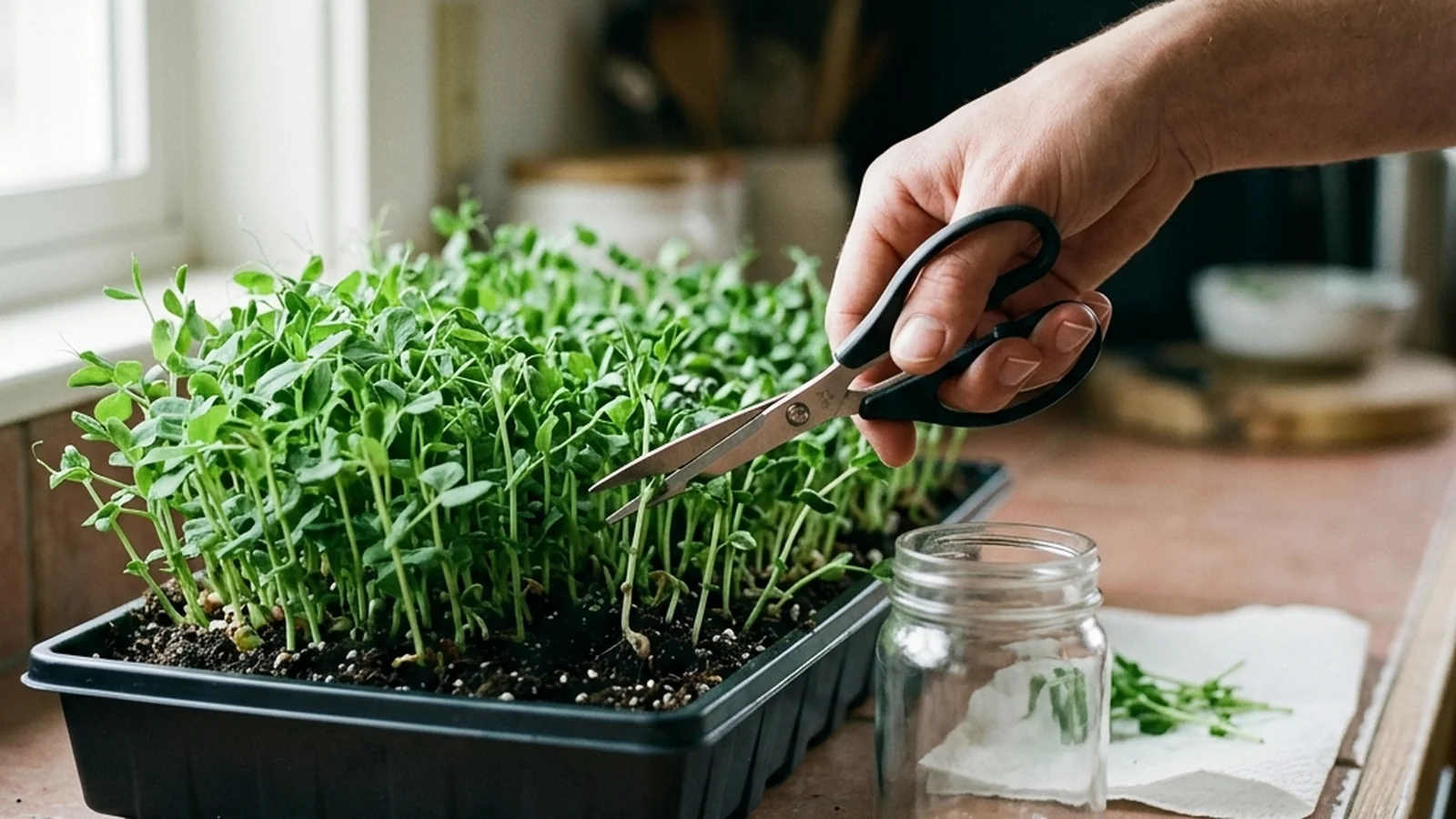
The cut and the fridge decide how long a tray lasts. Here is when to harvest, why you should not wash before storing, and what the shelf-life data actually shows.
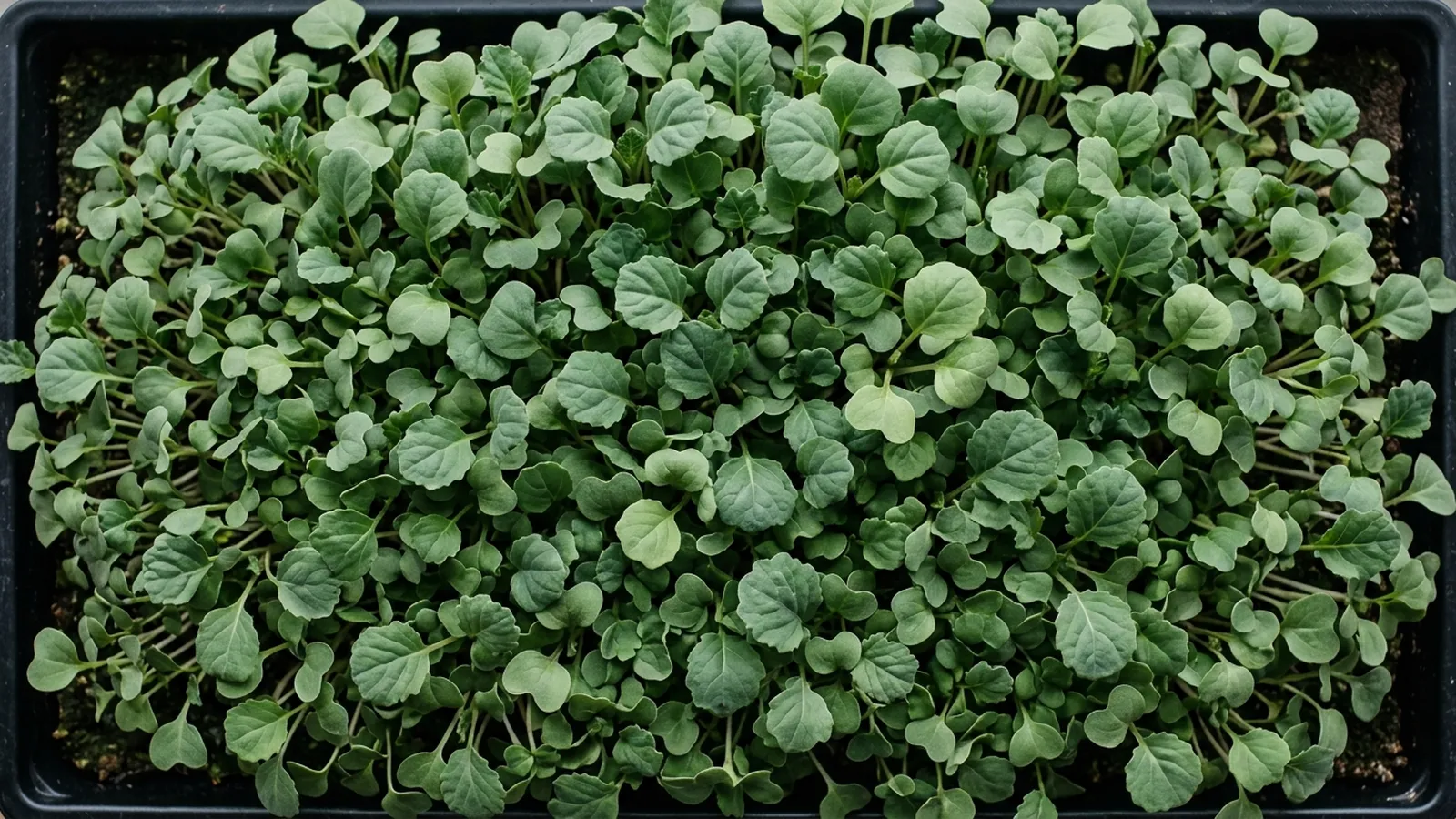
Kale and broccoli microgreens grow the same way, on the same clock. The reason to pick one over the other is what you do with the tray after you cut it.
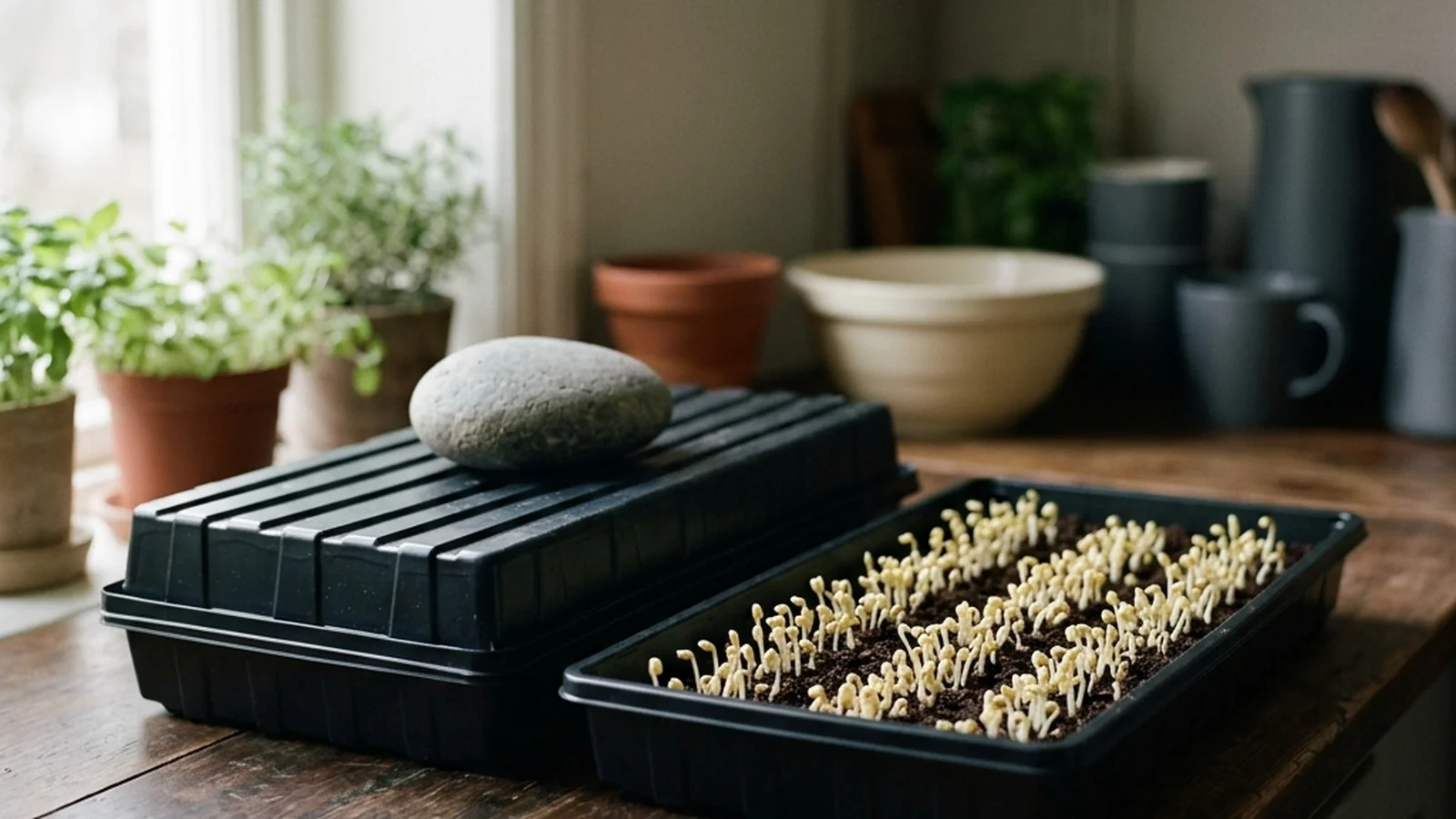
Blackout time varies by crop — Utah State's table runs from 1-2 days for arugula to 7-14 for cilantro. Here is how that compares to the documented blackout methods, and how to judge readiness by the tray instead of the calendar.
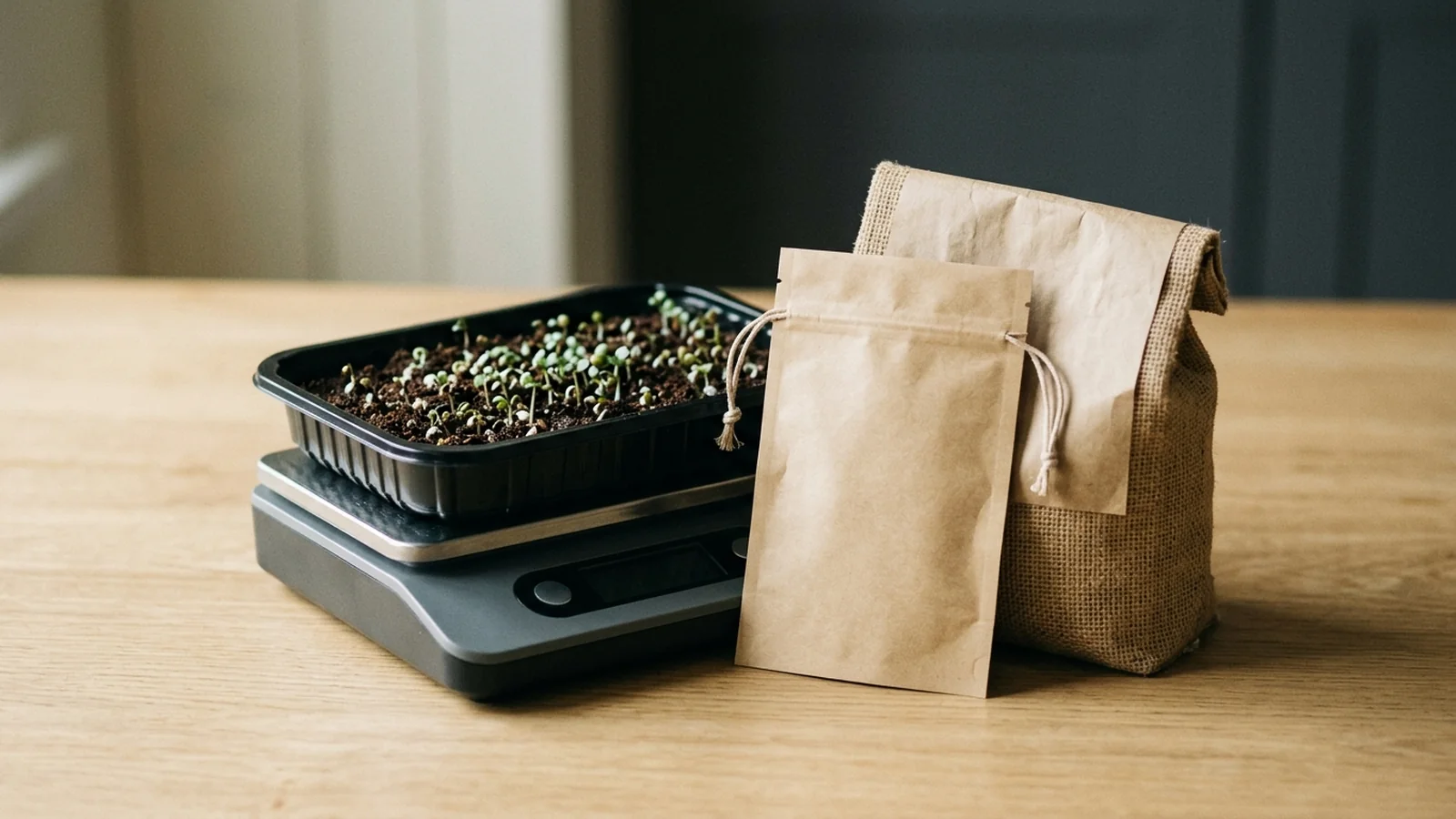
Seed, substrate, and light are the only three costs a tray of microgreens has. Enter your own prices below and see what your tray costs per 100 g, not a stranger's estimate.
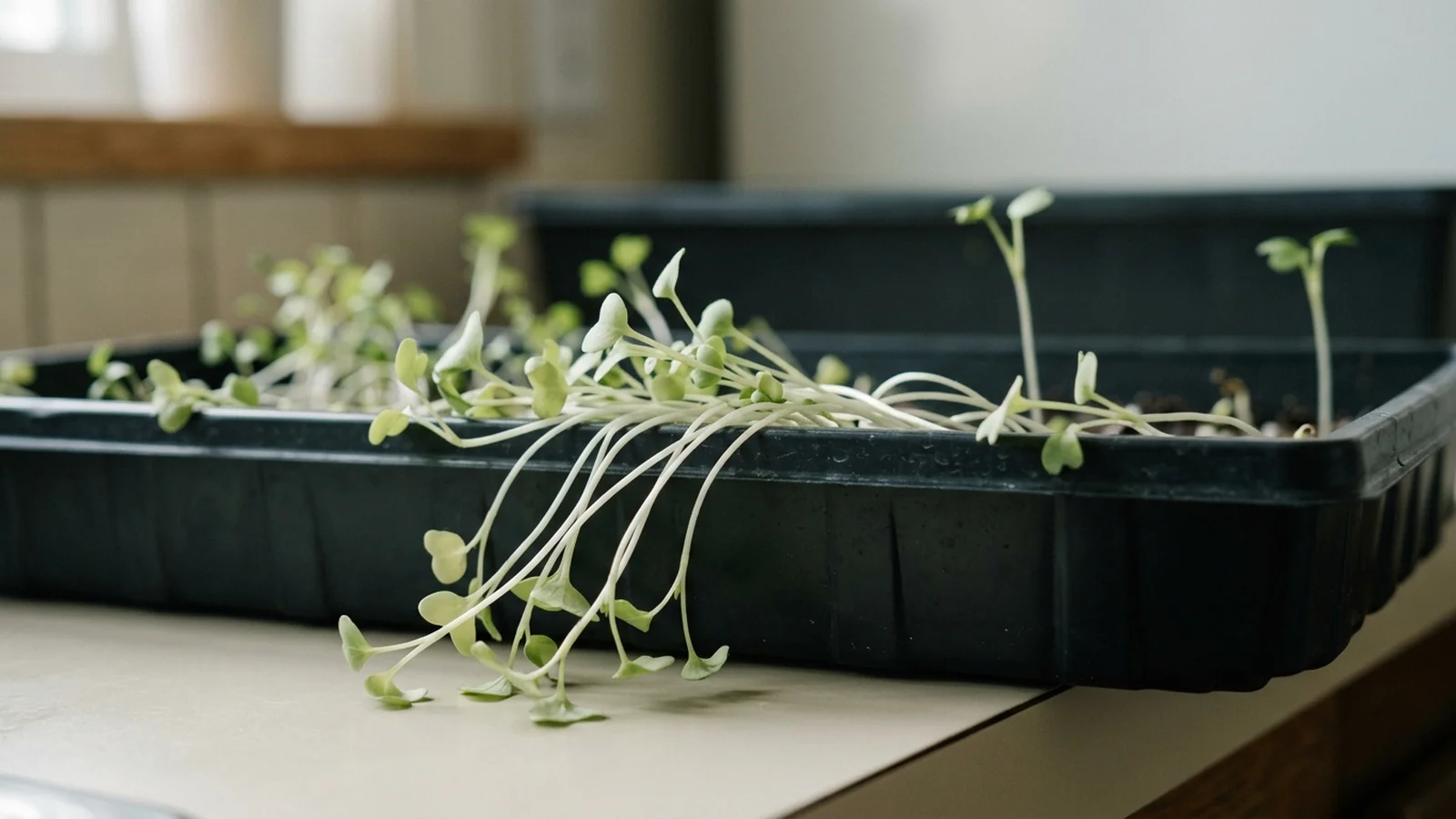
A collapsed tray is not always damping-off. The stem at the medium line tells you whether the fix is more light, gentler watering, or the compost bin.
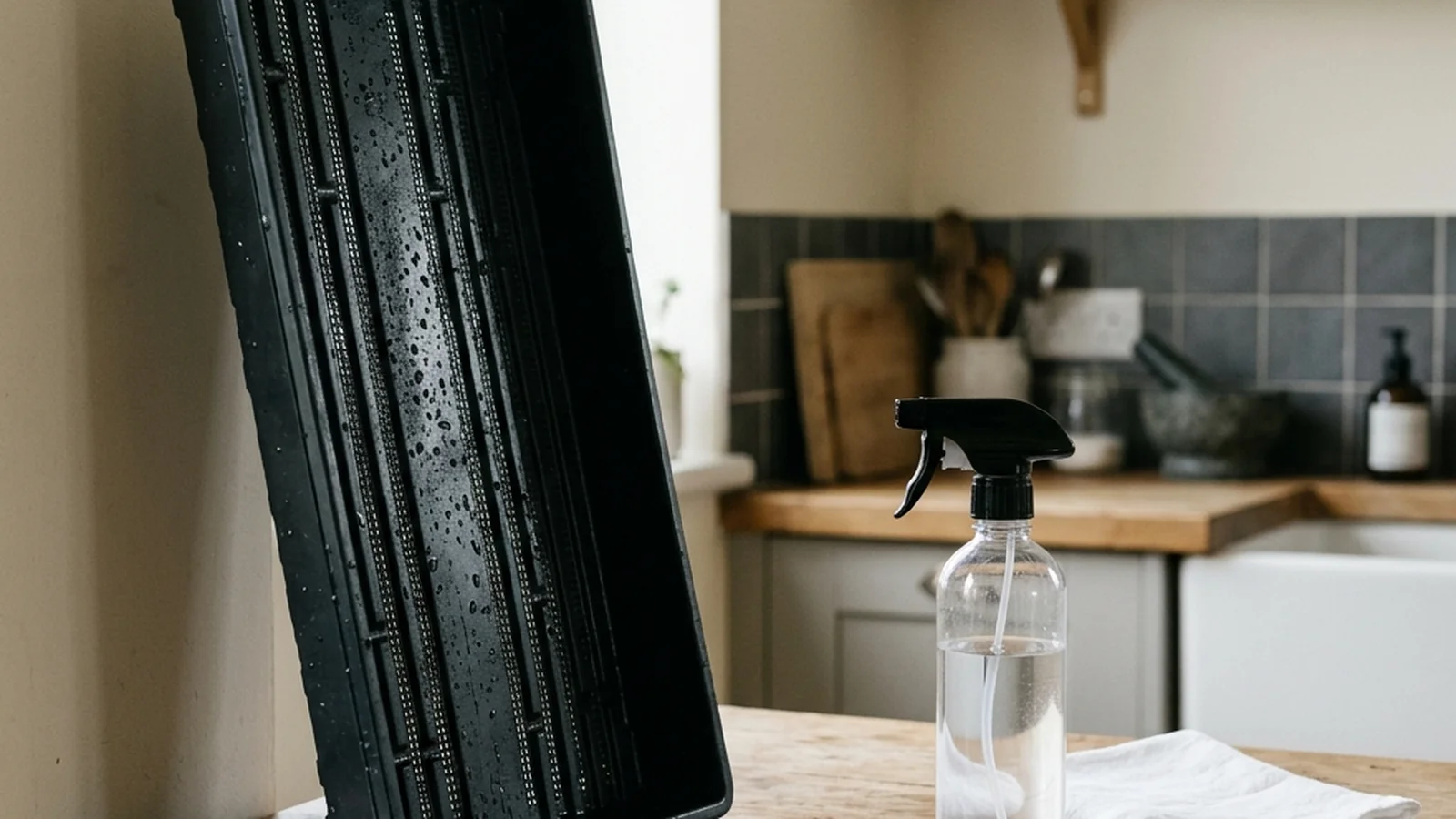
Sprout recalls do not automatically make microgreens risky. The harvest method is what separates them, and one hydroponic setup can erase that gap.
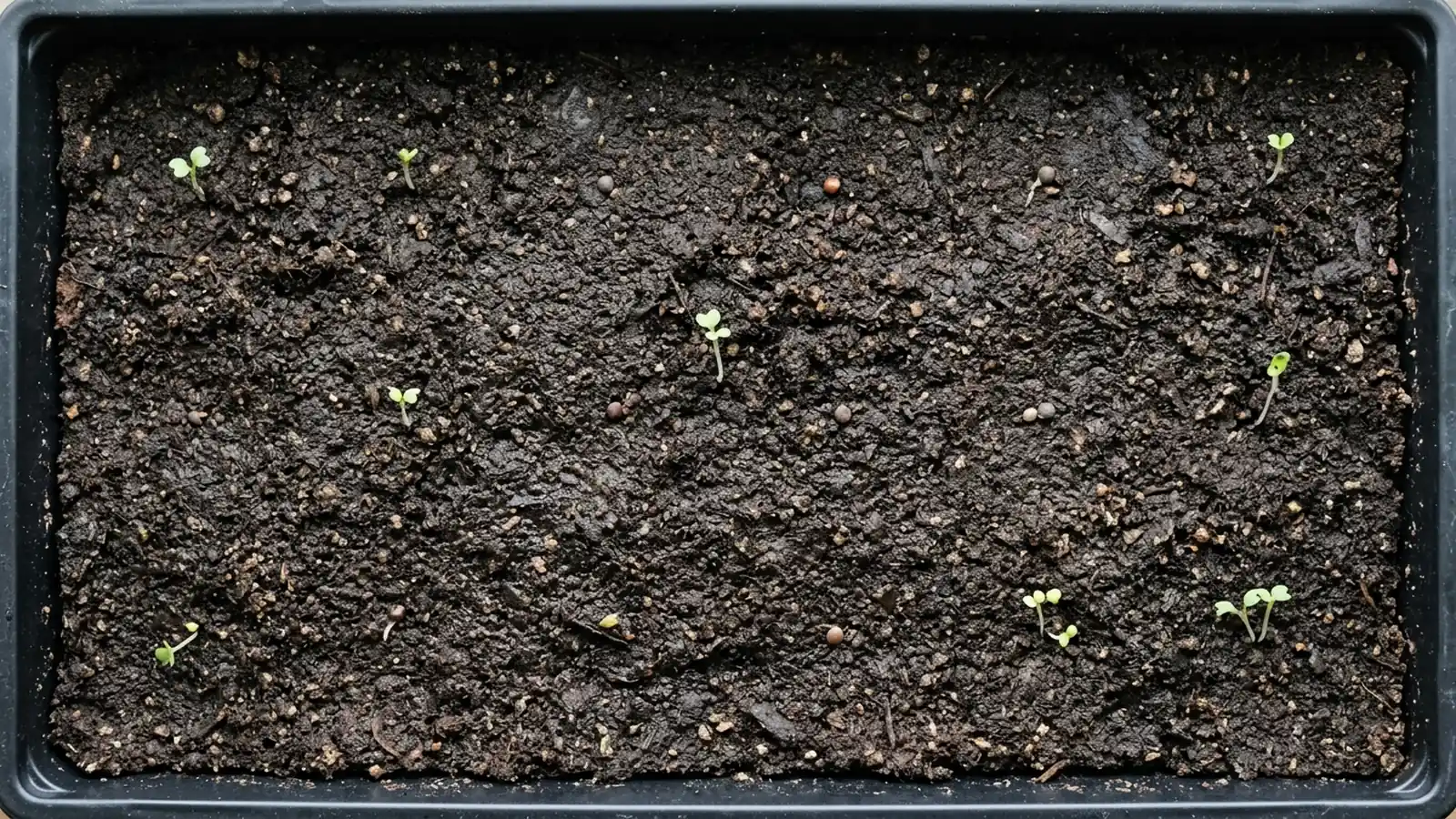
A bare tray after a few days is usually not a dead batch. Most cases trace to timing, a cold room, or moisture - work through the list before assuming the seed failed.
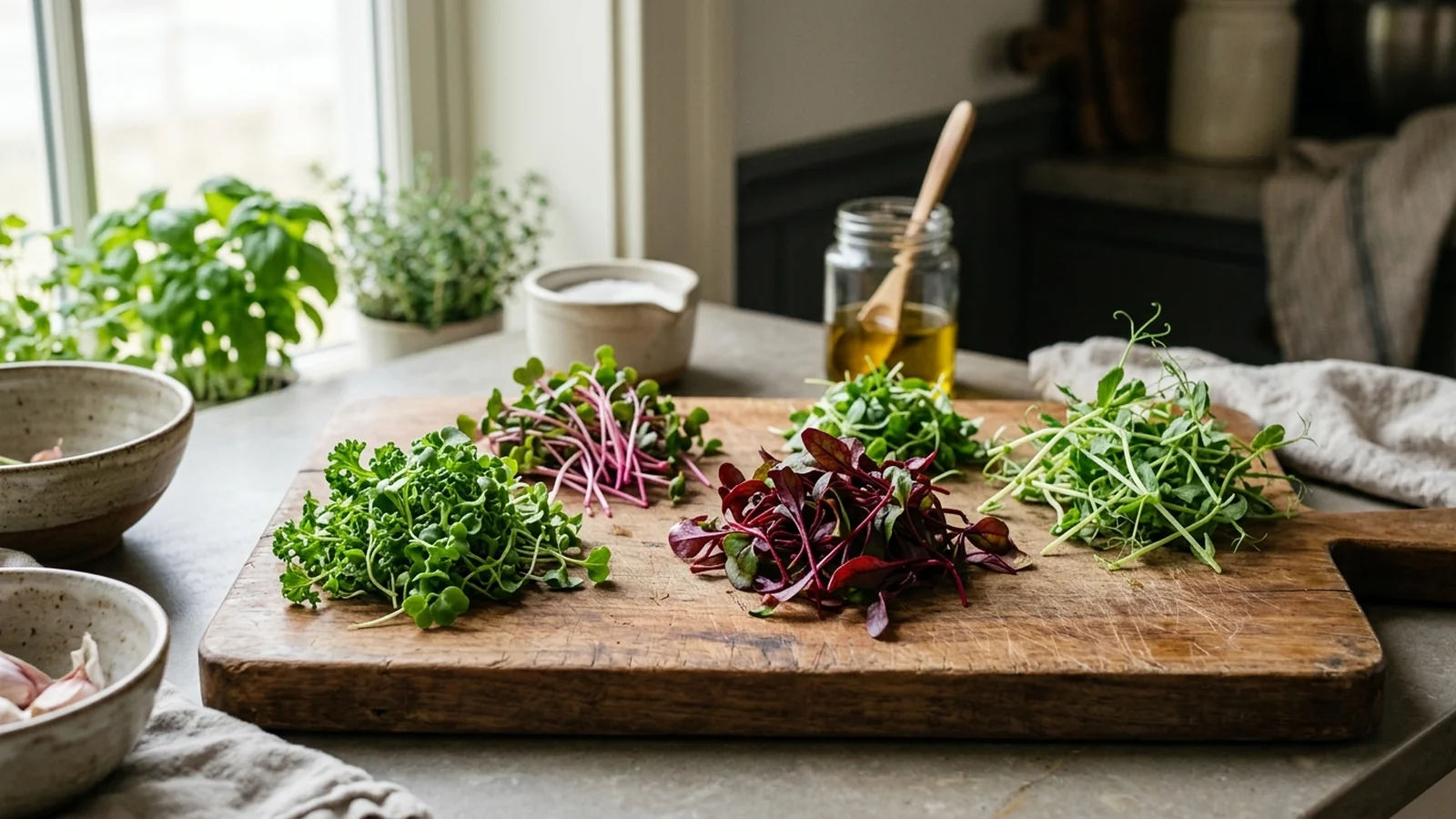
The number gets repeated everywhere, usually stripped of the two words that make it accurate: one nutrient, one crop. Here is what the underlying study actually found, and what that does and does not tell you about eating microgreens.
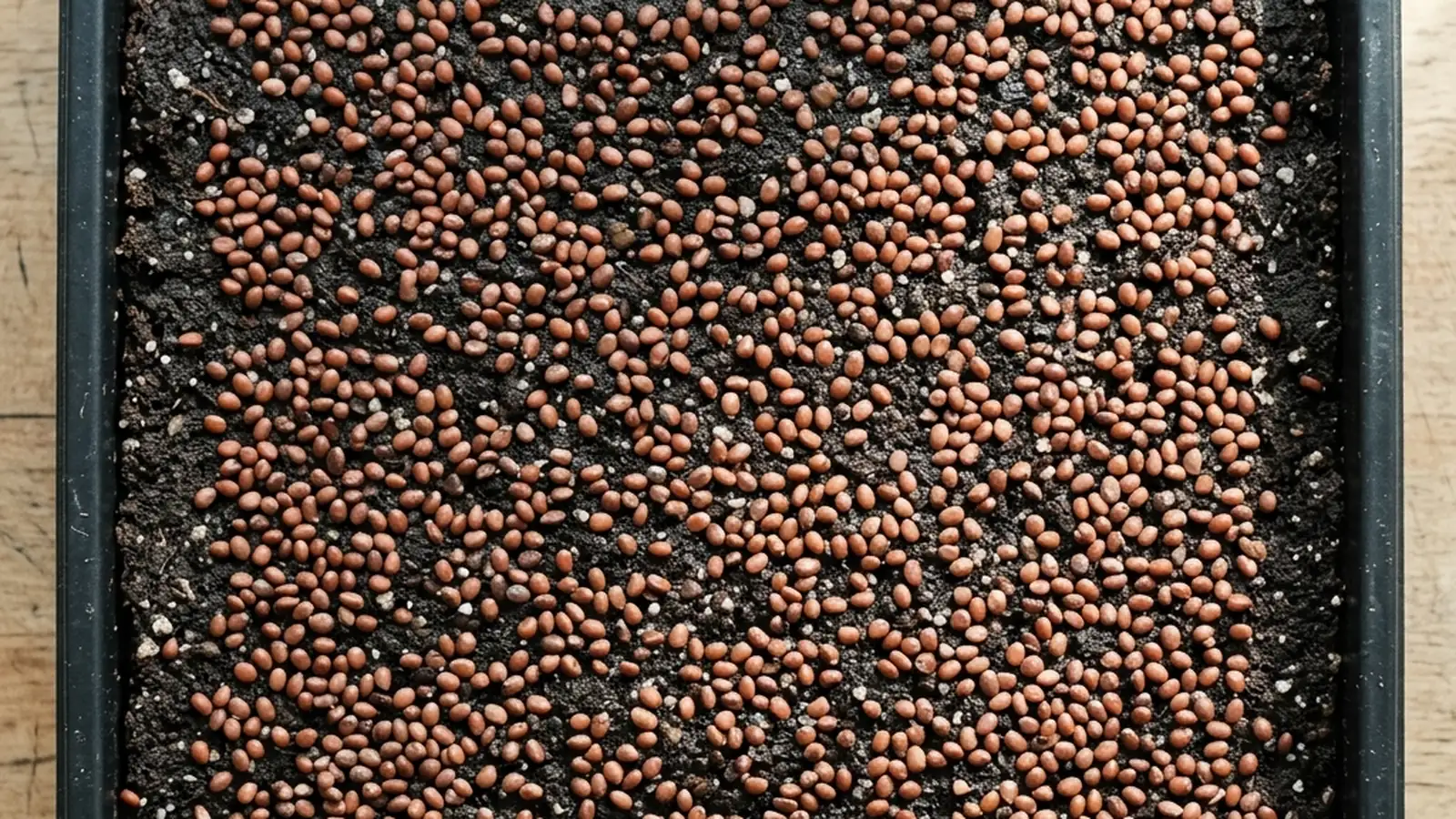
Seed density is the one variable that decides whether a tray comes up as an even carpet or a patchy, mould-prone mat. Here is how to calculate it from your own seed.
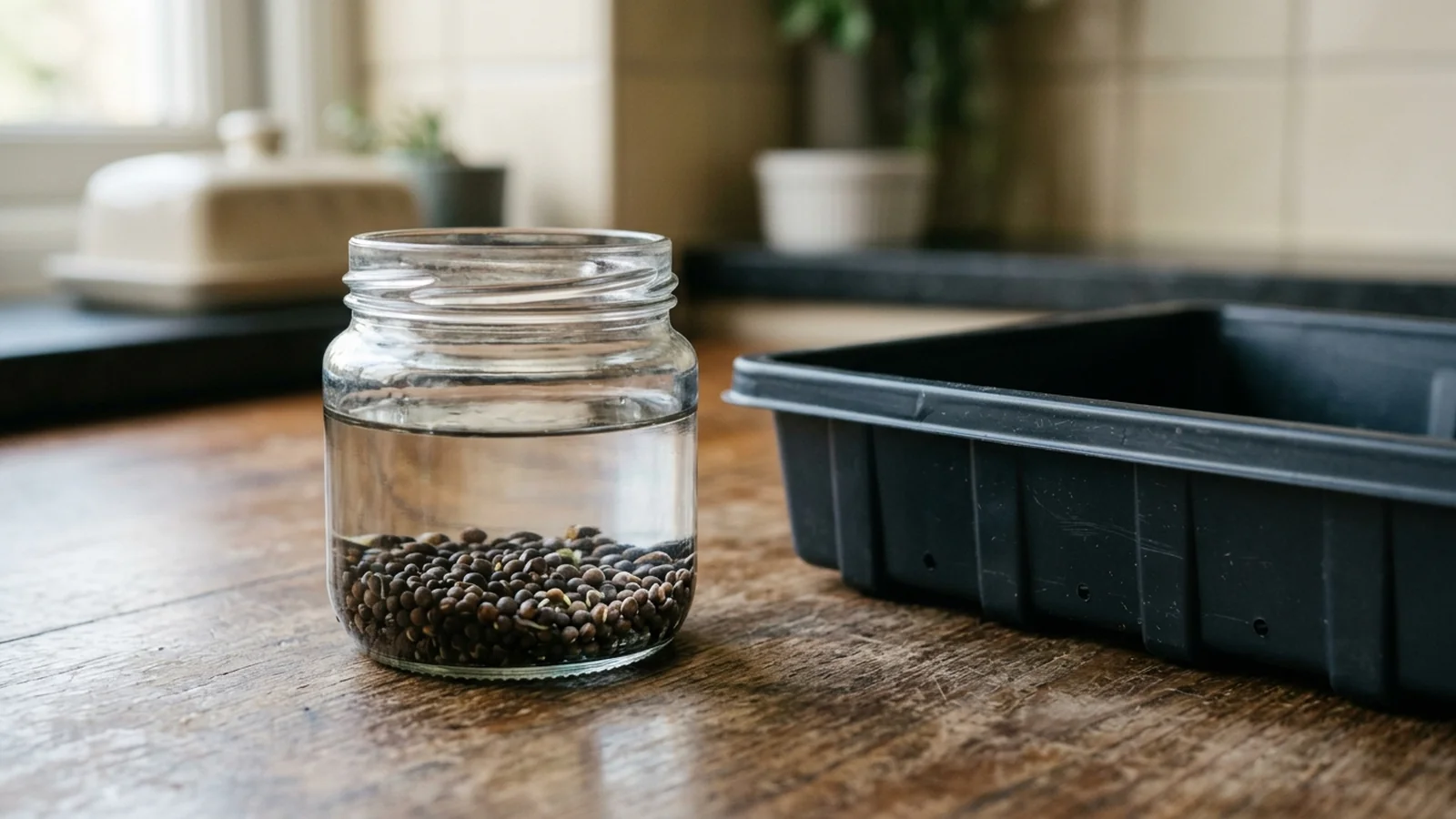
Soaking is not a step every crop needs. Two extension sources cover it — one general rule and one per-crop protocol — and they agree with each other.
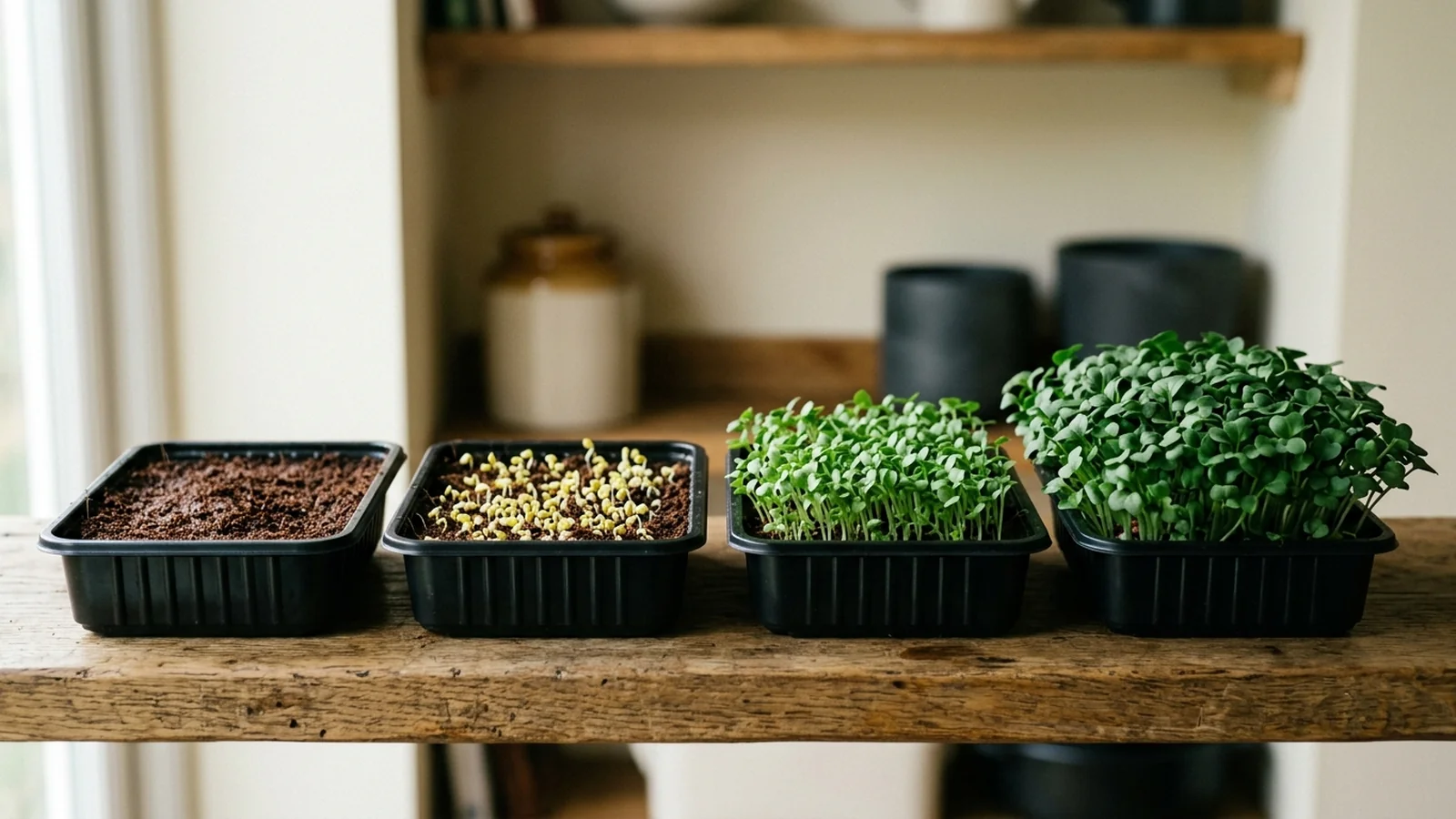
A tray's calendar depends on the crop in it. Enter a sow date and a variety below and get the blackout, light and harvest dates worked out for you, plus the numbers behind them.
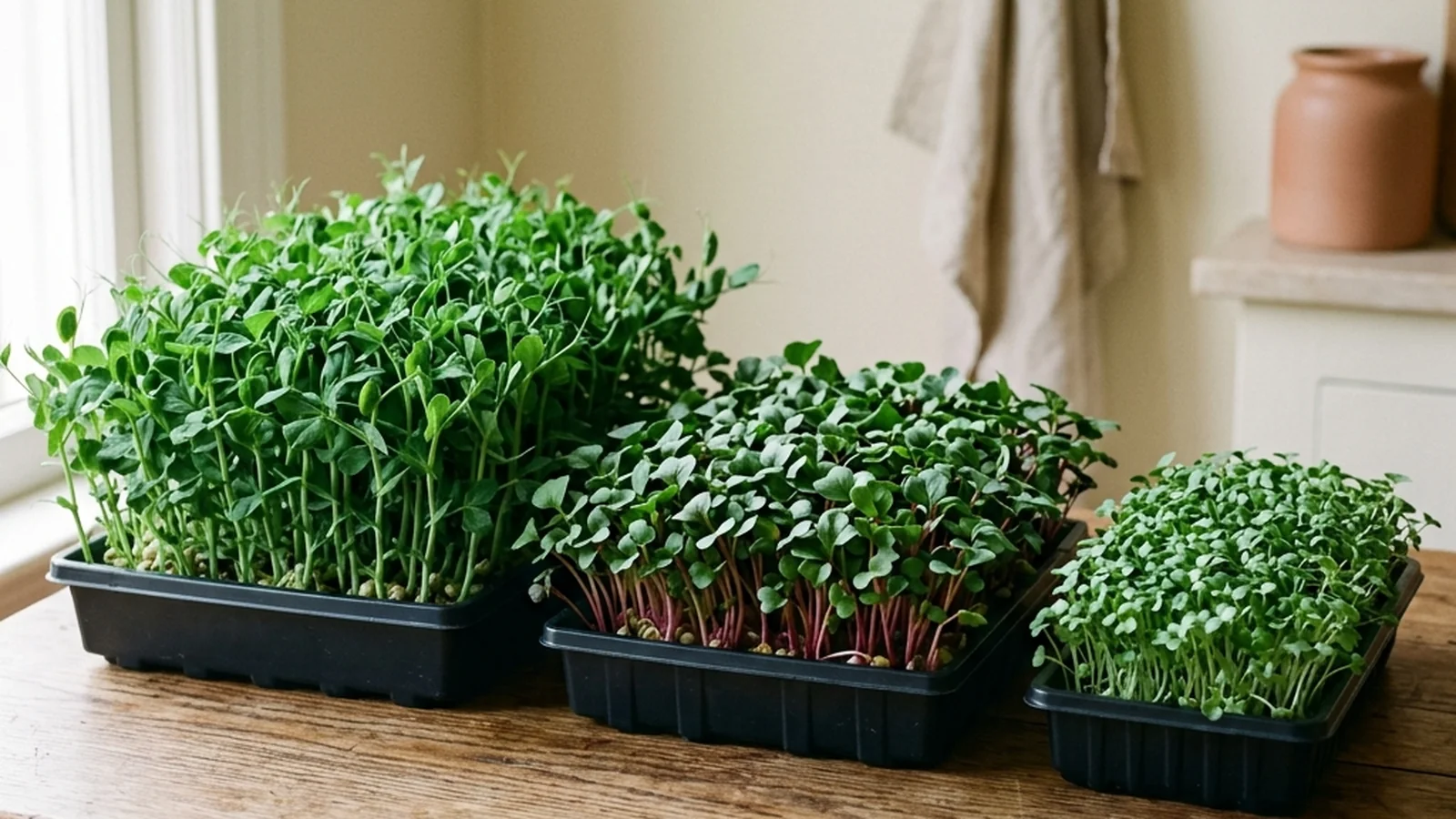
One tray of microgreens can weigh anywhere from 47 to 201 grams at harvest depending on the crop, and the tray size behind that figure matters as much as the crop itself.
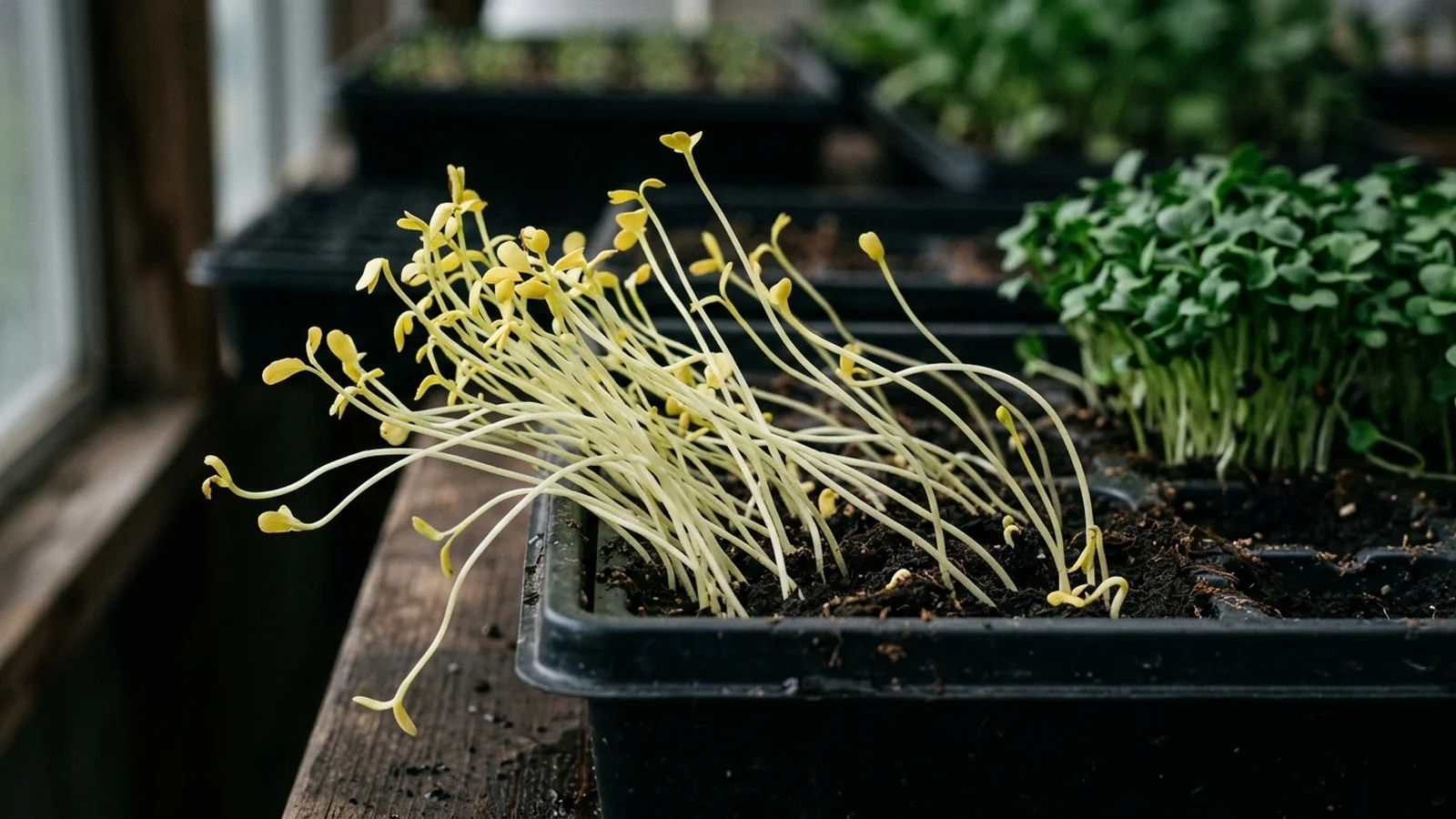
Pale, yellow, leggy microgreens right after you lift the cover are usually fine. Here is how to tell that from a light problem, a crowded wet tray, or disease.
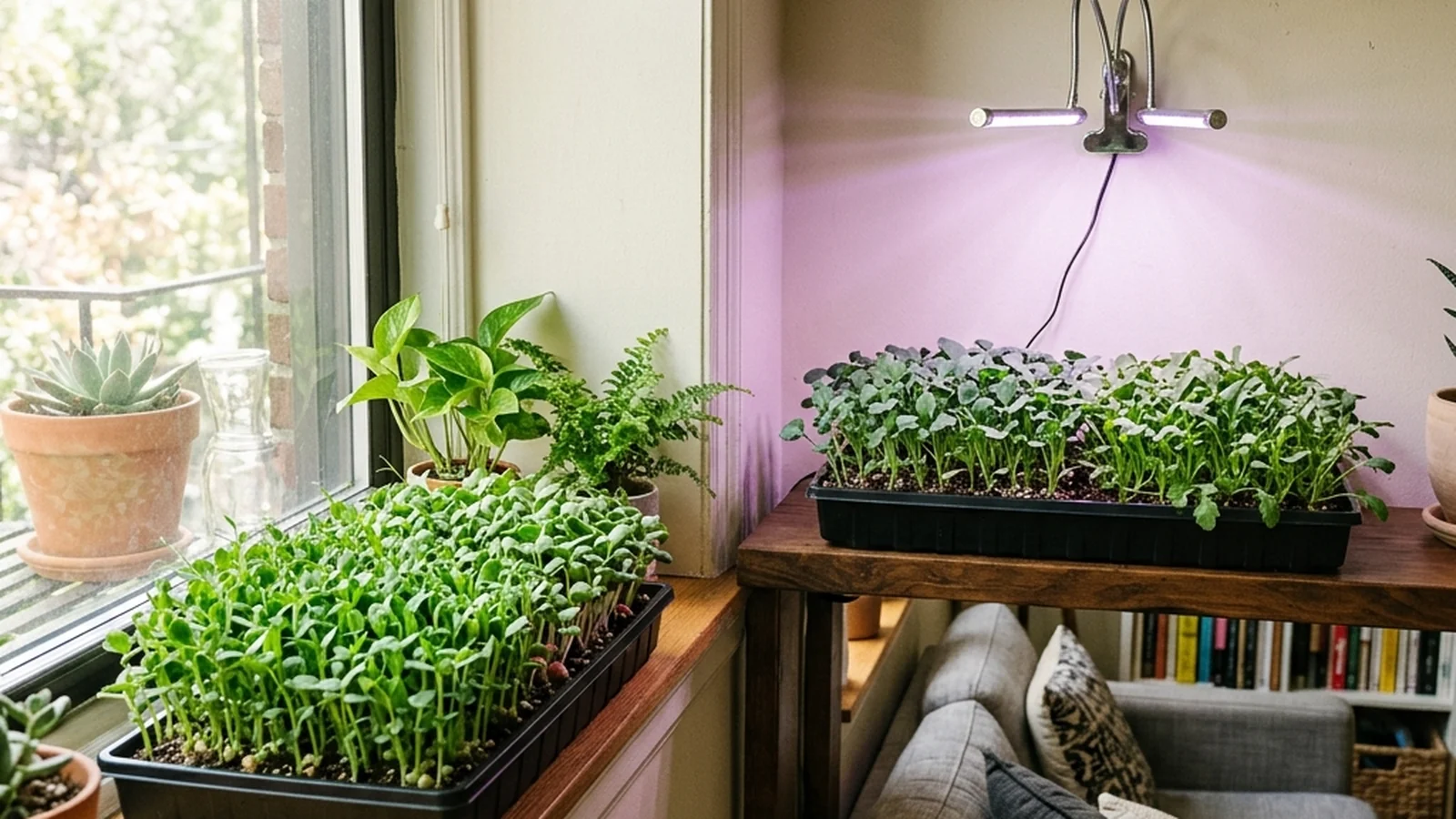
A grow light is not the default requirement it looks like online. This is the decision page: what a window can do for microgreens, and the point where it can't.
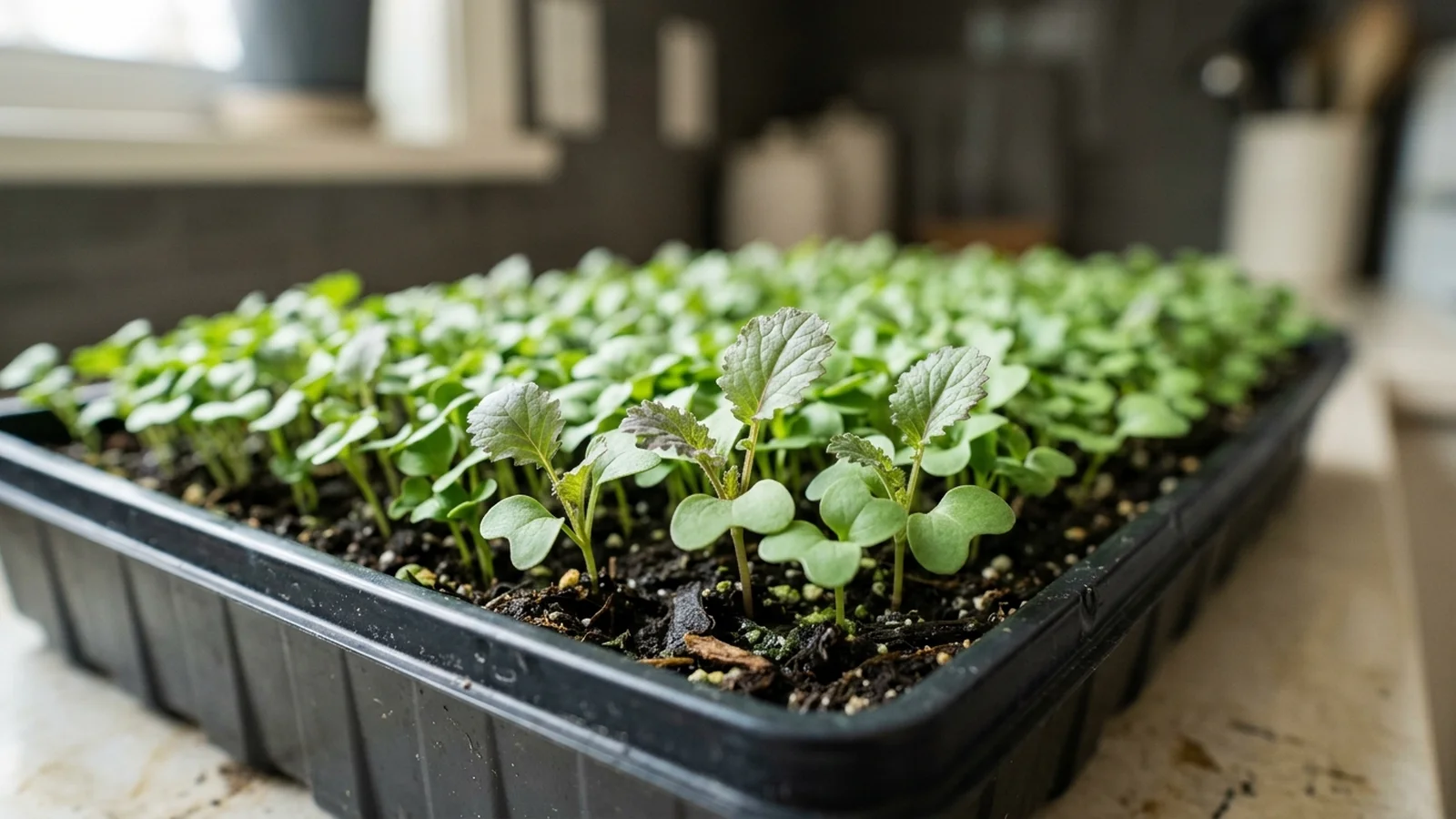
Mustard is the brassica people either love or badly over-sow. Sown like broccoli, a full tray delivers far more heat than most first-timers want.
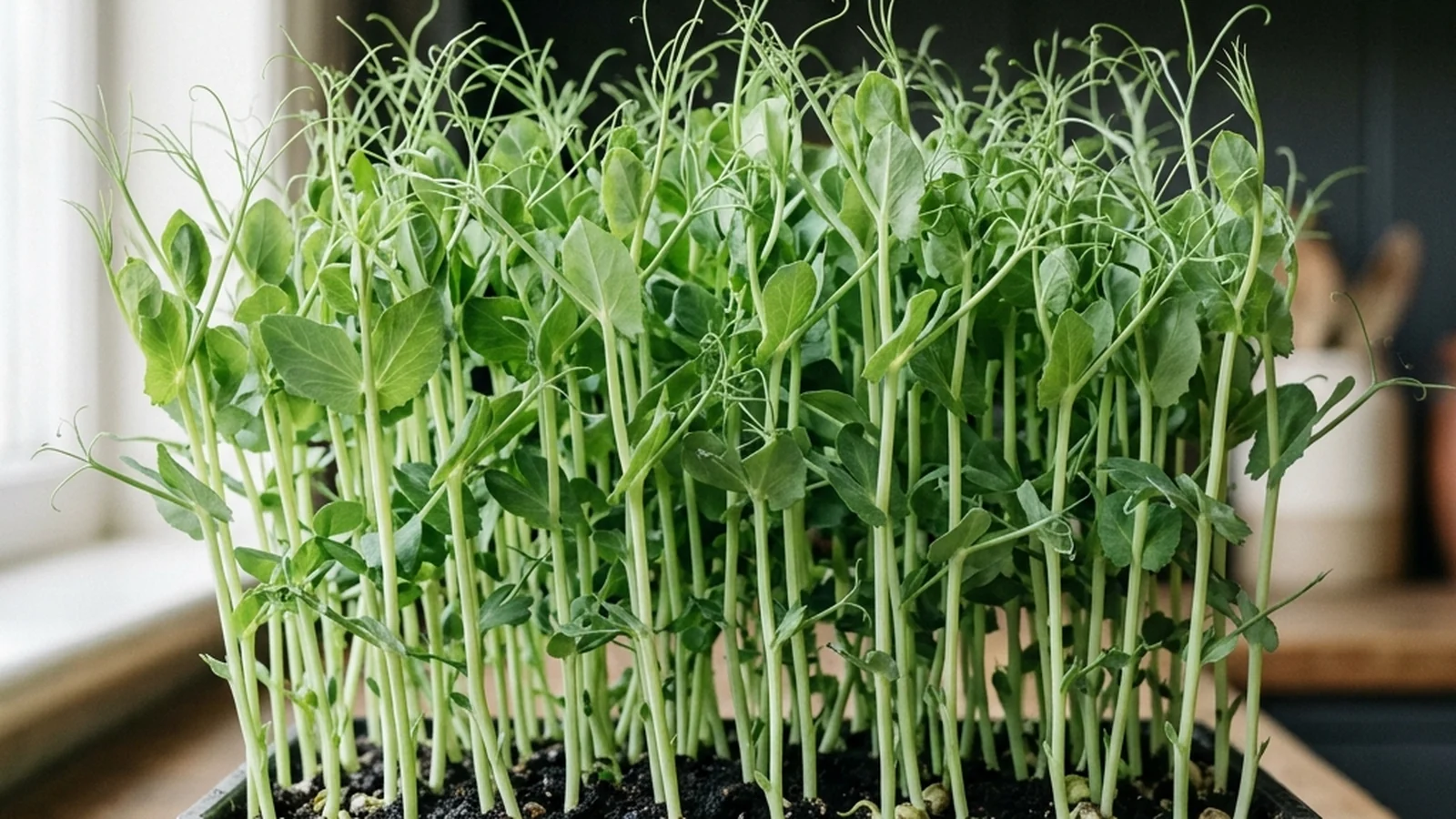
Pea shoots are the one microgreen documented to regrow. Here is the realistic day-by-day timeline, the long soak they need, and exactly where to make the cut.
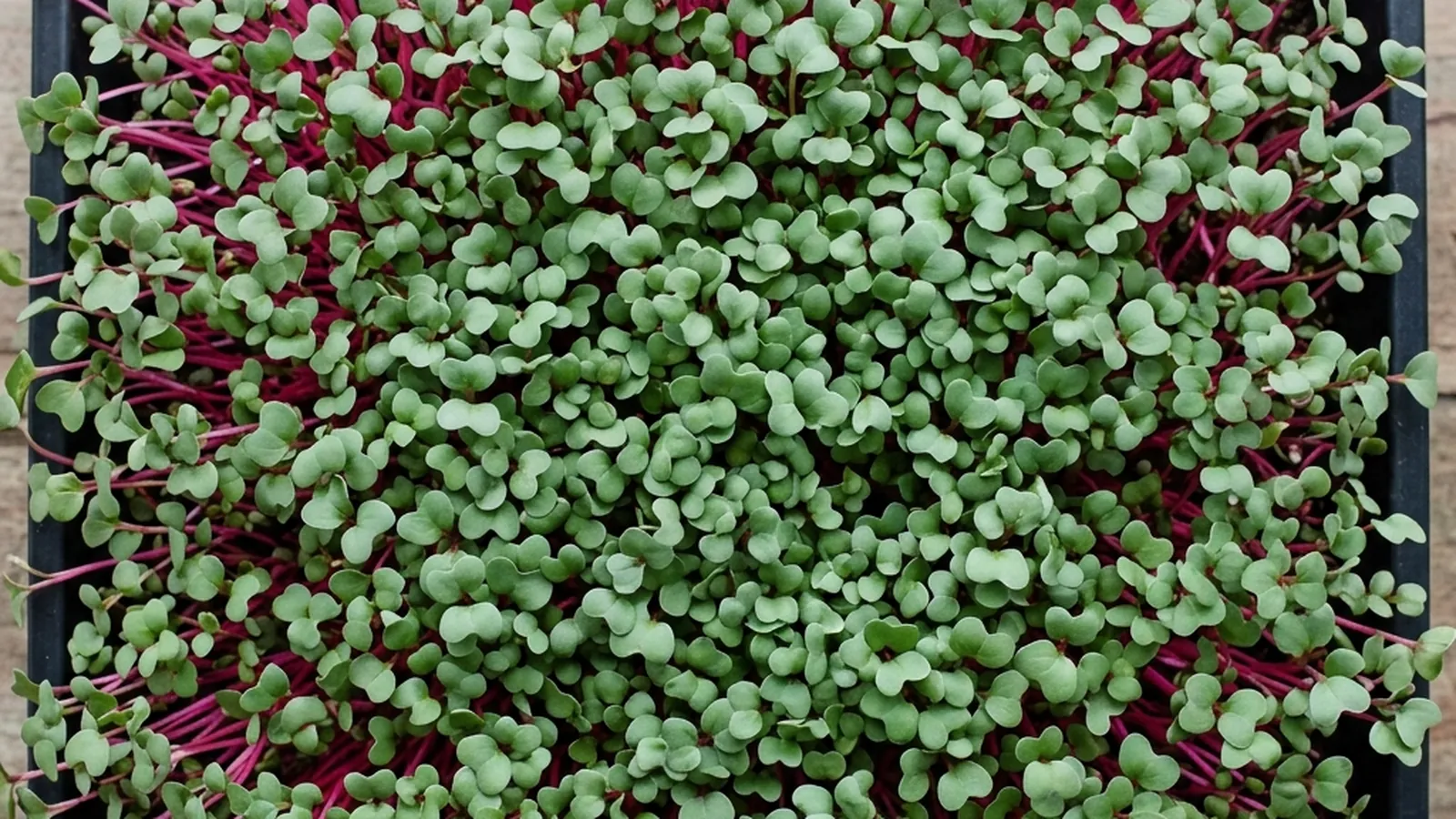
Radish is one of the fastest common microgreens, which is why it works as the benchmark crop for beginners. Here is the realistic week it takes, stage by stage.
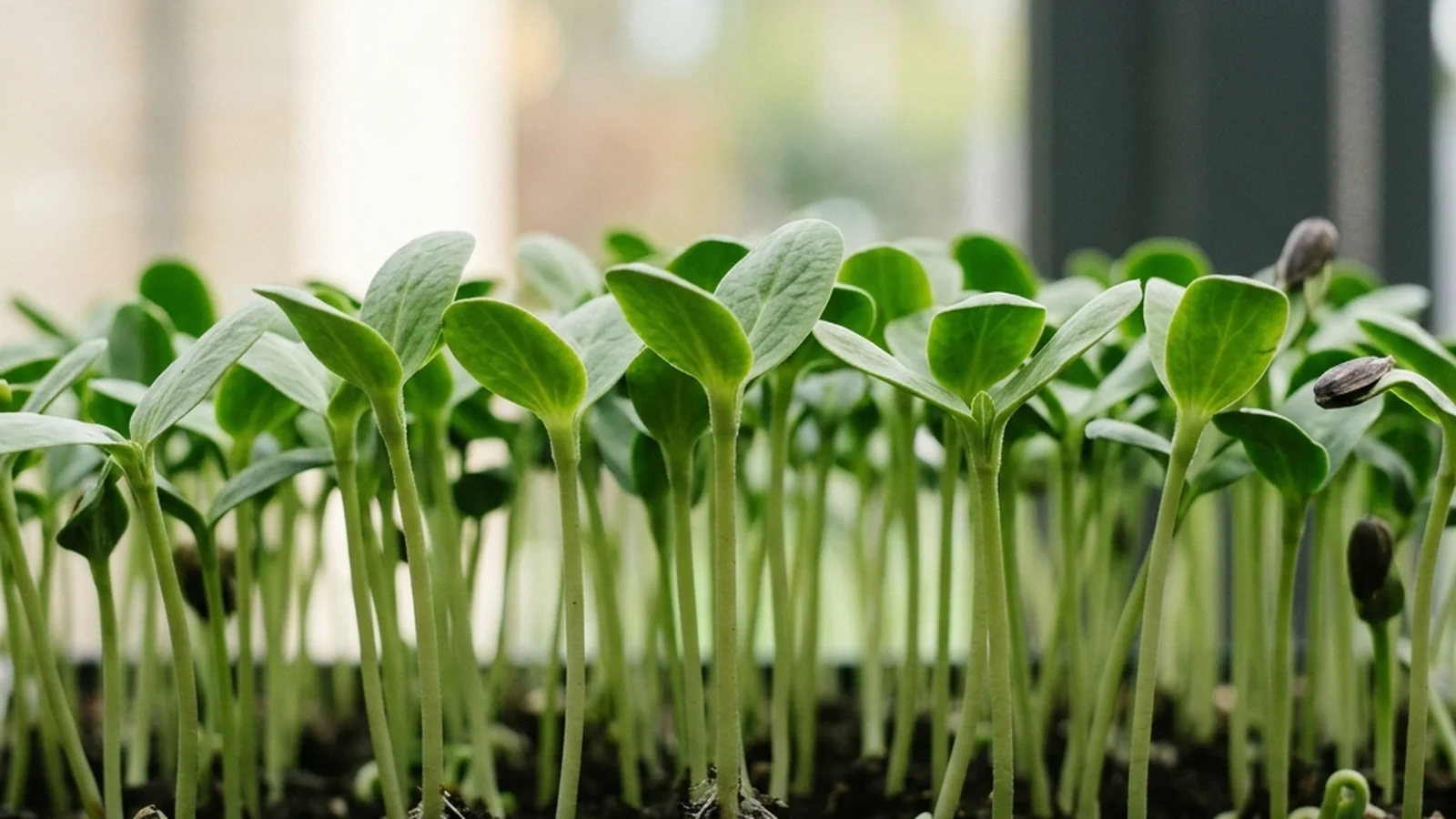
Sunflower microgreens follow the same basic method as other crops, but the seed changes the process — a real presoak, a heavier blackout weight, and hulls that often do not let go of the cotyledons on their own.
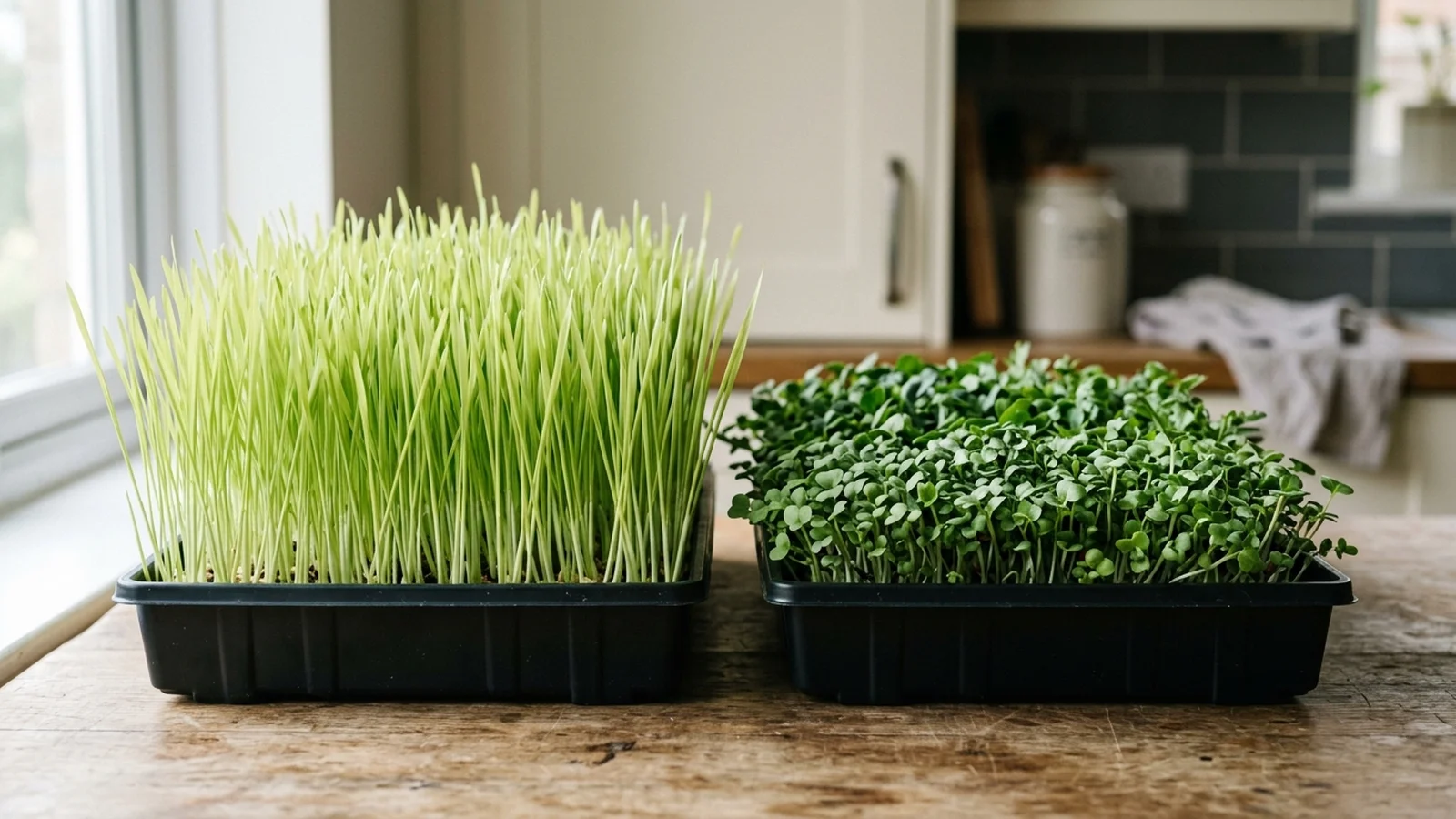
Same seed tray, same water, two very different harvests. The line between wheatgrass and microgreens comes down to one decision: are you eating the leaf, or juicing it?
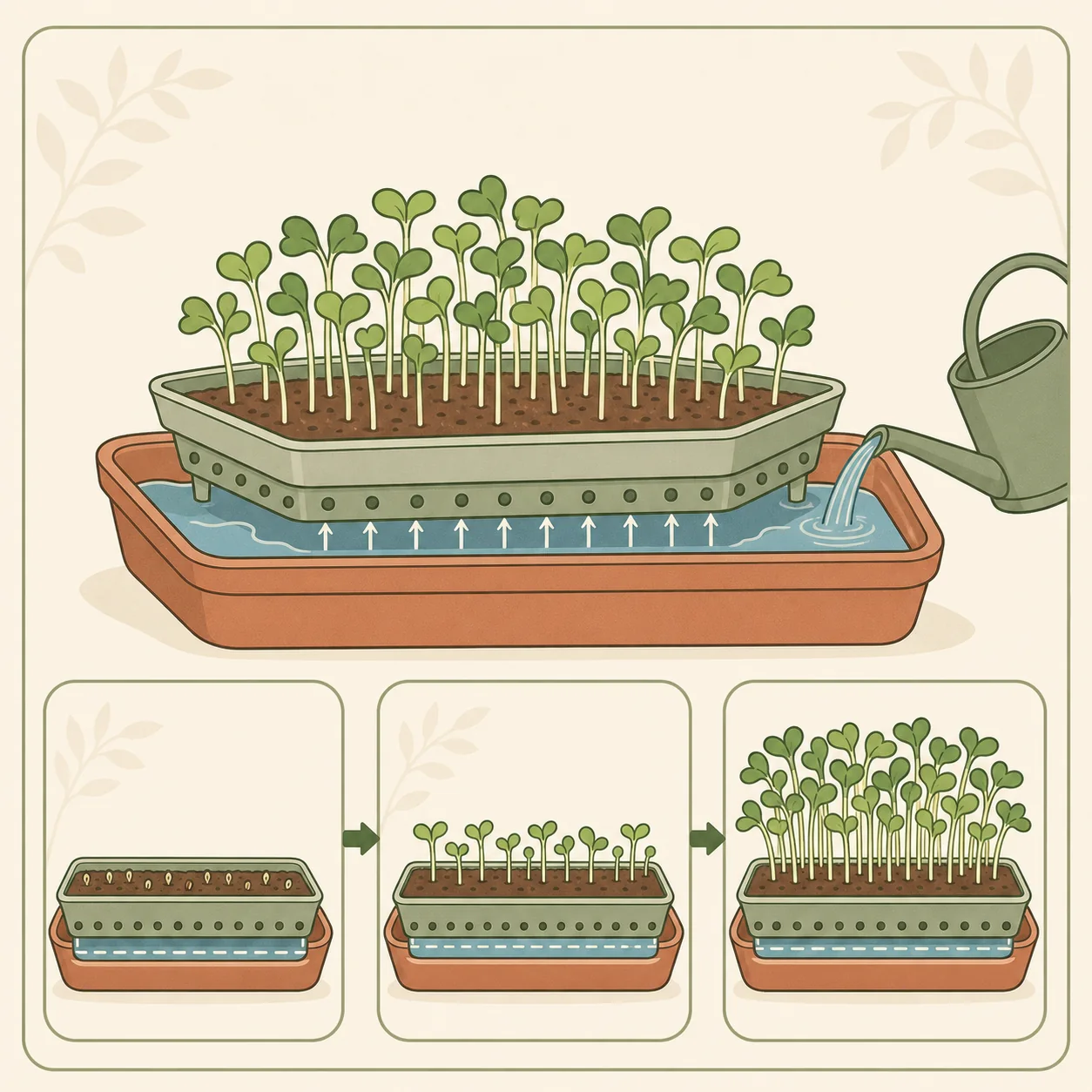
Bottom watering is a controlled transfer, not permanent standing water. Add a measured amount, let the medium absorb it, and drain what remains.
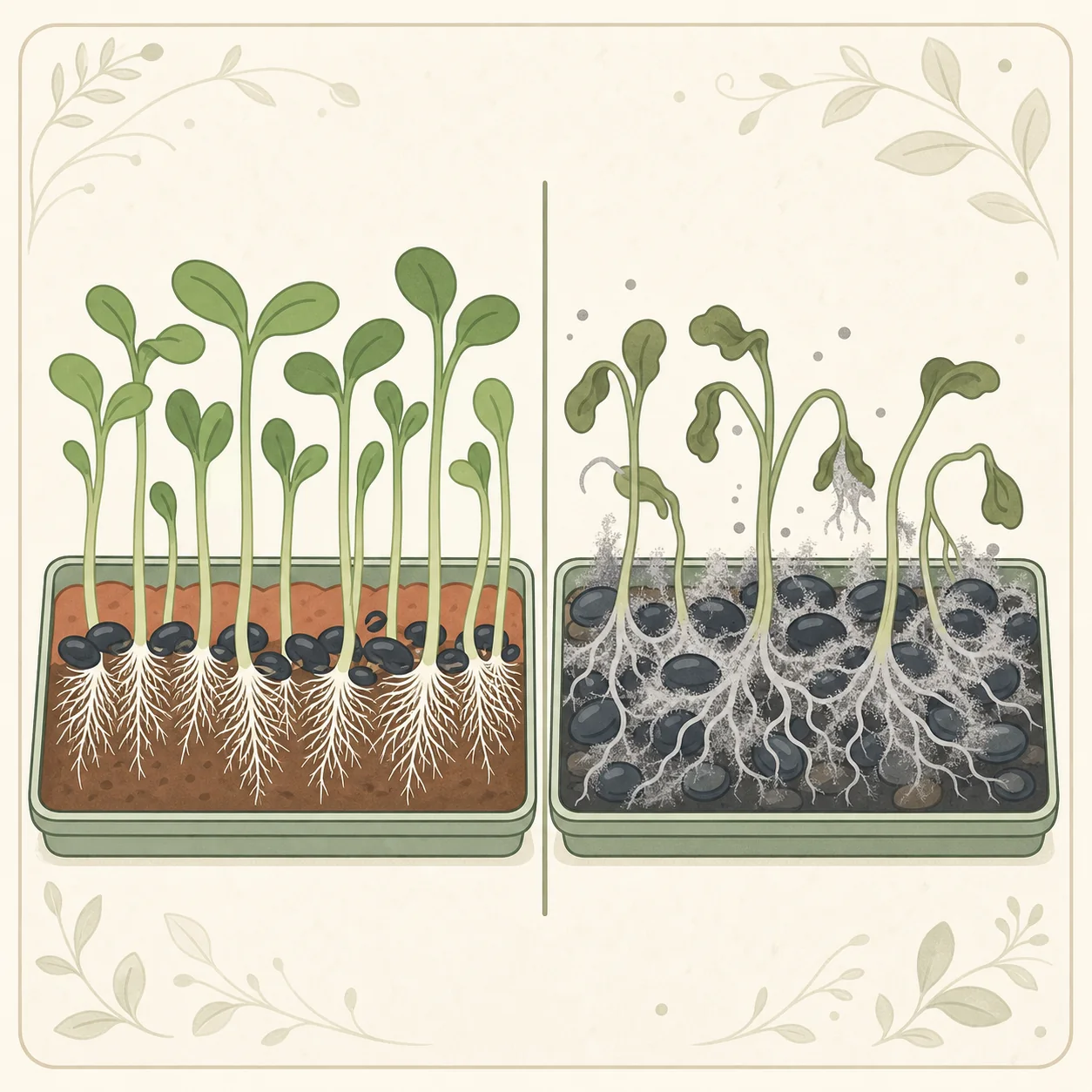
White fuzz around newly emerged roots is often normal root hair growth. Irregular spread, bad odor, slime, or collapsing stems changes the decision.
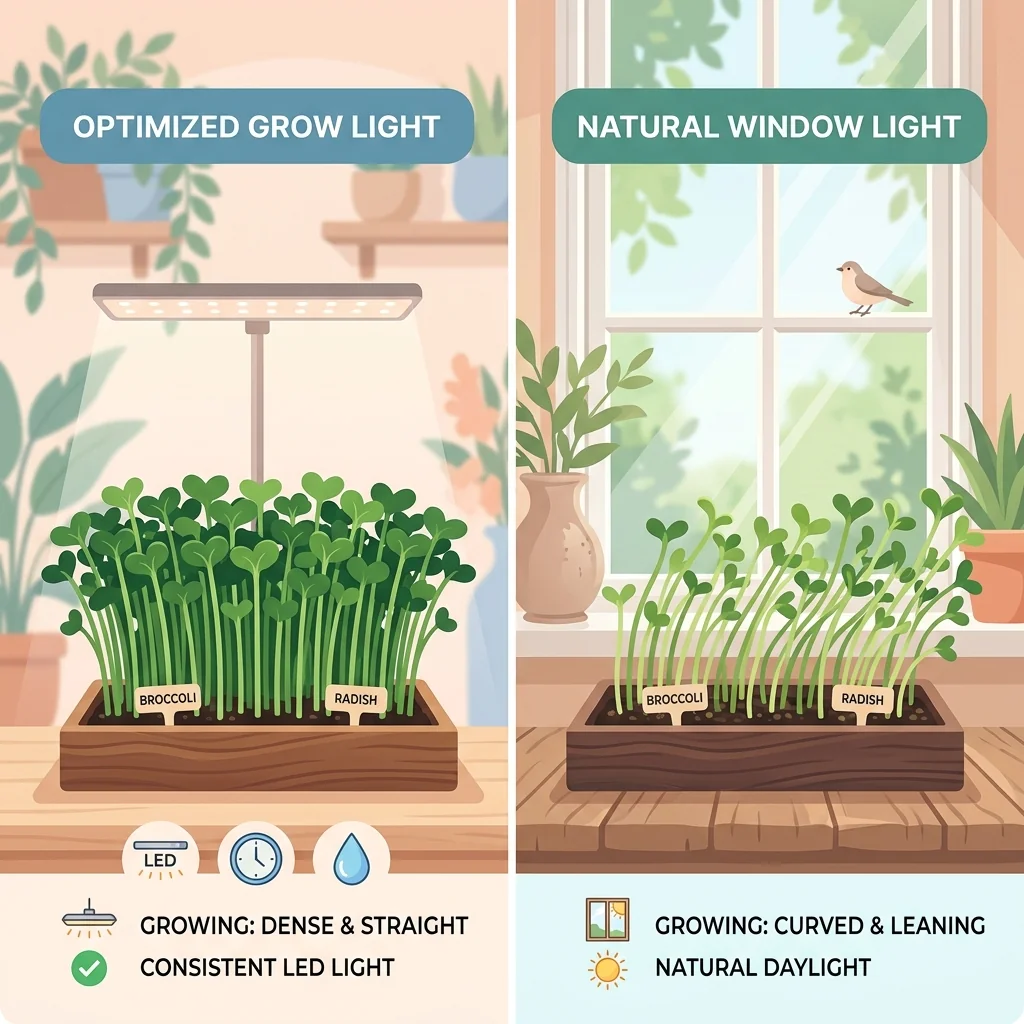
Microgreens are kept dark to germinate, then need good light to stay short and green. Here is how much light they need and the simplest windowsill or LED setup.
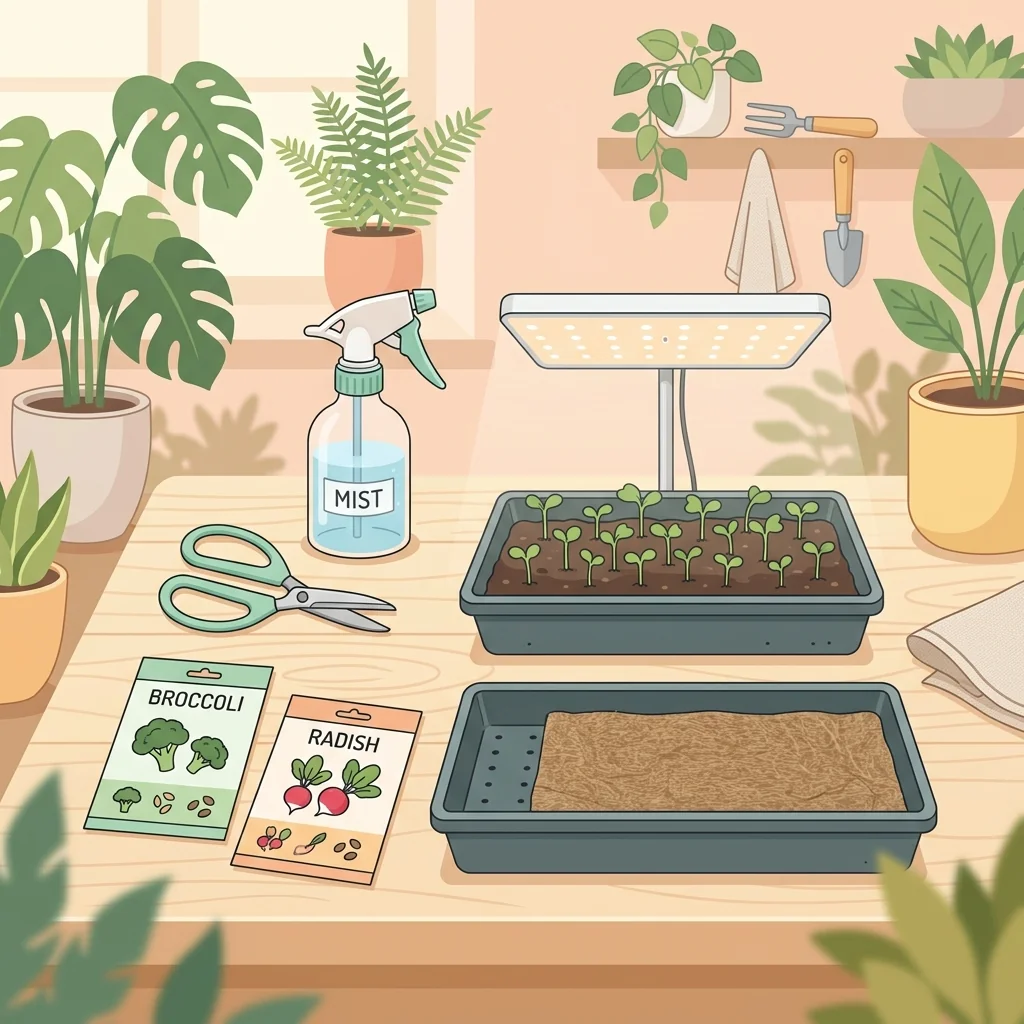
The microgreens supply list is short: tray, medium, seeds, spray bottle, light, scissors. Here is exactly what to get for your first setup and what not to waste money on.
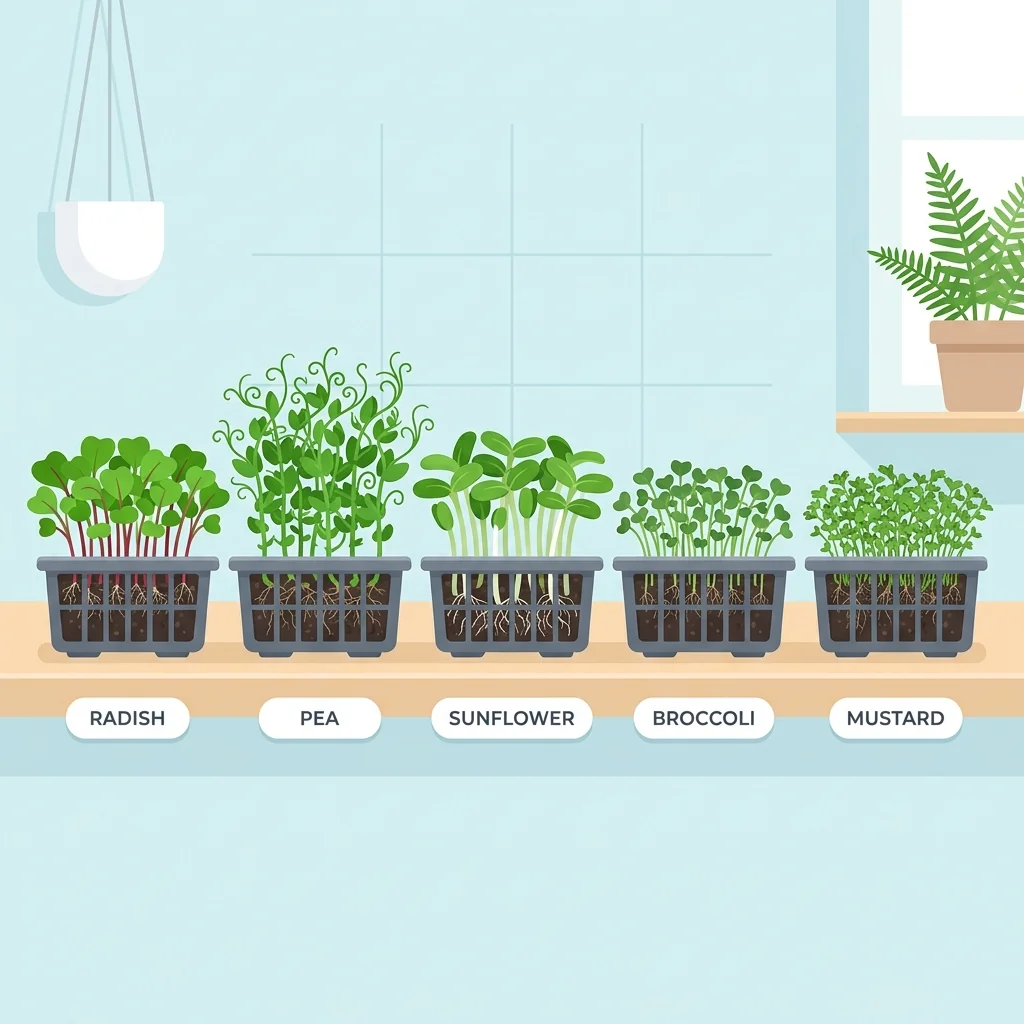
Start with microgreens that germinate fast and forgive mistakes. Radish, peas, sunflower, broccoli, and mustard are the easiest first trays, ready in about a week.
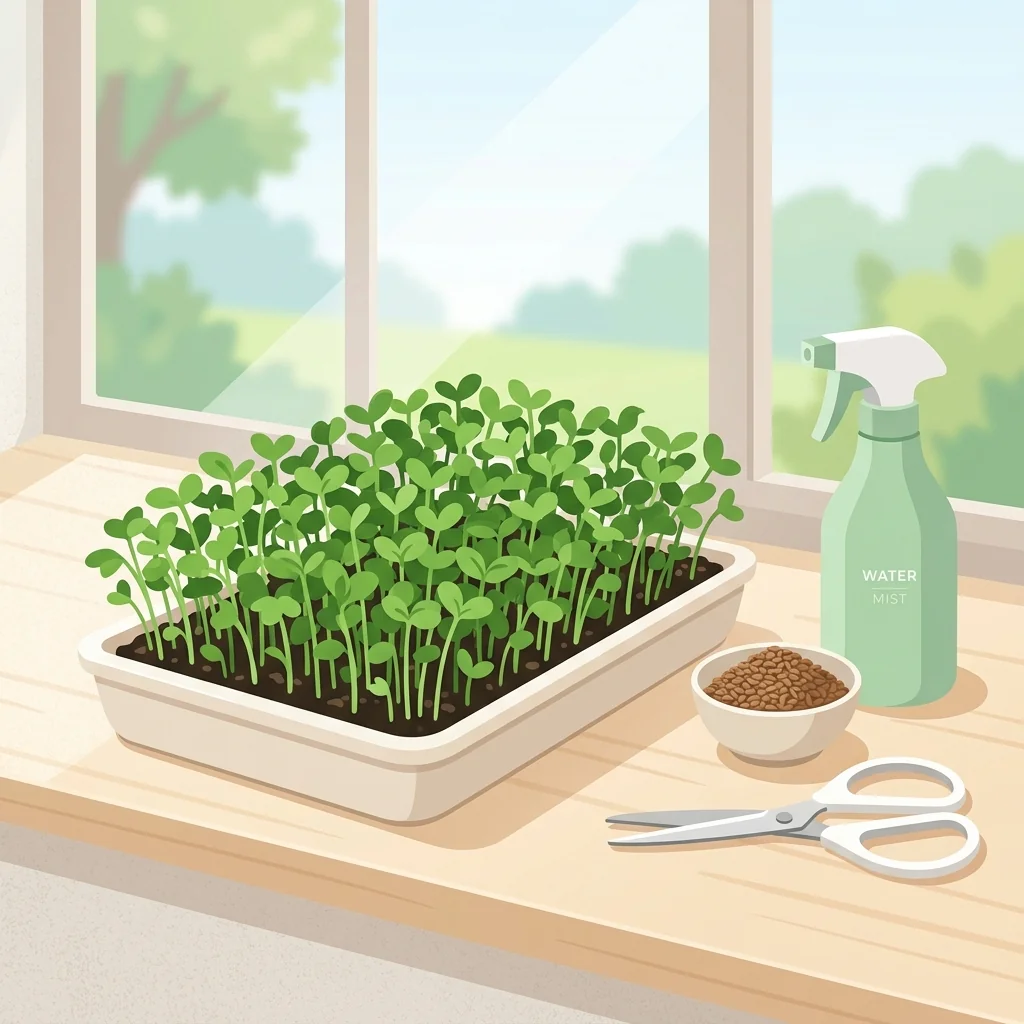
Microgreens are the fastest crop you can grow indoors. This beginner guide walks through sowing, watering, light, and harvesting your first tray in about ten days.
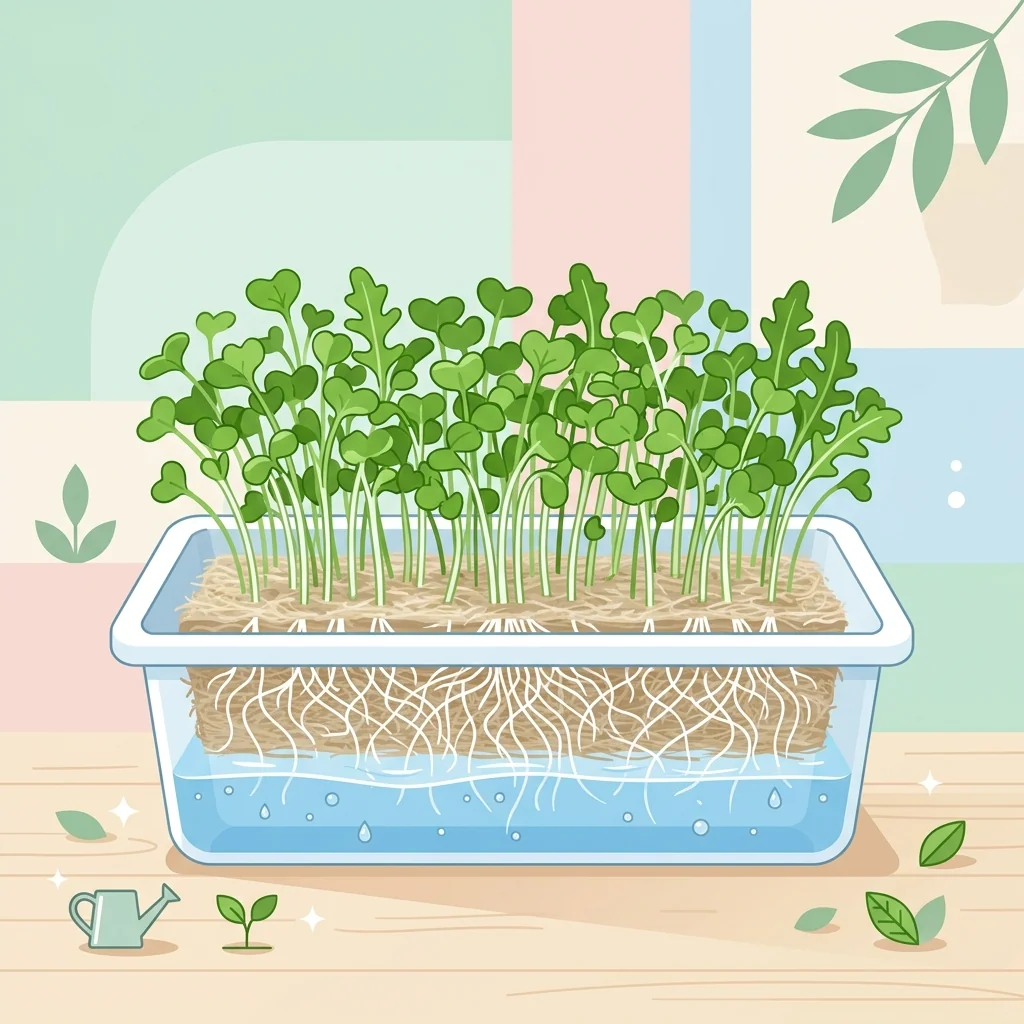
No soil, no mess. Grow microgreens hydroponically on a grow mat or pad for clean, tidy trays indoors. Here is how the soil-free method works and where it shines.