
A practical way to match balcony zones to herb choices
| Balcony condition | Herbs that usually fit best | Main watch-out |
|---|---|---|
| Hot, sunny edge | Thyme, oregano, rosemary | Small pots can dry too fast |
| Bright zone with a little shelter | Basil, parsley, chives | Crowding increases watering volatility |
| Bright but slightly softer corner | Parsley, chives, mint | Growth slows if the light is weaker than it looks |
| Windy exposed spot | Only hardier herbs in heavier pots | Light pots dry out and tip easily |
A balcony herb garden works best when it is treated like a small outdoor system, not like a decorative afterthought. Beginners usually struggle for predictable reasons: the herbs are mismatched to the light, the pots are too small for the heat, or the layout makes watering harder than it should be. If you want the cluster roadmap first, start with Small-Space Herb Gardening: Start Here for Apartments, Balconies, and Indoor Setups. If the structure of the whole system still feels loose, pair this article with How to Set Up a Small-Space Herb Garden That Actually Works.
The goal is not to pack every inch of the balcony with containers. The goal is to build a herb layout you can actually keep productive through heat, wind, travel days, and ordinary busy weeks.
Quick Setup Logic
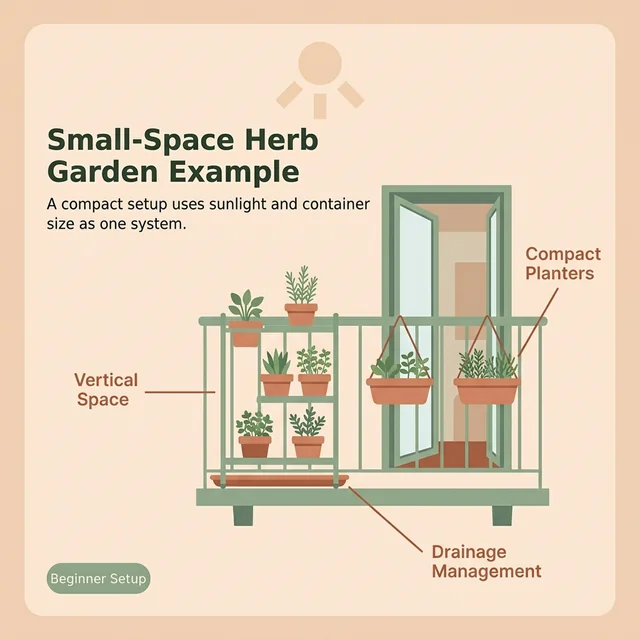
The simplest successful balcony herb garden usually looks like this: three to five herbs, medium-to-large containers with real drainage, one watering checkpoint you can reach easily, and crop placement based on the balcony’s hottest and softest zones.
That sounds modest, but modest is the point. A beginner balcony setup should stay readable. You should be able to tell which pot dries first, which spot gets the harshest afternoon heat, and which herb is failing because the site is wrong rather than because herbs are mysterious.
Read the Balcony Before You Buy
Balconies create microclimates. One corner may receive hard afternoon sun, reflected heat, and wind. Another may be bright but protected. A railing planter may dry twice as fast as a pot against the wall. If you treat the whole balcony like one uniform zone, the care routine gets confusing very quickly.
Check four variables first
Before buying herbs, look at:
- how many hours of direct sun the balcony actually gets
- whether the hottest light hits in the morning or afternoon
- how much wind the pots will take
- how easy the plants will be to reach with a watering can
This is the difference between a setup that feels intuitive and one that constantly surprises you. Sun and airflow determine which herbs make sense. Access determines whether the routine stays easy enough to keep.
Split the balcony into working zones
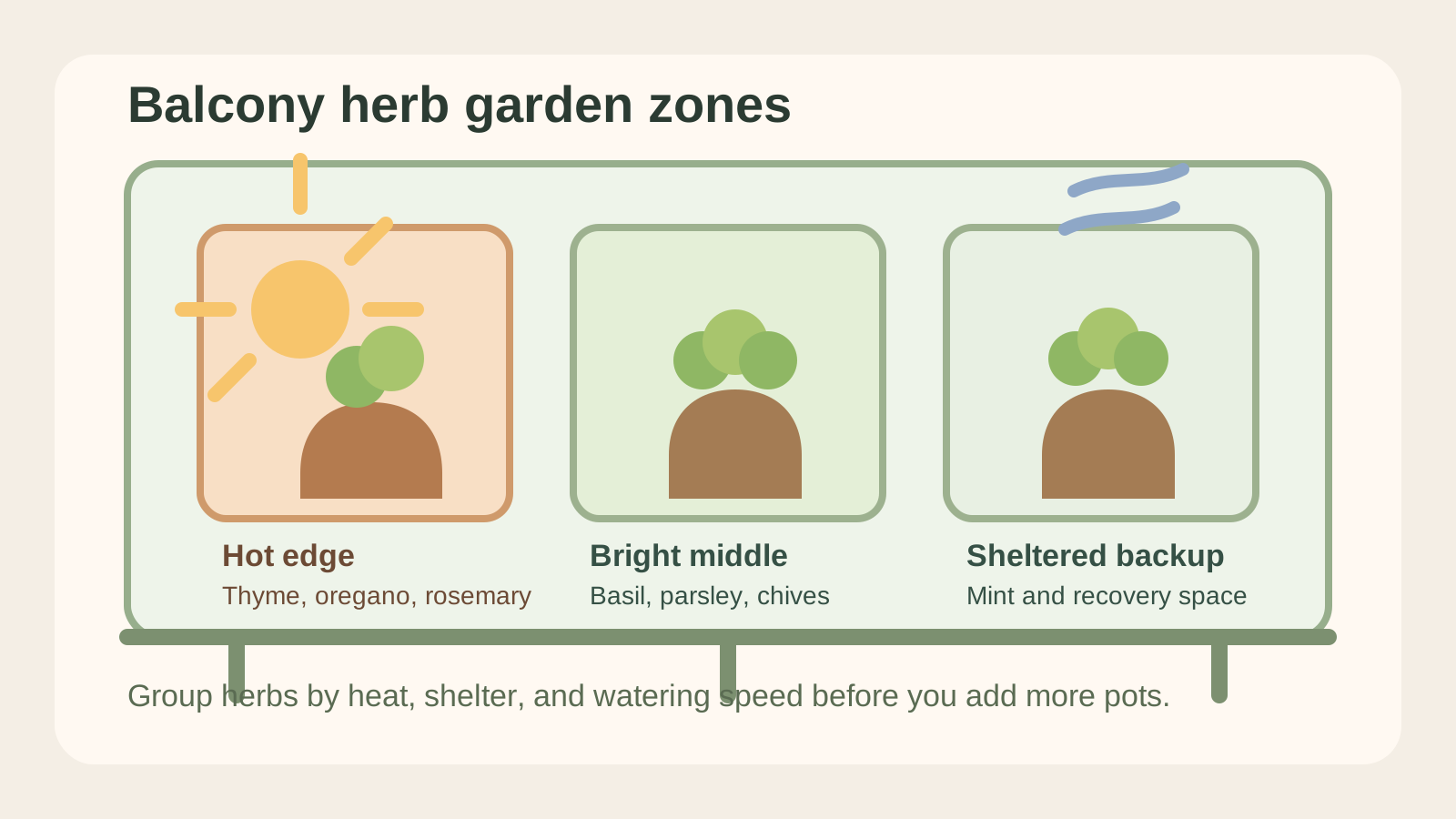
For most beginners, the balcony is easiest to manage when you mentally divide it into three zones: the hottest edge, the bright sheltered middle, and the softer backup area. The hottest edge is usually best for thyme, oregano, and sometimes rosemary. The bright sheltered middle is where basil, parsley, and chives often perform best. The softer area works well for overflow, temporary recovery, or mint that needs light but not the harshest exposure.
That zoning logic matters more than matching pots or building vertical shelves on day one. A herb that fits the right microclimate is easier to water, easier to read, and far less likely to become a rescue project.
Start With a Short Crop List
A balcony can support many herbs, but beginners should not start with many herbs. A short crop list teaches the space faster.
The safest first lineup
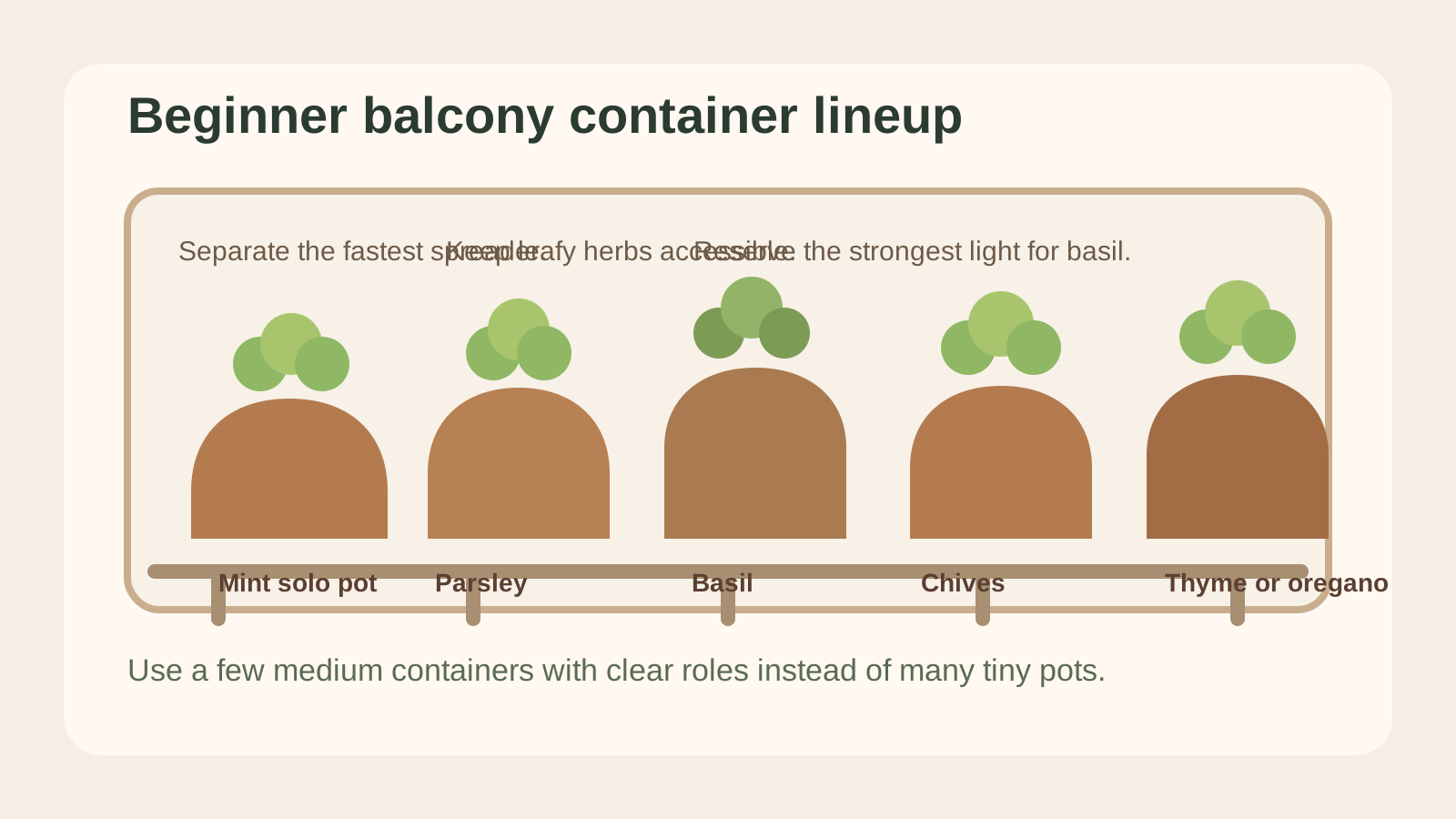
For most balconies, a reliable first group is basil, parsley, chives, thyme, and one separate pot of mint. That gives you a mix of higher-light leafy herbs and tougher sun-tolerant herbs without turning every container into a different problem. If you want a broader crop breakdown, use Best Herbs for Small Spaces: What Grows Well in Apartments, Balconies, and Windowsills.
Keep mint alone. It grows aggressively, drinks quickly, and becomes much harder to manage when it shares root space with slower herbs.
Match herbs to the balcony, not to the recipe list
If the balcony is intensely sunny and dries fast, lean harder into thyme, oregano, and rosemary. If it is bright but a little softer, parsley, chives, mint, and basil become easier to manage. If the only usable area is bright but partly protected, that is not a failure. It just means you should choose the herbs that stay worthwhile there instead of forcing a hot-sun lineup.
This is where many beginners go wrong. They choose herbs based only on what they like cooking with, then blame themselves when the balcony keeps teaching the same lesson about light and heat.
Use Containers That Stabilize the Balcony
Balcony herb gardens fail faster in undersized pots than in plain-looking ones. Small decorative containers heat up quickly, dry unevenly, and make the routine feel dramatic when the weather shifts.
Bigger is usually calmer
For most beginner herbs, containers around 8 to 12 inches wide are easier to manage than tiny planters. They give the root zone more buffer, which means less extreme drying and fewer swings between soggy and bone dry. Heavier pots are also less likely to tip or overheat compared with very thin balcony rail containers.
Drainage matters just as much as size. Every herb container should have clear exit holes and a saucer strategy that does not leave roots standing in trapped water. If you need the full container breakdown, use Best Containers for Herbs: Pot Size, Drainage, and Material Guide.
One herb per pot is still the cleanest beginner system
Shared balcony planters can look efficient, but they often create mixed-moisture problems. Basil and parsley usually want more even moisture than thyme or oregano. One herb per pot keeps the watering logic cleaner and makes mistakes easier to diagnose.
That does not mean shared planters are always wrong. It means they are rarely the easiest place to start.
Build a Layout You Can Maintain
A balcony herb layout should shorten the routine, not add friction to it.
Place the thirstier herbs where you naturally notice them first. Put the tougher sun herbs on the hotter edge. Leave space between pots so you can inspect soil, rotate containers, and harvest without knocking everything over. If the balcony is windy, cluster lighter pots beside heavier ones or against a wall instead of spreading them across the whole railing.
This kind of layout feels less exciting than a dense showroom-style arrangement, but it usually stays productive longer. The right question is not “How much can I fit?” It is “How many pots can I keep easy to read in July?”
Build the Care Routine Before Expanding
Balcony herbs often look easy on cool days and complicated on hot ones. That is why routine matters more than decoration.
The daily habit
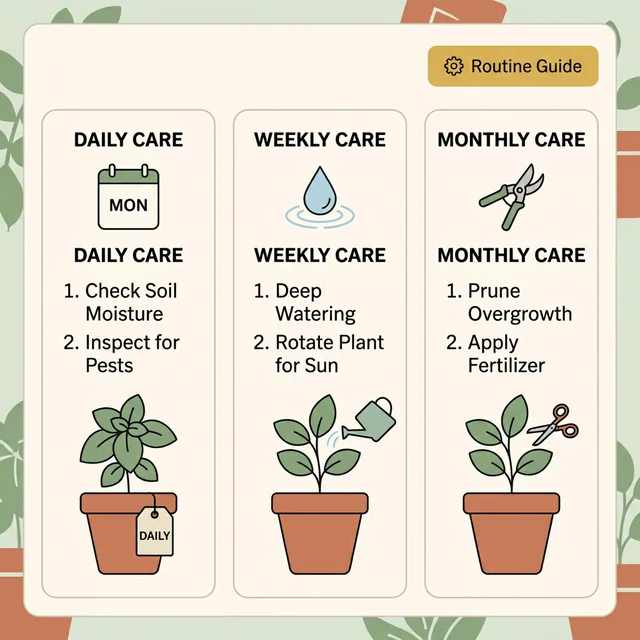
In active growth, check the root zone regularly and learn which pots dry first. Water thoroughly when the active root zone is drying, not because the calendar says you should. Harvest lightly and often so herbs branch and stay compact. Rotate or shift containers if one part of the balcony clearly outperforms another.
The full routine logic lives in Potted Herb Care: Watering, Feeding, and Pruning Without Guesswork, but the balcony version is simpler than many people expect: look, feel, water when needed, and do not let the setup become too crowded to observe clearly.
Expect the balcony to change through the season
Spring light, summer heat, and windy stretches can all change how the same container behaves. That does not mean the setup is failing. It means outdoor container systems are dynamic. Beginners do better when they expect the balcony to speed up and slow down instead of searching for one perfect fixed watering interval.

Common Mistakes
The first common mistake is starting too large. Six stressed pots do not teach more than four healthy ones.
The second is treating the entire balcony as one light condition. The herbs along the railing and the herbs beside the wall are often living in meaningfully different environments.
The third is choosing tiny containers for visual neatness. Small pots make warm-weather herb care harder, not easier.
The fourth is mixing herbs with very different drying preferences in one planter. It can work later. It usually complicates the beginner stage.
FAQ
What is the best layout for a small balcony herb garden?
Usually one that groups herbs by exposure and drying speed. Put hotter, drier herbs on the brightest edge, keep softer leafy herbs in a bright but slightly protected zone, and avoid scattering pots so widely that you stop checking them consistently.
Can I grow basil on a balcony?
Yes, and balconies are often one of the best places for basil if the light is strong and the container is large enough to stay manageable. Basil becomes frustrating when the pot is too small or the site is bright but not truly sunny.
Are railing planters good for herbs?
They can be, but they often dry quickly and may expose roots to more heat and wind. They are usually better once you already understand your balcony’s drying pattern.
Do balcony herbs need more water than indoor herbs?
Often yes, because sun, heat, and airflow increase evaporation and plant demand. The exact timing still depends on pot size, herb type, and weather, so observation matters more than a fixed schedule.
Related Guides
Use these next if you are refining the rest of the system:
- Small-Space Herb Gardening: Start Here for Apartments, Balconies, and Indoor Setups
- How to Set Up a Small-Space Herb Garden That Actually Works
- Best Herbs for Small Spaces: What Grows Well in Apartments, Balconies, and Windowsills
- Best Containers for Herbs: Pot Size, Drainage, and Material Guide
- Potted Herb Care: Watering, Feeding, and Pruning Without Guesswork
If you are planning a balcony herb garden, also read
These guides connect balcony layout decisions back to herb selection, container choice, and the care routine that keeps the setup manageable.
- Small-Space Herb Gardening: Start Here for Apartments, Balconies, and Indoor Setups
- How to Set Up a Small-Space Herb Garden That Actually Works
- Best Herbs for Small Spaces: What Grows Well in Apartments, Balconies, and Windowsills
- Best Containers for Herbs: Pot Size, Drainage, and Material Guide
- Potted Herb Care: Watering, Feeding, and Pruning Without Guesswork
Common questions
What herbs are easiest on a beginner balcony?
Basil, parsley, chives, thyme, oregano, and mint are among the most reliable first choices when you match them to the balcony's real sun and heat pattern.
Should balcony herbs share one big planter?
They can, but one herb per pot is usually easier for beginners because it keeps watering, pruning, and troubleshooting much clearer.
How much sun does a balcony herb garden need?
The stronger the sun, the wider your herb list becomes. Basil, thyme, oregano, and rosemary usually want the brightest positions, while parsley, chives, and mint are more flexible.
How many pots should a beginner start with?
Usually three to five. That is enough to learn the balcony's drying pattern without creating a watering routine that becomes annoying after a week.
Related guides

Best Herbs for Small Spaces: What Grows Well in Apartments, Balconies, and Windowsills
A practical guide to the herbs that actually perform well in compact homes, with selection logic for bright windows, balconies, and more forgiving low-space setups.
How to Set Up a Small-Space Herb Garden That Actually Works
A calm, practical guide to starting a herb garden on a balcony, windowsill, or bright indoor corner without overbuying or overcomplicating the setup.
Potted Herb Care: Watering, Feeding, and Pruning Without Guesswork
A calm, science-based guide to keeping basil, parsley, mint, thyme, chives, and other potted herbs healthy without turning the routine into guesswork.