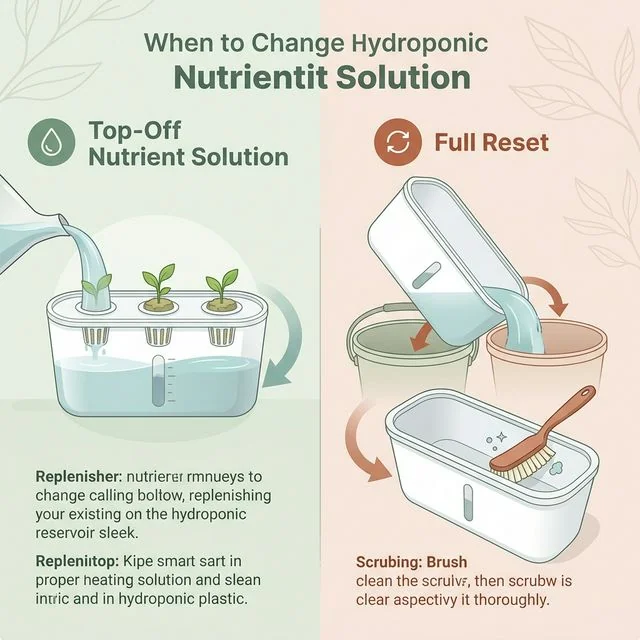
Top-Off vs. Full Reset Schedule
| Action | When to do it | Why you do it | What goes in |
|---|---|---|---|
| Top-Off | Every 3-7 days (when water drops by 20-30%) | To replace transpired water and prevent nutrient spikes. | Pure, pH-balanced water (usually no extra nutrients) |
| Full Dump & Reset | Every 14-21 days (or instantly if water smells bad) | To flush toxic salt accumulations and reset the chemical baseline. | 100% fresh water + a full dose of mixed nutrients |
Most hydroponic systems need two different maintenance actions: a simple top off every few days as the water level drops, and a full nutrient change every couple of weeks to restore balance. If you only keep adding water forever, the reservoir drifts out of balance even when the plants still look acceptable at first.
That distinction matters because plants remove water faster than they remove every dissolved mineral. If you are still building the underlying routine, start with Hydroponic Nutrients for Beginners: EC and pH Without the Confusion and then use this page to decide when you should top off versus dump and remix the reservoir.
One of the greatest appeals of growing herbs in a Countertop Hydroponic System is the lack of daily watering. You fill a reservoir, plug it in, and walk away. The trouble starts when that convenience turns into a “set it and forget it” mindset for too long. After a few weeks of seemingly good growth, basil may claw downward, roots may smell stale, or lettuce may simply stop accelerating.
The Science of the Reservoir Drop
To understand why you need to completely dump the water out of your system, you need to understand what happens when the water level goes down.
As covered in our Hydroponic Nutrients, EC, and pH Basics guide, your reservoir is filled with water and heavy mineral salts (Nitrogen, Calcium, Potassium, etc.).
When a plant sits under a warm grow light, it “sweats” (transpires). It sucks water up through its roots and evaporates it out of its leaves to stay cool. The plant evaporates pure H2O, leaving the heavy mineral salts behind in the reservoir.
Therefore, as the water level drops over the course of a week, the remaining water becomes highly concentrated with fertilizer. If the water drops from 100% to 50%, the concentration of salts in the remaining water essentially doubles. This can chemically burn the roots.
The “Top-Off” (Weekly Maintenance)
A top-off is exactly what it sounds like. You are simply adding liquid back to the reservoir to bring it back to the “Fill Line.”
When to Top-Off
You should top off the reservoir whenever the water level drops by 20% to 30%. For small countertop units with large mature plants, this might be every three days. For a massive 10-gallon tub growing tiny lettuce seedlings, it might take two weeks.
How to Top-Off
The most critical rule of topping off is: Do not automatically add more nutrients.
Because the plant evaporated pure water and left the salts behind, you need to add pure water back in to dilute the concentrated soup back to safe levels.
- Fill a jug with tap water or distilled water.
- Adjust the pH of the pure water to roughly 6.0 (if using tap water).
- Pour it in until the reservoir is full again.
(Pro Tip: If you own an EC meter and want to be perfectly accurate, check Hydroponic Lettuce EC and pH Chart for Beginners to learn how to measure the exact salt concentration before deciding to add more feed).
The “Full Reset” (Monthly Maintenance)
Even if you are diligently topping off with pure water, a hidden problem is brewing over time.
Plants do not consume nutrients evenly. A basil plant going through a massive growth spurt might drink 100% of the Nitrogen in the water, but only 10% of the Calcium.
After three weeks of growth and multiple “Top-Offs”, your reservoir will be completely devoid of Nitrogen, but loaded with massive, toxic amounts of unused Calcium. This chemical imbalance creates a “Nutrient Lockout.” Even though there is food in the water, the extreme excess of one mineral chemically blocks the roots from absorbing others. The plant begins to starve.
When to do a Full Reset
You must completely dump the reservoir, scrub the plastic sides, and mix a brand new batch of perfectly balanced nutrients on the following schedule:
- Every 14 to 21 days: This is the golden rule for active vegetative growth. It guarantees the plant has a perfectly balanced buffet of all micro and macro-nutrients.
- Immediately if it smells: If your reservoir smells like sulfur, a swamp, or rotting eggs, you are experiencing anaerobic bacteria growth. This leads directly to Root Rot. Dump it instantly, scrub the tub with hydrogen peroxide, and start fresh.
- If growth stalls: If the pH is correct, the lights are on, but the plant simply looks sad and stops growing, dump the water. A fresh chemical baseline often solves the kind of slowdown covered in Hydroponic Lettuce Growing Slowly? How to Diagnose the Real Bottleneck.
Hydroponics is a miracle of modern indoor gardening, but it is effectively life support for a plant. If you don’t periodically flush the “lungs” of the system by dumping the old, imbalanced water, the plant will eventually suffocate. Set a calendar reminder every two weeks, and your herbs will reward you with massive, continuous harvests.
Related Guides
Diagnosing a sick hydroponic plant?
A dirty reservoir is the root cause of almost every hydroponic failure. Read these guides to identify what a bad reservoir did to your plants.
Common questions
Should I add more nutrients when I top off the water?
Usually, no. Plants transpire (evaporate) pure water faster than they consume the heavy nutrient salts. When the water level drops, the salts left behind become *more* concentrated. Topping off with pure, pH-balanced water dilutes it back to a safe level.
How often should I replace hydroponic nutrient solution completely?
For most actively growing herbs and lettuce, a full reservoir change every 14 to 21 days is a practical baseline. Change it sooner if the water smells bad, roots look stressed, or growth stalls for no obvious reason.
Can I dump old hydroponic nutrient solution down the drain?
Yes, the heavy dilution of residential wastewater makes it completely safe for indoor plumbing. Better yet, pour it into your outdoor garden or houseplant pots—it is excellent free fertilizer for soil plants.
Why does my reservoir get slimy?
Slime is a biofilm created by beneficial (or sometimes harmful) bacteria feeding on organic matter or root exudates. A light, clear biofilm is normal. Thick, brown, foul-smelling slime indicates an anaerobic (oxygen-starved) environment leading to root rot.
Related guides
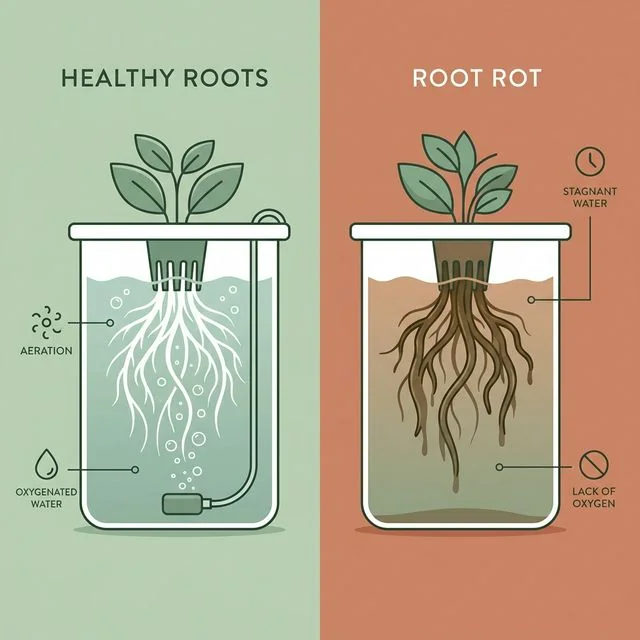
Hydroponic root rot: brown roots, slimy roots, and prevention
If your hydroponic roots look brown, feel slimy, or smell swampy, this guide helps you identify root rot early and fix the conditions causing it.
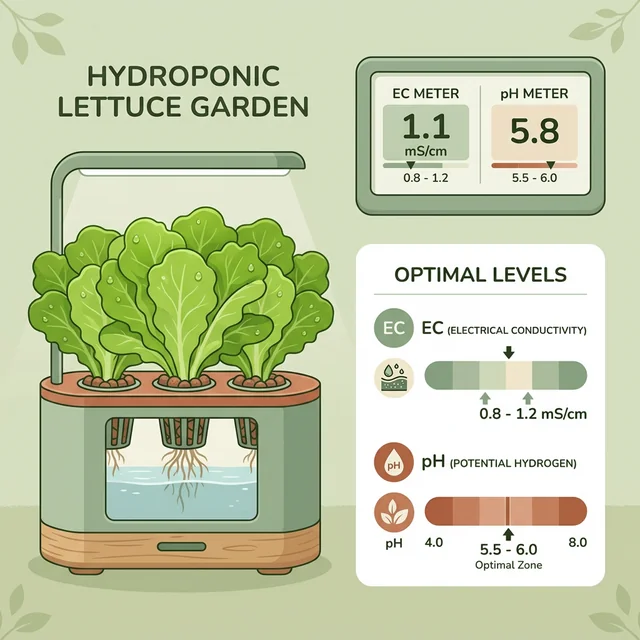
Hydroponic lettuce EC & pH chart: 0.8-1.2 and 5.5-6.0
Lettuce is the easiest crop to grow hydroponically, but it requires specific water chemistry. Use this beginner-friendly EC and pH guide to prevent tip burn and slow growth.
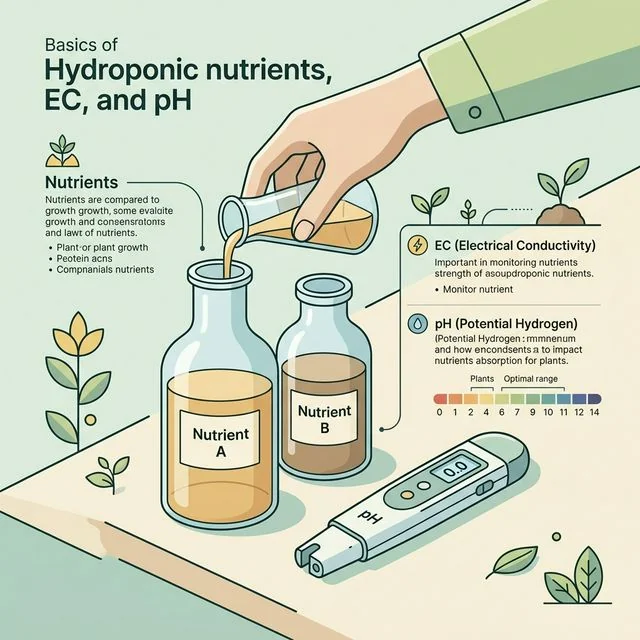
Hydroponic nutrient basics: EC, pH, dilution, and reservoir stability
Most hydroponic problems are not mysterious. They come from concentration drift, pH drift, heat, or neglected maintenance. This guide covers the basics clearly.