
Troubleshoot the system before you change the inputs.
Symptoms
- Seedlings are tall, thin, or leaning hard toward the fixture.
- Internodes are longer than they should be for the crop stage.
- Trays look bright to you but plants still appear weak.
Possible causes
- The light is too far from the canopy.
- Fixture output is too low for the tray size.
- Heat management concerns have pushed the light too high.
Quick fixes
- Lower the fixture or raise the tray while watching for stress.
- Reduce the footprint if one light is covering too much area.
- Reassess runtime only after fixture distance is sensible.
Starting grow light distance for seedlings by fixture type
| Light type | Distance above seedlings | Why |
|---|---|---|
| T5 / fluorescent tube | 6-12 in (15-30 cm) | Low heat and intensity, so it can sit close |
| Standard / low-watt LED | 12-24 in (30-60 cm) | Moderate output; start near 18 in and adjust |
| High-output full-spectrum LED | 18-36 in (45-90 cm) | Strong, warm output; too close bleaches new leaves |
| CFL bulb | 3-6 in (8-15 cm) | Weak output, so it must be very close to help |
Seedlings need compact, sturdy growth early on. That usually means the light has to sit closer to the canopy than many beginners expect. A fixture hanging far above the tray produces thin stems, slow development, and a seedling bench that looks bright to you but dim to the plant.
Quick answer: how far should a grow light be from seedlings?
As a starting point, measured from the top of the seedlings:
- Fluorescent / T5 tubes: 6-12 in (15-30 cm)
- Standard LED panels: 12-24 in (30-60 cm)
- High-output full-spectrum LEDs: 18-36 in (45-90 cm)
- CFL bulbs: 3-6 in (8-15 cm)
Start at the closer end of the range for your fixture, then raise the light if you see bleaching or lower it if seedlings stretch toward the lamp. The full chart and the symptoms to watch for are below.
Start close, then adjust
Most seed-starting setups perform better when the light is kept relatively close and raised gradually as the canopy grows. The exact number depends on the fixture, but the principle is stable: compact growth is the target signal.
What stress looks like
Move the light farther away if you see:
- bleached top leaves
- curled leaf edges
- unusually dry media directly under the lamp
- signs of heat accumulation in enclosed spaces
What low intensity looks like
Move the light closer if seedlings are:
- leaning hard toward the fixture
- developing long, weak stems
- producing large internodes early
Distance and runtime work together, which is why grow light hours for herbs should be considered alongside fixture placement.
Related Guides
If seedlings are stretching under lights, also read
These related guides connect light distance with runtime, fixture choice, and diagnosis-led troubleshooting.
- How many hours should grow lights run for herbs? 12-16
- Best grow lights for herbs: what actually matters before you buy
- Countertop hydroponic herbs for beginners: what to buy and what to ignore
- Hydroponic lettuce growing slowly? Check light, roots, and EC in order
- Why are basil leaves turning yellow indoors?
Common questions
How far should a grow light be from seedlings?
It depends on the fixture. Fluorescent tubes can sit 6 to 12 inches above seedlings, standard LED panels around 12 to 24 inches, and high-output LEDs about 18 to 36 inches. Start at the closer end for your fixture type and raise the light if leaves bleach.
How close should LED grow lights be to seedlings?
Most standard LED panels do well at 12 to 24 inches above the canopy, while strong full-spectrum LEDs should start around 18 to 36 inches. If seedlings stretch and lean, lower the light a few inches at a time.
Why are seedlings leggy under a grow light?
The most common cause is insufficient light intensity at canopy level, often because the fixture is too far away.
Can a grow light be too close?
Yes. Too much intensity or radiant heat can bleach, curl, or dry the newest leaves.
Related guides
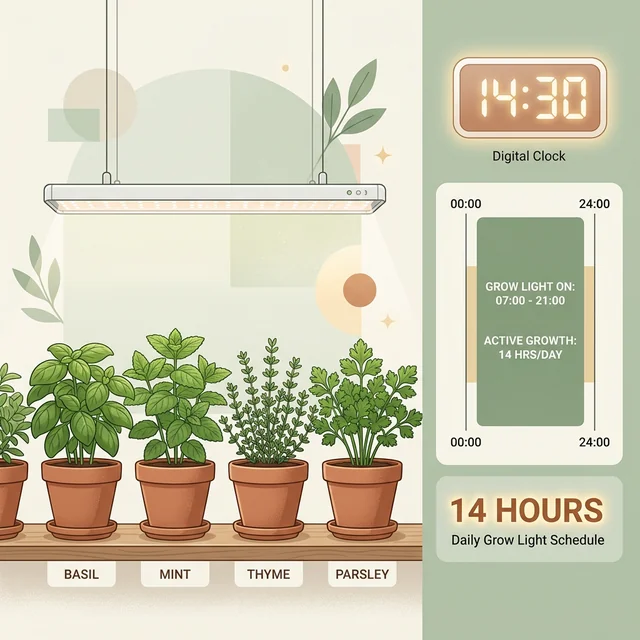
How many hours should grow lights run for herbs? 12-16
Most herb grow lights should run about 12 to 16 hours per day, but intensity, distance, and a stable dark period matter as much as the timer itself.
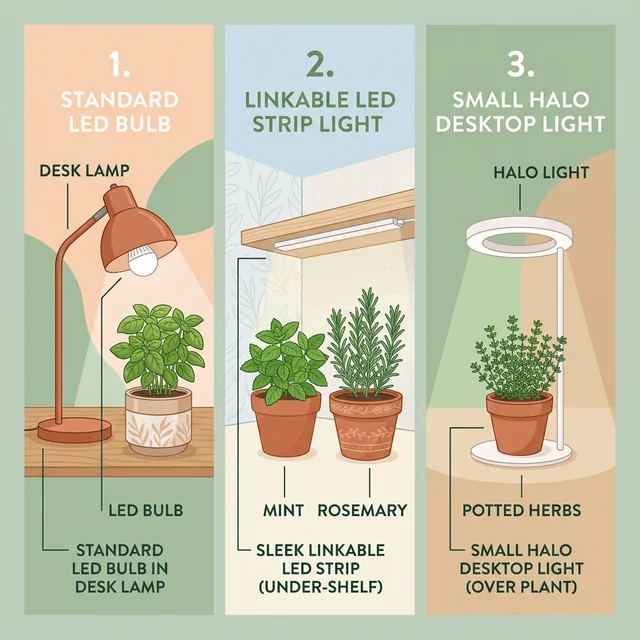
Best grow lights for herbs: what actually matters before you buy
Most indoor herbs don't need a massive, expensive grow tent light. Here is how to choose the right LED bulbs, strips, or halos for your real apartment setup.
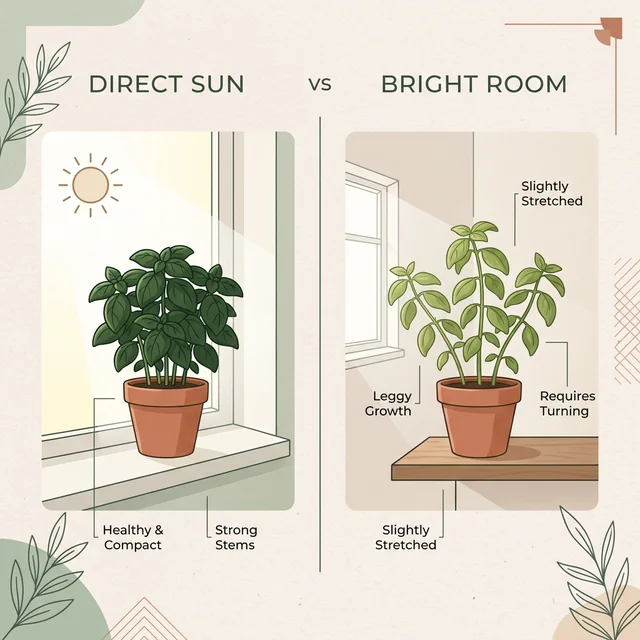
Can herbs grow indoors without direct sunlight? Yes, but bright windows matter
A realistic answer to a common indoor-herb question, with clear expectations for growth, herb choice, and when a grow light becomes the cleaner solution.