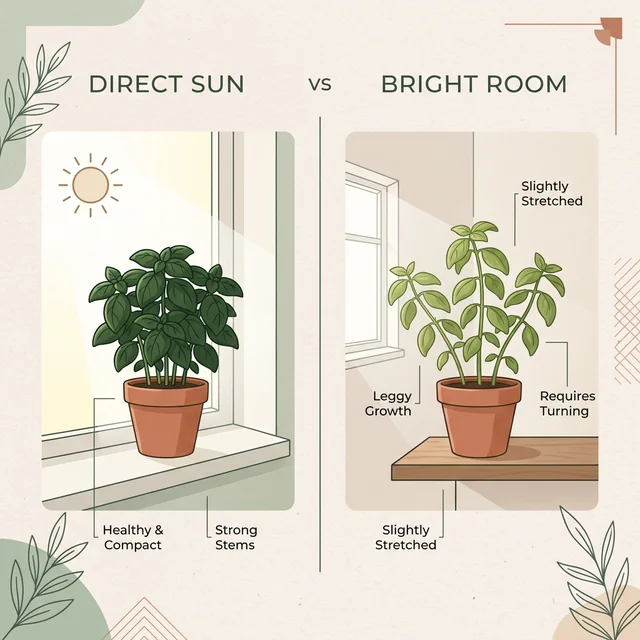
What herbs usually do in different no-direct-sun situations
| Indoor situation | What usually works | What to expect |
|---|---|---|
| Bright window with no direct sun | Parsley, chives, mint, sometimes basil | Usable growth, but high-light herbs may still be slower and looser |
| Bright room a short distance from the window | Parsley and mint at best | Lower yield, slower regrowth, more stretch risk |
| Dim room | Very little stays productive | Survival is possible for a while, but real harvests usually fade |
| Indoor setup with a grow light | Most common culinary herbs | The answer becomes much better because light is now controlled |
Yes, herbs can grow indoors without direct sunlight, but the better answer is that some herbs can remain worthwhile indoors without direct sunlight if the space is still genuinely bright. That is a narrower claim, and it matters because many beginners hear “yes” and assume any bright room can produce lush basil all year. Usually it cannot. If you want the full small-space pathway first, start with Small-Space Herb Gardening: Start Here for Apartments, Balconies, and Indoor Setups. If you need the broader light framework, read How Much Light Do Herbs Need? Realistic Sun and Grow Light Rules alongside this one.
The useful question is not only whether herbs can survive. It is whether they will stay compact, flavorful, and productive enough to deserve the space they take up in your home.
Quick Answer
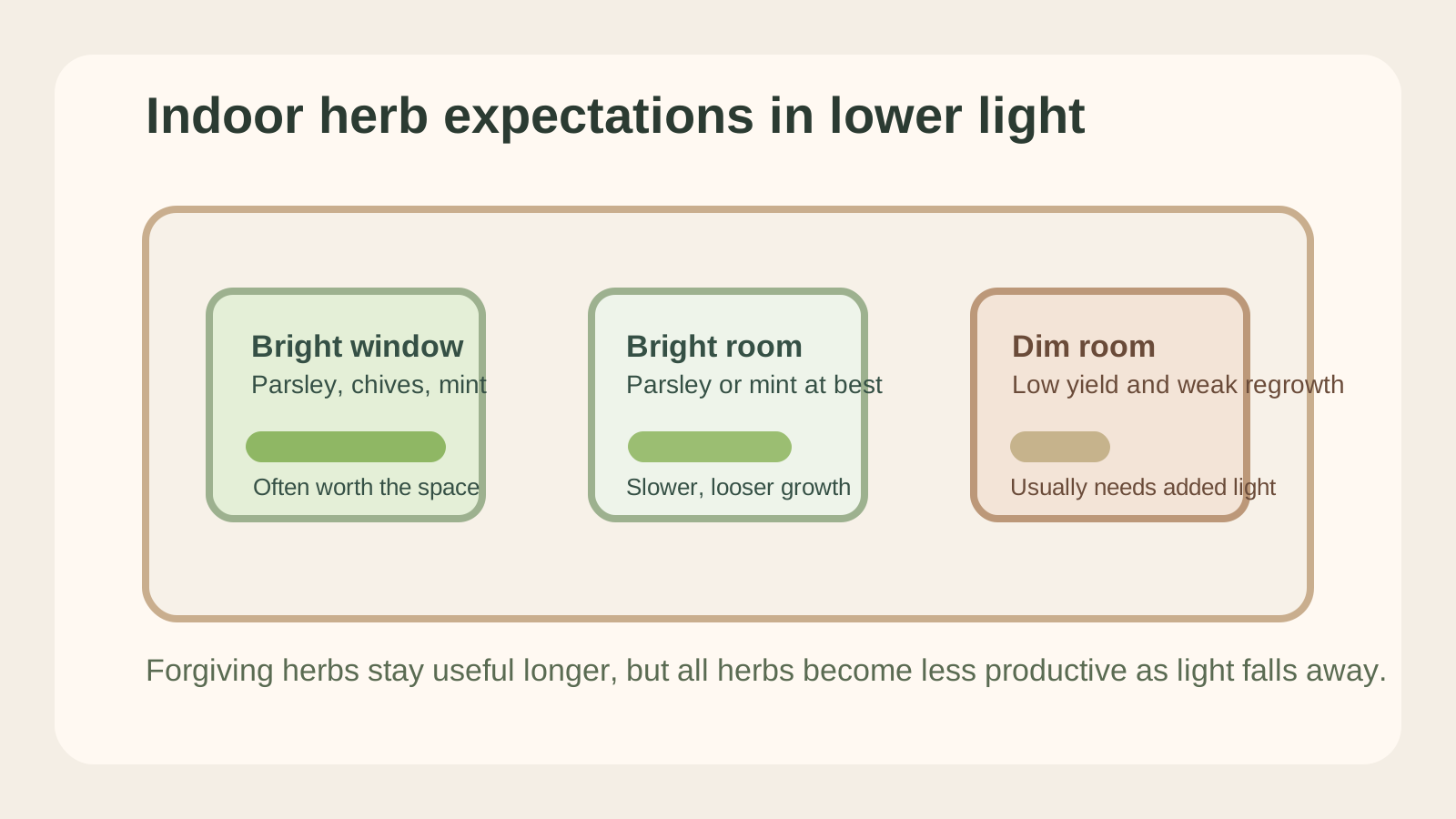
Herbs without direct sun fall into three outcomes. In a bright window with no direct sun, some herbs can still do reasonably well. In a bright room away from the window, the list gets shorter and the expectations should drop. In a dim room, most herbs stop being satisfying unless you add a grow light.
That is why direct sun is not the only path to indoor herbs, but it is still the easiest path for many of them.

What “Without Direct Sunlight” Actually Means
People use that phrase for very different situations. Sometimes it means a bright window that never gets a clean block of direct sun. Sometimes it means a bright room several feet from the window. Sometimes it means a kitchen that feels cheerful to people but is still weak for plants.
Those are not the same environment.
Bright window, no direct sun
This is the best version of the no-direct-sun scenario. The plants are still right at the light source, and the overall brightness can be good enough for forgiving herbs. Parsley, chives, and mint often remain worthwhile here. Basil may survive, but it is more likely to grow loosely or more slowly unless the window is unusually strong.
Bright room away from the glass
This is where many indoor herb plans become too optimistic. The room may look bright, but usable light falls off fast as you move away from the window. Herbs in these locations often stretch, pale out, and use water slowly. The setup may look stable for a while, but productivity usually drops.
Truly low-light room
In genuinely dim rooms, most herbs become decorative more than productive. They may stay alive for a period, especially if they arrived healthy, but harvests thin out and the plants become harder to read. At this point, the answer is usually not “try harder.” It is “change the setup.”
Which Herbs Still Make Sense
The practical winners in no-direct-sun homes are usually parsley, chives, and mint. They still prefer strong light, but they tend to remain more useful when the light is good rather than ideal. Basil is the herb that often tells the truth about the room. If basil keeps getting leggy, pale, or weak, the light is probably below target for high-performance indoor herbs.
This is why herb choice has to follow the window, not the other way around. If you need help choosing crops that fit the real site, use Best Herbs for Small Spaces: What Grows Well in Apartments, Balconies, and Windowsills.
It is also why a complete apartment plan matters. If the location is the real bottleneck, a dedicated setup like Indoor Herb Garden Setup for Apartments Without Outdoor Space usually helps more than another vague care tip.
What Results Should You Expect?
The answer changes depending on what “success” means to you.
If success means keeping a few herbs alive and occasionally harvesting from them, bright indirect light may be enough for the right herb choices. If success means dense growth, fast regrowth after cutting, and strong flavor from basil or other higher-light herbs, then no direct sun becomes a much harder proposition.
Growth usually slows first
In weaker indoor light, herbs often keep living before they keep producing. Regrowth after harvest slows down. Stems become longer. The plant may lean harder toward the window. Flavor can become less concentrated because growth is being built on less energy.
Watering gets harder to read
Low light changes moisture behavior too. A herb with less energy uses less water, which means the pot stays wet longer. Beginners often misread that as proof that watering is the real issue when the deeper problem is that the plant is not getting enough light to drive strong growth.
This is one reason indoor herb care has to stay tied to light. If the soil keeps staying wet, the answer may be more sun or a better-positioned grow light, not simply watering less forever.
When a Grow Light Changes the Answer
Grow lights matter because they turn a vague lighting situation into a controllable one. If the home is bright but still below target, a small grow light can widen the herb list and improve plant shape, regrowth, and consistency.
That does not mean every no-direct-sun setup needs equipment. It means there is a point where adding light is cleaner than lowering expectations again and again. If parsley is acceptable but basil keeps failing, that is often the line.
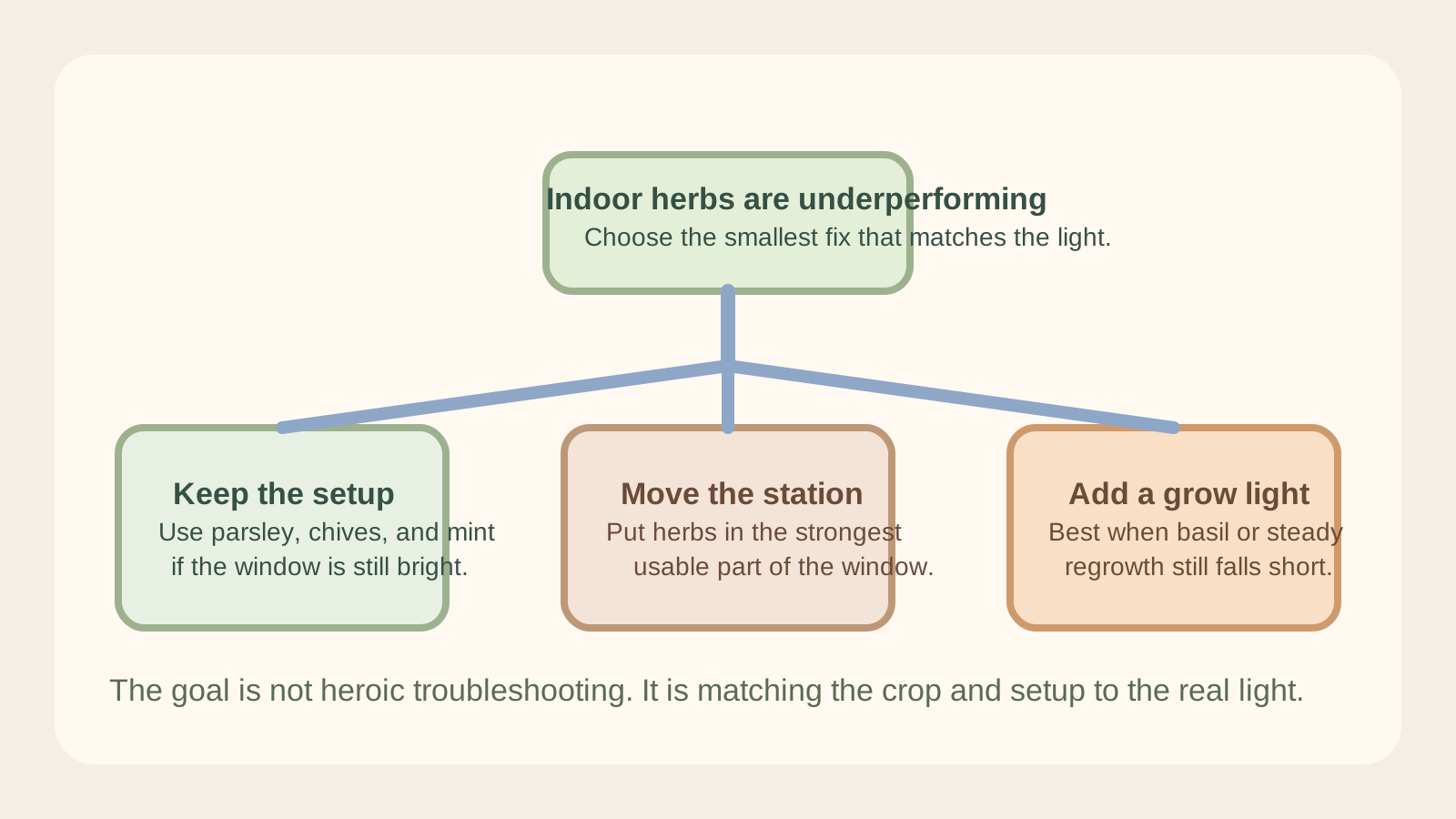
Decide Between Three Fixes
When indoor herbs are underperforming without direct sun, the cleanest decision usually falls into one of three categories.
Switch the herb list
If the space is bright but limited, move toward herbs that are more forgiving there. Parsley, chives, and mint are often better long-term fits than insisting on basil everywhere.
Move the station
If the herbs are already near a window but not in the best part of it, move them first. Small shifts toward the brightest usable edge can matter more than people expect.
Add light
If the best available natural-light spot is still not enough for the herbs you want, then a grow light is often the most rational answer. It is not an admission of failure. It is simply the tool that closes the gap between the home and the crop.
Common Mistakes
The first common mistake is treating “bright room” and “bright window” like the same thing. For herbs, they are often very different.
The second is assuming survival equals success. A plant that is alive but weak, stretched, and rarely harvested is not really the outcome most people want.
The third is blaming fertilizer for slow growth when the real issue is low light. A weak-light herb usually needs more energy before it needs more nutrients.
The fourth is refusing to simplify the crop list. In limited light, better herb choice is often the easiest win.
FAQ
Can parsley grow indoors without direct sunlight?
Often yes, if the setup is still bright and close to the window. Parsley is usually more forgiving than basil, though it still grows better with stronger light.
Can mint grow in bright indirect light?
Usually yes. Mint is one of the more tolerant common culinary herbs, though it still benefits from brighter positions and can become less vigorous in weaker conditions.
Why do my herbs stay wet for so long indoors?
Because the light may be too weak for strong water use. When herbs are not growing actively, the root zone often stays wet longer, which makes the setup feel harder to manage.
Is no direct sun the same as no light?
No. Some no-direct-sun spaces are still bright enough for useful herb growth. The problem is that many homes are weaker than they appear, so the exact window or room matters a lot.
Related Guides
Use these next if you are deciding whether to adjust the setup or change the herb list:
- Small-Space Herb Gardening: Start Here for Apartments, Balconies, and Indoor Setups
- How Much Light Do Herbs Need? Realistic Sun and Grow Light Rules
- Indoor Herb Garden Setup for Apartments Without Outdoor Space
- Best Herbs for Small Spaces: What Grows Well in Apartments, Balconies, and Windowsills
- Potted Herb Care: Watering, Feeding, and Pruning Without Guesswork
If you are growing herbs indoors with limited sun, also read
These guides help you decide whether to change herbs, improve the setup, or add supplemental light.
Common questions
Which herbs handle no direct sun best?
Parsley, chives, and mint are usually among the more forgiving options when the setup is bright but not sunny. They still grow better in stronger light, but they usually cope better than basil.
Can basil grow indoors without direct sunlight?
Sometimes, but results are often disappointing unless the window is unusually bright or you add a grow light. Basil is one of the first herbs to show when indoor light is weaker than it looks.
Does bright indirect light count as enough for herbs?
It can be enough for some herbs to remain usable, but not always enough for compact growth, fast regrowth, or strong flavor, especially in high-light herbs.
When should I stop trying and add a grow light?
Add one when the best available indoor spot still produces stretching, pale leaves, slow regrowth, or wet soil that lingers because the plant is not using water well.
Related guides

How Much Light Do Herbs Need? Realistic Sun and Grow Light Rules
A practical guide to herb light needs for real homes, with clear rules for sunny windows, balconies, dimmer apartments, and beginner grow light setups.

Indoor Herb Garden Setup for Apartments Without Outdoor Space
A practical apartment herb guide for people growing entirely indoors, with realistic advice on light, layout, containers, and everyday maintenance.

Best Herbs for Small Spaces: What Grows Well in Apartments, Balconies, and Windowsills
A practical guide to the herbs that actually perform well in compact homes, with selection logic for bright windows, balconies, and more forgiving low-space setups.