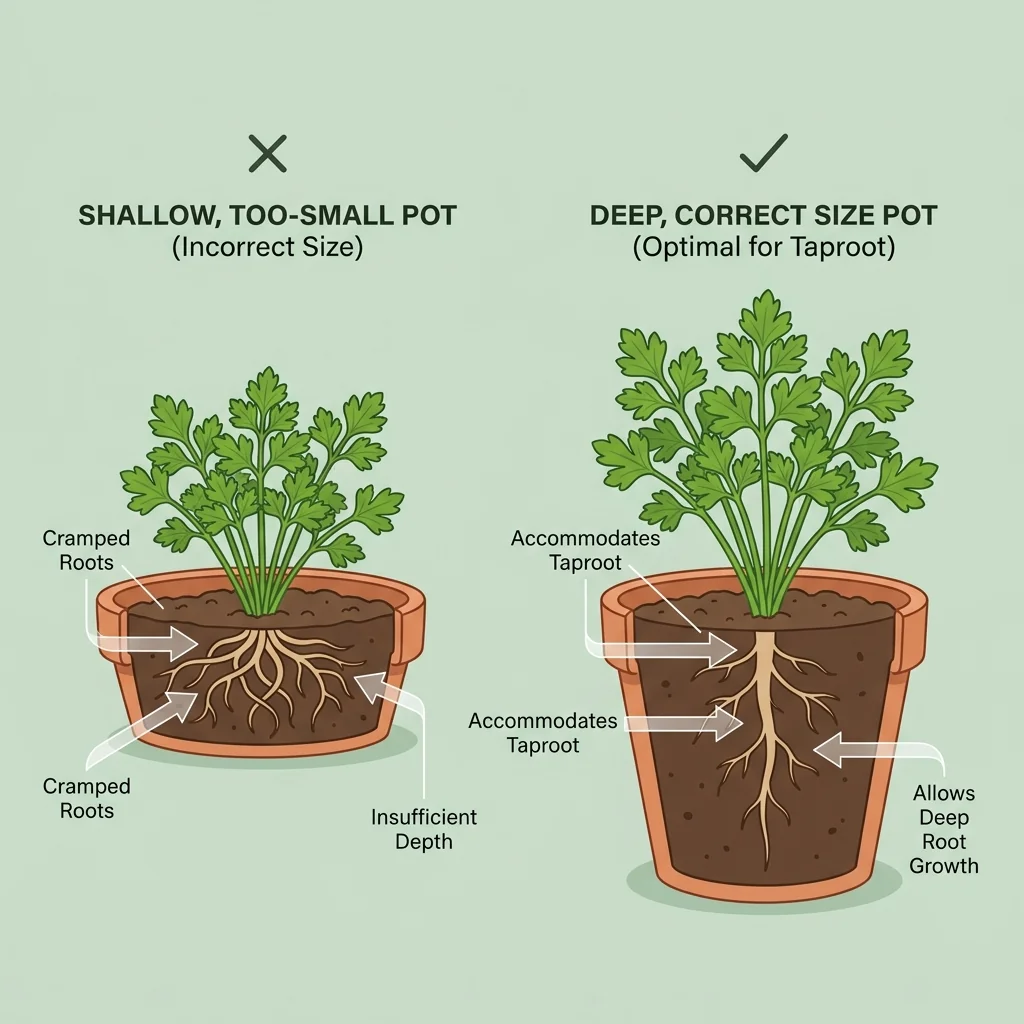
Parsley pot size at a glance
| Container | Size | Best for |
|---|---|---|
| Minimum pot | 8 in deep, 6 in wide (20 x 15 cm) | One parsley plant, short term |
| Ideal pot | 10 in deep, 8 in wide (25 x 20 cm) | One parsley plant, long term |
| Trough / window box | 8-10 in deep, plants 6 in apart | Several parsley plants in a row |
Parsley grows in two directions at once — a fountain of leaves above and a long taproot below — and it is the root that sets the container spec. A single plant wants a pot about 8 to 10 inches (20 to 25 cm) deep and 6 to 8 inches (15 to 20 cm) wide, with real drainage. Judged by the leaves alone, a wide shallow pot looks generous; judged by the root, it is a dead end. Among common kitchen herbs only its relative cilantro shares this depth-first rule, and both stand out on the main herb pot size chart.
What the taproot is actually for
Most leafy herbs spread fibrous roots near the surface. Parsley instead drives one central root downward that anchors the plant and — because it is a biennial — stores the energy meant to fuel next year’s flowering. In a shallow pot that root hits the bottom early and bends, and the plant responds by slowing down or bolting sooner. Give the root its full run and you get the dense, productive leaf fountain; cramp it and you get the thin supermarket-window clump everyone recognises.
Depth, width, and spacing
Depth is the hard requirement: 8 inches minimum, 10 preferred. Width is more forgiving — 6 to 8 inches gives the feeder roots room without holding so much soil that it stays soggy. For a row, use a trough at least 8 inches deep with plants spaced about 6 inches apart; crowding is the most common reason potted parsley stays small. In a mixed planter, parsley coexists happily as long as its taproot sets the container depth, not the shallow herbs around it. For material and drainage choices, see best containers for herbs.
A window box done right and wrong
The same 24-inch window box tells both stories. Planted with six parsley seedlings “for a lush look,” it produces six thin plants with yellowing lower leaves by midsummer — each one fighting five neighbours for root run and water. Replanted the next season with three plants at 6-inch spacing, the same box yields more total parsley than the six ever did, because each plant builds a full root column and regrows fast after every cutting. With parsley, generosity per plant beats headcount every time.
The drainage caveat that comes with depth
A deep pot concentrates its risk at the bottom, exactly where the taproot tip sits, so a deep container without drainage holes is worse than a shallow one with them. Always use holes, and mix in extra perlite if the pot tends to stay wet. Yellowing leaves usually mean a wet base, not thirst. Once the pot is sorted, the watering rhythm is covered in how often to water potted herbs.
Flat-leaf vs curly: size to the variety
The two common parsleys are not the same plant size. Flat-leaf (Italian) grows taller and more vigorously — give it the deeper end of the range, close to 10 inches, especially for steady cooking use. Curly stays compact and crops happily in an 8-inch pot. The extra soil volume under flat-leaf pays off as a longer cropping season before the plant tires.
Two taproots, two temperaments
Parsley shares its root architecture with cilantro but not its nerves: parsley transplants fine. A nursery parsley can be potted up into a proper deep container without drama — handle the rootball gently, keep the taproot pointing straight down rather than curling it, and set it at the same depth it grew. No need for the direct-sowing discipline cilantro demands.
Size for one season, not forever
As a biennial, parsley gives you one strong leaf year, then bolts to seed in its second. So there is no need to oversize the pot for the long haul — size it for one productive season and start a fresh plant when the old one bolts. If a plant wilts daily, dries out within hours, or stalls with roots showing at the drainage holes before the season is done, it has outgrown its pot; move it up a size with minimal taproot disturbance, following how to repot herbs without slowing growth.
After sizing parsley's pot, read these
These guides connect parsley's pot size to the wider container, watering, and repotting decisions that keep it growing.
Common questions
What size pot does parsley need?
A single parsley plant does best in a pot about 8 to 10 inches (20 to 25 cm) deep and 6 to 8 inches (15 to 20 cm) wide. Depth matters most because parsley grows a long taproot, so a deep pot beats a wide, shallow one.
How deep does a pot need to be for parsley?
At least 8 inches (20 cm), and 10 inches (25 cm) is better. Parsley's taproot reaches down further than basil or chives, and a shallow pot forces it to stall or bend.
How many parsley plants can I grow in one pot?
Give one parsley plant per 6 to 8 inch pot, or space plants about 6 inches (15 cm) apart in a larger trough or window box. Crowding parsley leads to thin, slow growth.
Can parsley grow in a small pot?
It can survive in a small pot for a while, but growth stays limited and the pot dries out fast. If parsley is wilting daily or staying small, move it to a deeper container.
Does flat-leaf parsley need a bigger pot than curly?
Yes, a little. Flat-leaf (Italian) parsley grows taller and more vigorously, so aim for the deeper end of the range around 10 inches. Curly parsley stays more compact and does fine in an 8-inch pot.
Can I transplant a nursery parsley plant, or must I sow it?
You can transplant it. Unlike cilantro, parsley tolerates being moved, so potting up a nursery plant into a deep container works well. Handle the taproot gently, keep it pointing straight down, and plant at the same depth.
Related guides
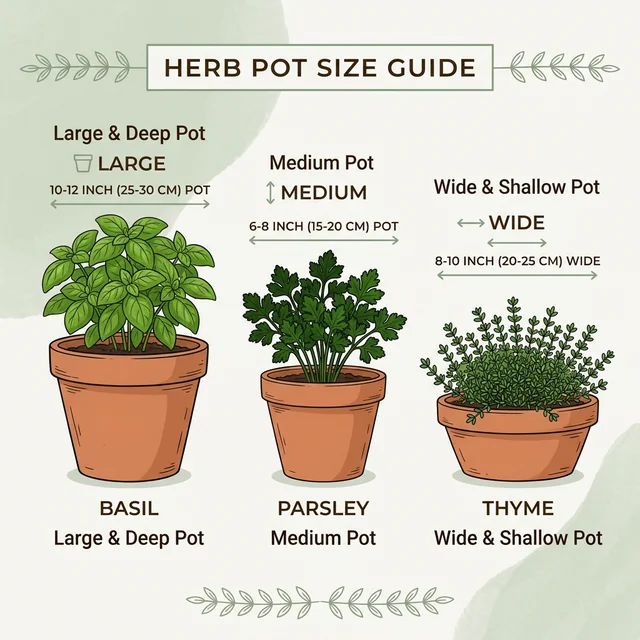
Herb pot size chart: basil, mint, parsley, thyme & chives
A practical herb pot size guide for the most common kitchen herbs, with simple size ranges that make container growing easier to read and maintain.
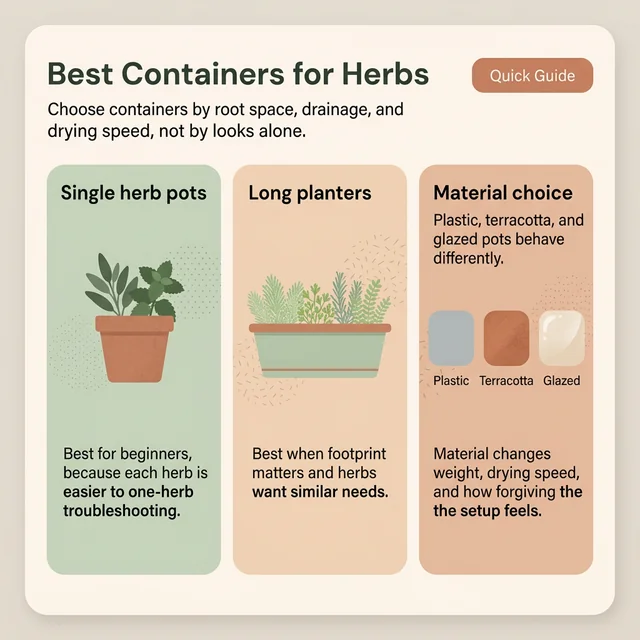
Best containers for herbs: drainage, pot size, and materials that work
A practical guide to herb containers that explains which pots work best, why drainage matters, and how material changes the way containers dry.
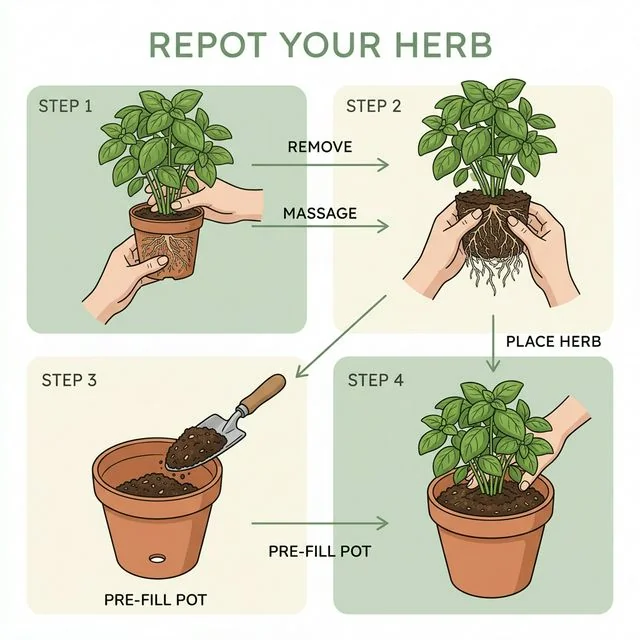
How to repot herbs without slowing growth
Moving an herb to a bigger pot should trigger a massive growth spurt. If your plants wilt and drop leaves after repotting, you are suffering from transplant shock. Here is how to upgrade your container without stressing the roots.