Basil pot size at a glance
| Container | Size | Best for |
|---|---|---|
| Minimum pot | 6 in wide and deep (15 x 15 cm) | One plant, expect frequent watering |
| Ideal pot | 8-10 in wide and deep, 1-2 gal (20-25 cm) | One healthy, bushy plant |
| Large trough | Plants 8 in apart | Several basil plants in a row |
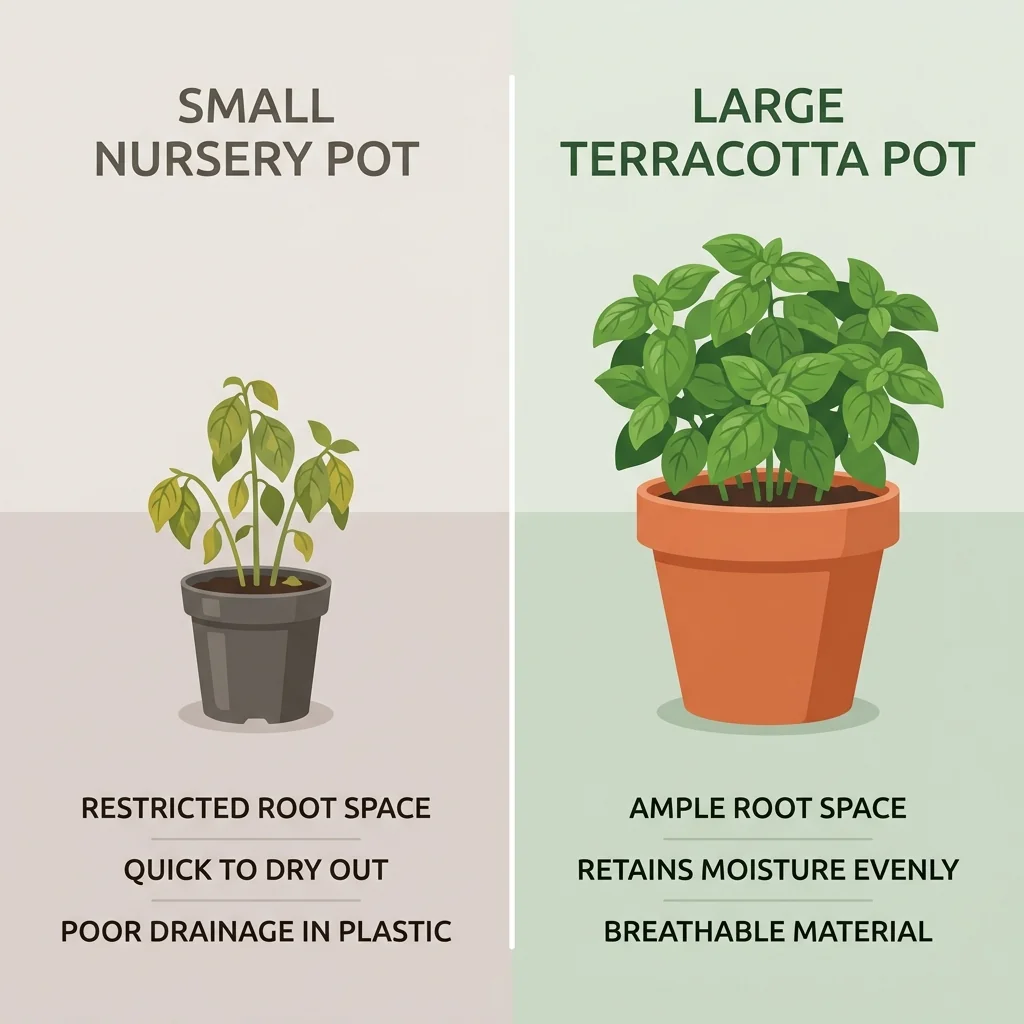
Most basil problems are really pot problems. One basil plant wants a container at least 8 inches (20 cm) wide and deep — roughly 1 to 2 gallons of soil — and the gap between that and the 4-inch pot it is usually sold in is the gap between a plant that wilts every afternoon and one that shrugs off a missed watering. The soil volume is the plant’s water reserve, and basil burns through reserves faster than any other common kitchen herb. To see where basil sits next to other herbs, the numbers here slot into the main herb pot size chart.
A root system that fills a pot in weeks
Basil is an annual in a hurry. From a seedling it builds a dense, fibrous root system in four to six weeks, and that root mass drives an equally fast top: more roots, more leaves, more water drawn out of the soil every day. In a small pot two things fail at once — the soil dries out within hours, and the roots run out of room — and both show up the same way, as constant wilting and stalled growth. A larger pot fixes both causes with one move, which is why upsizing does more for struggling basil than any change to the watering can.
The supermarket-basil trap
The basil pot from the supermarket is not one plant in a too-small pot; it is often ten to twenty seedlings crammed into a tiny cell to look lush on the shelf. Simply moving that whole rootball into a bigger pot rarely fixes it, because the seedlings still compete for the same crowded root zone and collapse. The better move is to slide it out, gently tease the clump into two or three smaller bunches, and plant each into its own 8-inch pot. Fewer plants with real root space outperform the original dense clump within a couple of weeks. This is the core of keeping supermarket basil alive longer than two weeks.
How much pot one plant actually uses
For a single plant, 8 to 10 inches wide and deep (1 to 2 gallons) is the sweet spot: enough reserve that summer watering drops from daily to every two or three days, not so much soil that it stays soggy. Growing a row for pesto, give each plant about 8 inches of its own space in a trough — crowding two plants into one 8-inch pot recreates the supermarket problem you just fixed. On material, plastic or glazed ceramic holds moisture longer than terracotta, which suits basil’s thirst; best containers for herbs compares the trade-offs.
A worked example: one clump, two outcomes
Take a typical store basil in June and split the experiment: half the clump stays in its original 4-inch pot on the windowsill, the other half is teased into two bunches and repotted into 8-inch pots. By week two, the original pot is wilting by mid-afternoon even with morning water, and the lower leaves are yellowing. The repotted bunches wilt once while they re-root, then hold firm — and by week four they are bushier than the original clump ever was, on half the watering. Nothing about the care differed except soil volume. That is the whole argument for pot size, compressed into one windowsill.
A cheap way to hit the size: fabric pots
Because basil’s whole problem is root volume and moisture stability, a large fabric grow bag (2 to 3 gallon) is an inexpensive way to give it the space it wants without buying a big ceramic pot. Fabric pots also air-prune the roots, which reduces circling. The trade-off is they dry a little faster than plastic, so pair a fabric pot with the consistent-moisture routine in how often to water basil.
If it still struggles in the right pot
Once the container is 8 inches or more, persistent wilting points elsewhere: check the watering rhythm in how often to water basil, and run through why is my basil wilting indoors? for root rot and pest causes. If the plant stretches pale and leggy instead of wilting, the limit is light rather than the pot — see best grow lights for herbs.
Three signs basil has outgrown its pot
Roots circling out of the drainage holes, wilting within hours of a thorough watering, and growth that stalls despite good light all say the same thing: the reserve is gone. Move it up one size with minimal root disturbance, following how to repot herbs without slowing growth.
Sizing a pot for basil? These guides go with it
These guides connect basil's pot size to watering, wilting, and the container choices that keep it from drying out.
Common questions
What size pot does basil need?
At least 8 inches (20 cm) wide and deep per plant, which is roughly a 1 to 2 gallon container. Basil has a big, thirsty root system, so larger pots hold more water and stay far more stable than small ones.
Why does my basil keep wilting in its pot?
The pot is usually too small. A small pot dries out within hours, so the plant wilts daily even when you water it. Moving basil into a larger container is the most reliable fix.
Can I keep basil in the pot it came in?
Only short term. Supermarket and nursery basil is sold in tiny pots that dry out fast and crowd many seedlings together. Repotting into a larger container quickly improves growth.
How many basil plants per pot?
Give each basil plant about 8 inches (20 cm) of space. One strong plant in an 8 inch pot usually outperforms several crammed into the same container.
Should I split up a supermarket basil pot before repotting?
Yes. Supermarket basil is usually many seedlings crammed together, so moving the whole clump into a bigger pot keeps them competing. Tease the clump into two or three bunches and pot each into its own 8-inch container for much stronger plants.
Is a 6-inch pot big enough for basil?
It will keep one plant alive, but expect to water almost daily in summer and to harvest less. Six inches is the survival minimum; 8 to 10 inches is where basil stops fighting the container and starts producing.
Related guides
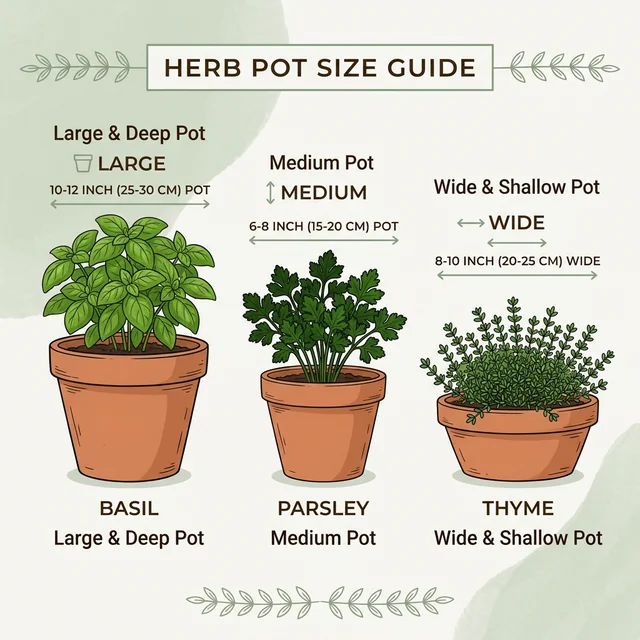
Herb pot size chart: basil, mint, parsley, thyme & chives
A practical herb pot size guide for the most common kitchen herbs, with simple size ranges that make container growing easier to read and maintain.
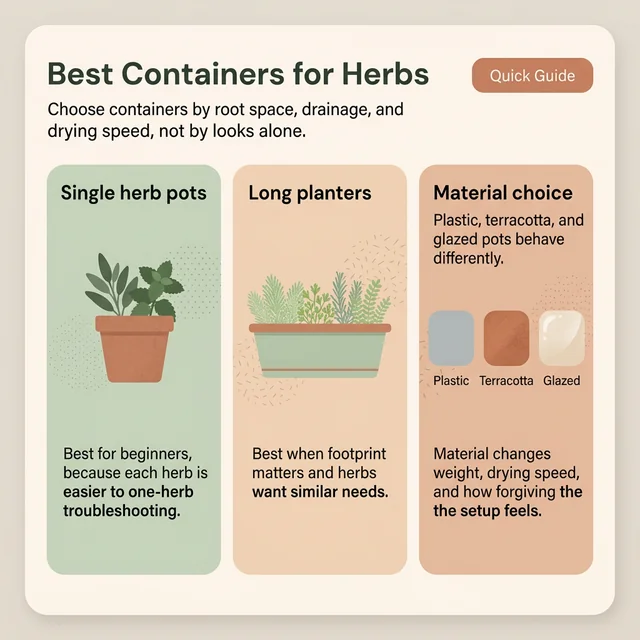
Best containers for herbs: drainage, pot size, and materials that work
A practical guide to herb containers that explains which pots work best, why drainage matters, and how material changes the way containers dry.
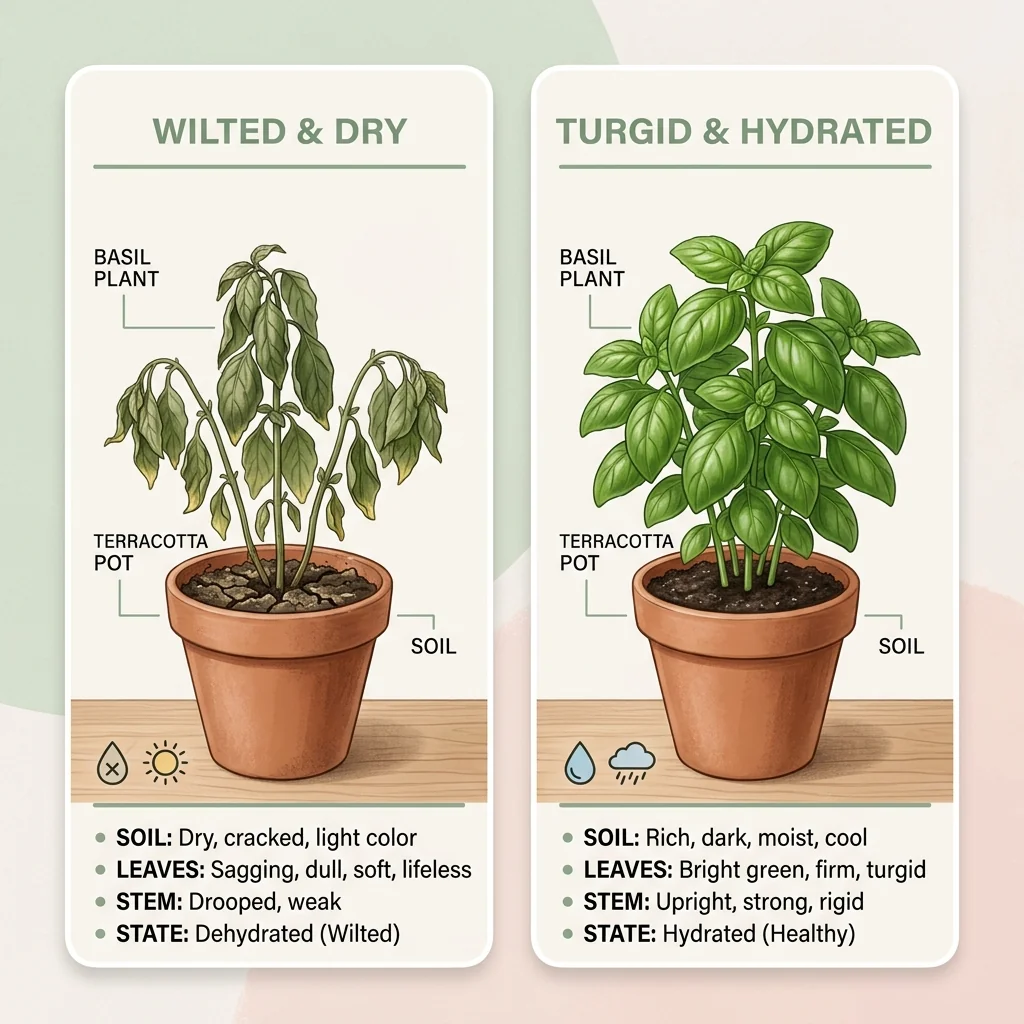
How often should you water basil? Keep it consistent
Basil is thirsty and dramatic: it wilts the moment it dries out. The fix is consistent moisture and a big enough pot, not a rigid daily schedule.